
TL;DR:
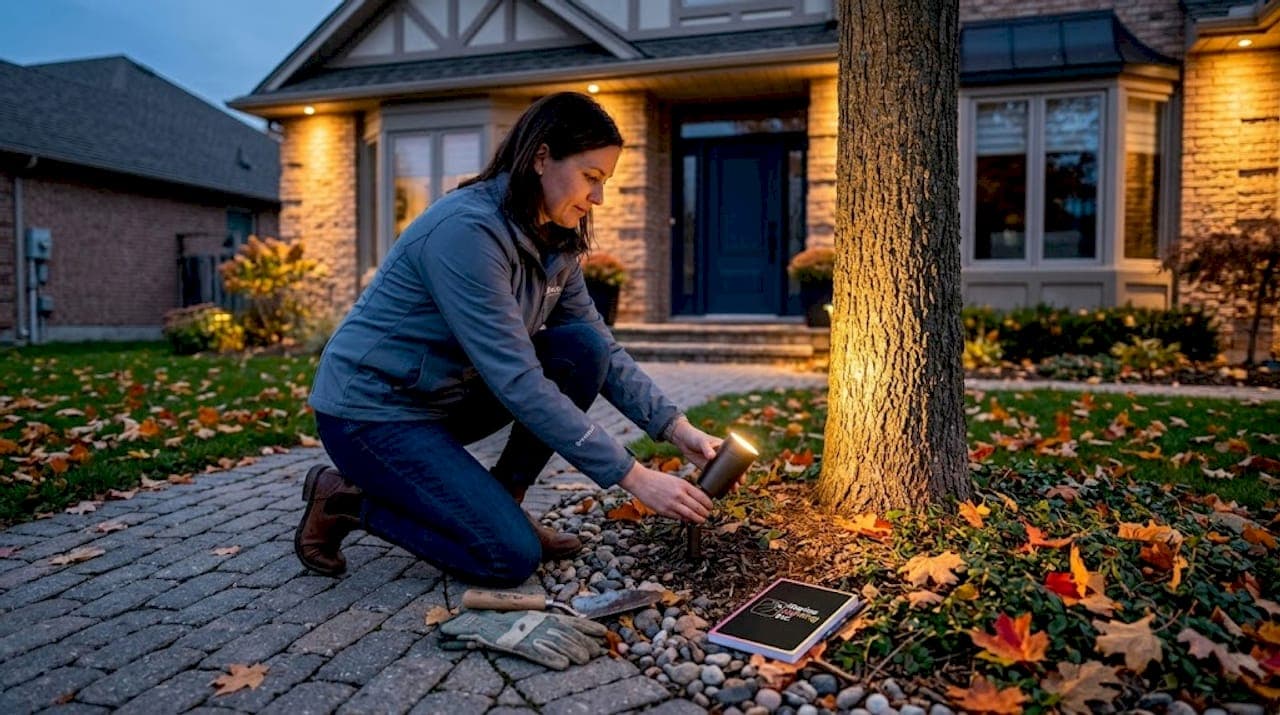
- LED uplighting involves placing ground-level fixtures that direct focused light upward to enhance architectural features and landscape, creating depth and drama. It offers energy savings, long lifespan, and improved security, making it a valuable investment for aesthetic and safety reasons. Proper fixture selection and placement, especially concerning IP ratings and thermal management, are essential for lasting, effective outdoor lighting.
LED uplighting is one of those outdoor lighting techniques that looks expensive and complex but is actually straightforward once you understand what it does. Put simply, what is LED uplighting? It's the practise of placing low-profile light fixtures at ground level and directing their beams upward to wash vertical surfaces, trees, walls, or architectural features with focused light. Unlike a porch light or flood lamp pointing downward, uplighting creates depth, drama, and dimension. This guide breaks down how it works, why it matters for your home's security and curb appeal, and how to choose and place fixtures that perform for years.
Table of Contents
- Key takeaways
- What is LED uplighting and how does it work?
- Benefits of LED uplighting for your outdoor space
- Choosing and installing outdoor LED uplights
- LED uplighting ideas for every part of your property
- My perspective on what LED uplighting can do for your home
- Permanent LED uplighting built for Canadian homes
- FAQ
Key takeaways
| Point | Details |
|---|---|
| Uplighting goes upward | Fixtures are placed at ground level and aimed up to highlight trees, walls, and architecture. |
| LEDs slash energy use | Modern LED uplights consume 50–75% less energy than halogen alternatives, with lifespans of 25,000–50,000 hours. |
| IP rating is non-negotiable | Choose IP65 or higher for outdoor residential use to protect against dust and rain year-round. |
| Design matters as much as gear | Poor placement creates harsh glare; layering uplighting with other fixture types produces balanced results. |
| It serves security and beauty | Strategic uplighting deters intruders while making your home look professionally designed after dark. |
What is LED uplighting and how does it work?
Uplighting is exactly what it sounds like: light directed upward rather than downward. Traditional outdoor fixtures hang from soffits or sit on posts and cast light onto the ground. Uplighting flips that logic. The fixture sits at or near ground level, its beam travels upward, and the result is a vertical surface bathed in light that reveals texture, colour, and form that flat overhead lighting completely misses.
Uplighting highlights textures and architectural details that would go completely unnoticed with standard ambient lighting. Think of the difference between a tree lit from above by a street lamp versus the same tree lit from below at night. The upward beam traces every branch and leaf, creating shadow and contrast that the top-down approach destroys.
The LED part is what makes modern uplighting a genuinely smart investment. LEDs consume 50–75% less energy than traditional halogen and discharge lighting and run cool enough to reduce fire risk near dry mulch and wood structures. Their rated lifespans of 25,000 to 50,000 hours dwarf the 2,000 to 5,000 hours you get from older bulb types. That means fewer replacements, less ladder-climbing, and lower long-term costs.
How does LED uplighting work at the fixture level? A typical uplight contains an LED array, a driver that converts AC power to the correct DC voltage, and a housing designed to resist the elements. The beam angle determines how wide or narrow the light spreads on the surface above. Narrow beam angles (10 to 25 degrees) create tight, dramatic columns of light ideal for tree trunks or tall columns. Wide angles (40 to 60 degrees) wash larger surfaces like stone walls or hedgerows with softer, more even illumination.
Pro Tip: When selecting LED uplights, look at the lumens output rather than wattage. A 10-watt LED uplight can produce the same visible brightness as a 50-watt halogen, so wattage alone tells you nothing useful about performance.
Benefits of LED uplighting for your outdoor space
The case for LED uplighting at home goes well beyond aesthetics, though the visual impact alone is genuinely striking.
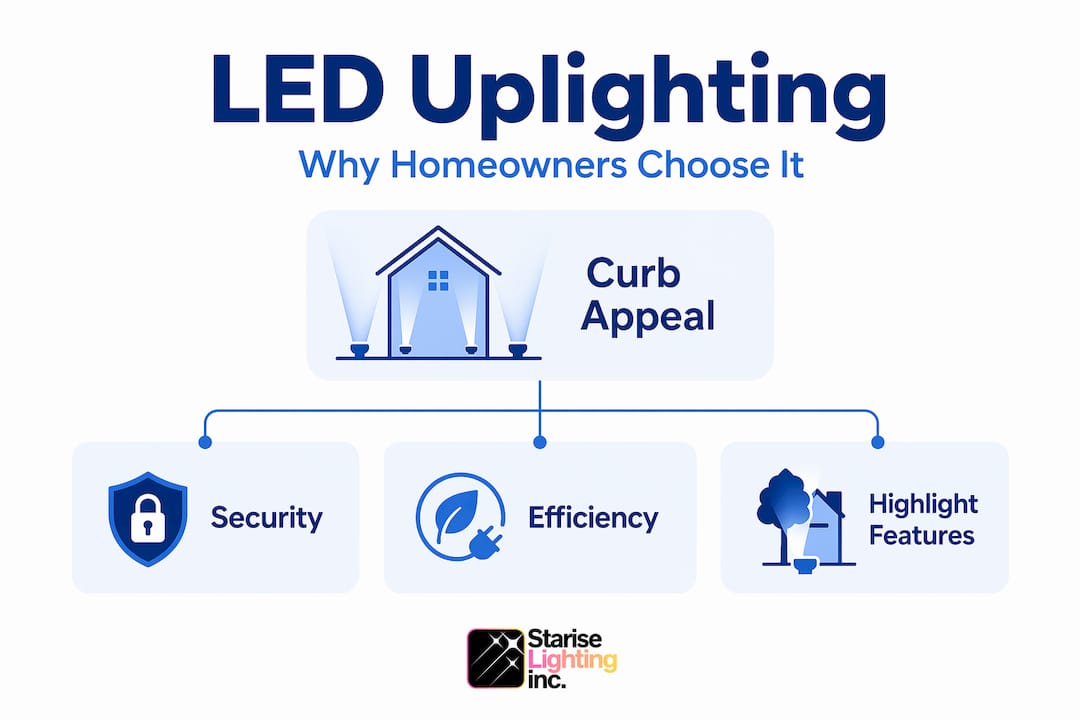
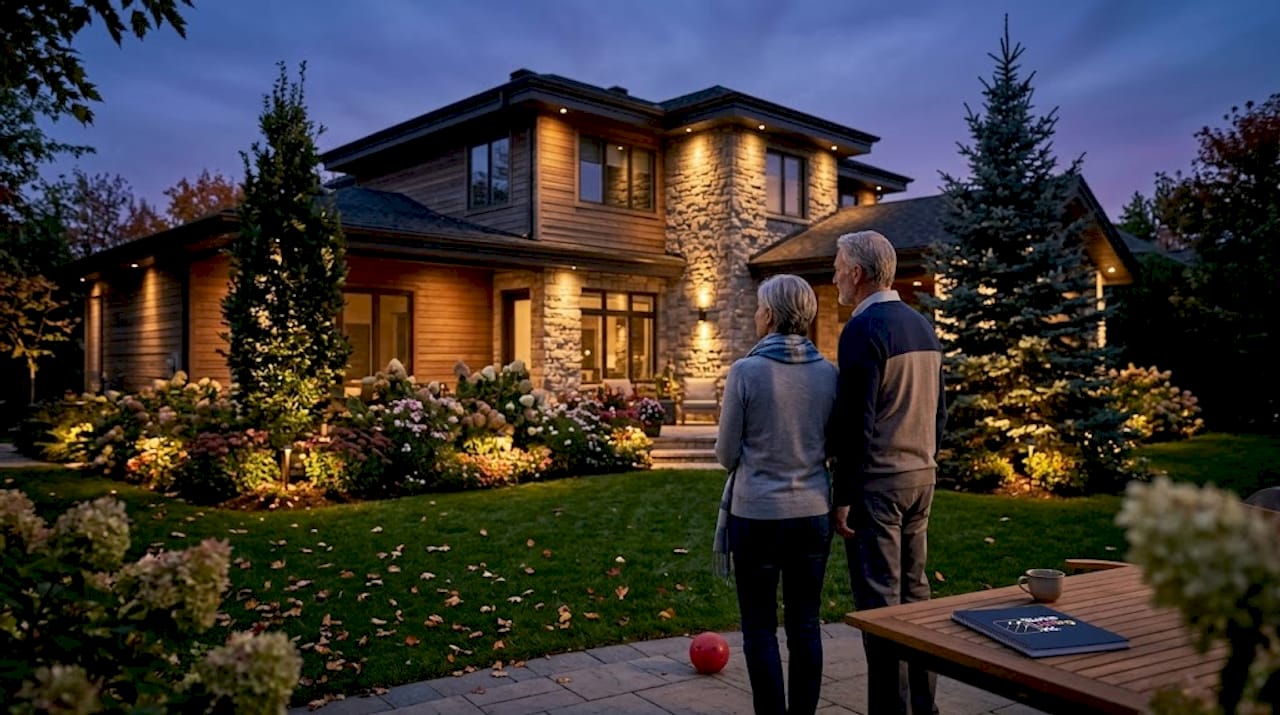
Curb appeal that works around the clock. Your home's architecture, mature trees, and landscaping are invisible assets after dark without uplighting. A well-placed uplight on a stone facade or a large spruce tree transforms your property's appearance from the street and makes it memorable. Real estate professionals consistently note that exterior lighting is one of the highest-return cosmetic improvements a homeowner can make.
Security that doesn't look like security. Harsh flood lights scream "I'm worried about intruders." Thoughtful uplighting achieves the same deterrent effect by eliminating the dark corners and shadowed entryways that make a property feel accessible to someone who shouldn't be there. Effective uplighting enhances both curb appeal and safety when designed as part of a layered outdoor lighting strategy rather than simply pointing bright lights at a problem.
Real energy savings. Lighting accounts for roughly 15% of average home electricity use, and switching to LEDs can save households approximately $225 annually. For outdoor lighting that often runs on timers or throughout the night, that gap compounds quickly. ENERGY STAR-certified fixtures go further by adding automatic daylight shutoff and motion sensors, cutting unnecessary runtime without any effort on your part.
The key benefits worth knowing before you buy:
- Dramatically improved kerb appeal by highlighting architectural features and mature landscaping
- Reduced electricity costs due to LED efficiency versus halogen or metal halide alternatives
- Enhanced home security through strategic elimination of dark zones around entry points
- Lifespans of 25,000 to 50,000 hours reducing maintenance frequency and replacement costs
- Eligibility for energy efficiency rebates in many Canadian municipalities
- Long-term cost of ownership that drops significantly when fixtures have field-replaceable drivers and LED modules
The combination of lower operating costs and reduced replacement frequency makes LED uplighting one of the few home improvements that genuinely pays back over time rather than simply looking good on a listing.
Choosing and installing outdoor LED uplights
Picking the wrong fixture for your outdoor conditions is the fastest way to waste money on uplighting. Calgary winters, coastal humidity, and summer downpours all test outdoor fixtures hard, and not every product marketed as "outdoor rated" is built for that reality.
IP rating is your baseline filter. Fixtures rated IP65 or higher provide dust-tight protection and resistance against low-pressure water jets, which covers the vast majority of residential outdoor situations. What IP65 does not cover is submersion or sustained high-pressure water exposure. For locations prone to standing water or regular power washing, IP66 or IP67 becomes the appropriate minimum. This distinction matters because misreading an IP rating is the most common cause of early fixture failure among DIY installations.
There's another layer most homeowners never hear about. Mistakes in wiring and conduit installation can compromise the IP rating entirely, allowing moisture ingress through improperly sealed entry points even when the fixture itself is rated correctly. Professional installation isn't always required, but attention to conduit sealing and junction box quality is non-negotiable if you want the IP rating to mean anything.
Additional considerations when choosing fixtures:
- Colour temperature: 2700K to 3000K produces warm, welcoming tones ideal for wood, brick, and most landscaping. 4000K and above creates a crisper look better suited to modern concrete or metal architecture.
- Colour Rendering Index (CRI): Choose a CRI of 80 or higher to accurately represent the true colour of stone, foliage, and painted surfaces after dark.
- Thermal management: Improper heat dissipation is the main cause of premature LED failure. Quality fixtures use aluminium housings that draw heat away from the LED array. Cheap plastic housings trap it.
- Construction materials: Bronze-coated aluminium resists corrosion better in harsh environments, extending the usable life of the system substantially.
- Controls integration: Fixtures compatible with smart timers, motion sensors, and app-based controls give you flexibility without ongoing manual adjustments.
Pro Tip: Prioritise system efficacy, measured in lumens per watt, over raw wattage when comparing fixtures. A higher lumens-per-watt ratio means more visible light for the same electricity draw, which is the actual measure of efficiency.
LED uplighting ideas for every part of your property
Once you understand the mechanics, the creative possibilities open up quickly. Here is a practical sequence for thinking through uplighting across a typical residential property.
-
Start with your tallest trees. Mature trees lit from below create an immediate and dramatic impact visible from the street. Place two fixtures at the base of each large tree aimed at the trunk and lower canopy. This anchors the lighting design and gives the property a sense of scale after dark.
-
Highlight your home's strongest architectural feature. Most homes have one element that defines their character: a stone chimney, a gabled roofline, a decorative column, or a brick accent wall. A single well-placed uplight on that feature does more for kerb appeal than a dozen randomly placed fixtures.
-
Wash garden walls and fences. Grazing light across a rough stone or board-and-batten fence reveals texture that flat overhead lighting destroys. Position the fixture close to the surface so the beam travels almost parallel to it, creating shadow and depth across the material.
-
Light pathways indirectly. Rather than pointing uplights directly at a path, angle them at adjacent shrubs or garden borders so the path benefits from the reflected and spilled light. This creates a softer, more layered effect than harsh pathway bollards.
-
Use colour intentionally for seasonal interest. Many modern LED uplighting systems, including permanent installations, allow colour adjustment through an app. Swapping from warm white to a seasonal colour for holidays or events is one of the more underrated uses of uplighting at the residential level.
-
Layer uplighting with other fixture types. Combining different lighting types such as soffit-mounted downlights, step lights, and uplights creates the layered effect that makes professionally designed outdoor spaces feel complete rather than simply bright.
For larger properties or complex architecture, a professional consultation makes a meaningful difference. A trained lighting designer can identify which angles will create compelling shadow play and which will result in flat or glaring results. For smaller projects, a thoughtful DIY approach using the principles above produces solid results.
My perspective on what LED uplighting can do for your home
I've seen a lot of homeowners approach uplighting the same way they approach replacing a light bulb: pick something that fits the socket and move on. That mindset is exactly why so many outdoor lighting projects end up looking mediocre or failing within a few seasons.
What I've learned is that LED uplighting is fundamentally a design decision, not just a product purchase. Where you place a fixture matters more than how bright it is. A single uplight placed thoughtfully on your home's dominant feature does more for its appearance than ten fixtures scattered without intention.
The security benefit is also consistently underestimated. I've spoken with homeowners who installed uplighting purely for aesthetics and later realised it had eliminated the dark entry points they'd been quietly worried about for years. That dual return on a single investment is rare.
The detail most people miss entirely is thermal management. A beautiful fixture with a poor-quality driver or inadequate heat dissipation will fail in two to three years, often just outside a manufacturer's warranty window. Spending a bit more on a fixture with quality internal components and proper aluminium construction pays back through a lifespan that's two to three times longer.
My honest take: if you're going to invest in outdoor lighting for your home, LED uplighting designed as part of a layered lighting strategy is where the real value lives. Not as an afterthought, but as the centrepiece of how your home presents itself after dark.
— Starise
Permanent LED uplighting built for Canadian homes
If you've worked through what LED uplighting is and you're ready to see what a professionally designed permanent system looks like for a Calgary or Edmonton home, Co-starise specialises in exactly this.
Co-starise installs permanent outdoor LED lighting systems engineered to perform through Canadian winters without annual takedowns or constant maintenance. Their Gen 2 24V LED technology provides rich colour, precise control through a dedicated app, and IP65-rated weatherproof construction. Every installation is designed around your home's specific architecture and landscaping, not a generic template. For homeowners in Edmonton looking for a permanent solution, Co-starise's Edmonton lighting service covers everything from initial design to final installation with fixtures built to last for decades.
FAQ
What is LED uplighting used for?
LED uplighting is used to illuminate vertical surfaces, trees, walls, and architectural features from below, creating depth and visual interest that overhead lighting cannot achieve. Beyond aesthetics, it serves residential security by eliminating dark zones around entry points.
How energy-efficient is LED uplighting?
Modern LED uplights consume 50–75% less energy than traditional halogen or discharge lighting and last 25,000 to 50,000 hours, making them significantly more efficient over their full lifespan.
What IP rating do I need for outdoor LED uplighting?
For most residential outdoor applications, an IP65 rating is the minimum standard, providing protection against dust and low-pressure water. Locations subject to standing water or power washing require IP66 or IP67.
Can LED uplighting work for events as well as permanent installations?
Yes. LED uplighting for events typically uses portable, battery-powered fixtures placed temporarily around a venue, while residential installations use permanently wired fixtures for nightly use. The uplighting technique is the same; the hardware and mounting differ.
Is LED uplighting difficult to install yourself?
Basic DIY installation is achievable for low-voltage systems, but proper conduit sealing and junction box quality are critical. Poor wiring technique can compromise a fixture's IP rating and allow moisture ingress even when the fixture itself is correctly rated.