
TL;DR:
- Effective Calgary outdoor lighting enhances home security and curb appeal through strategic placement and layered design. Proper system selection, careful installation, and regular maintenance ensure long-lasting, visually appealing results that provide safety and enjoyment year-round. Professional expertise and customized solutions maximize the property's aesthetic and functional benefits, making lighting a valuable investment.
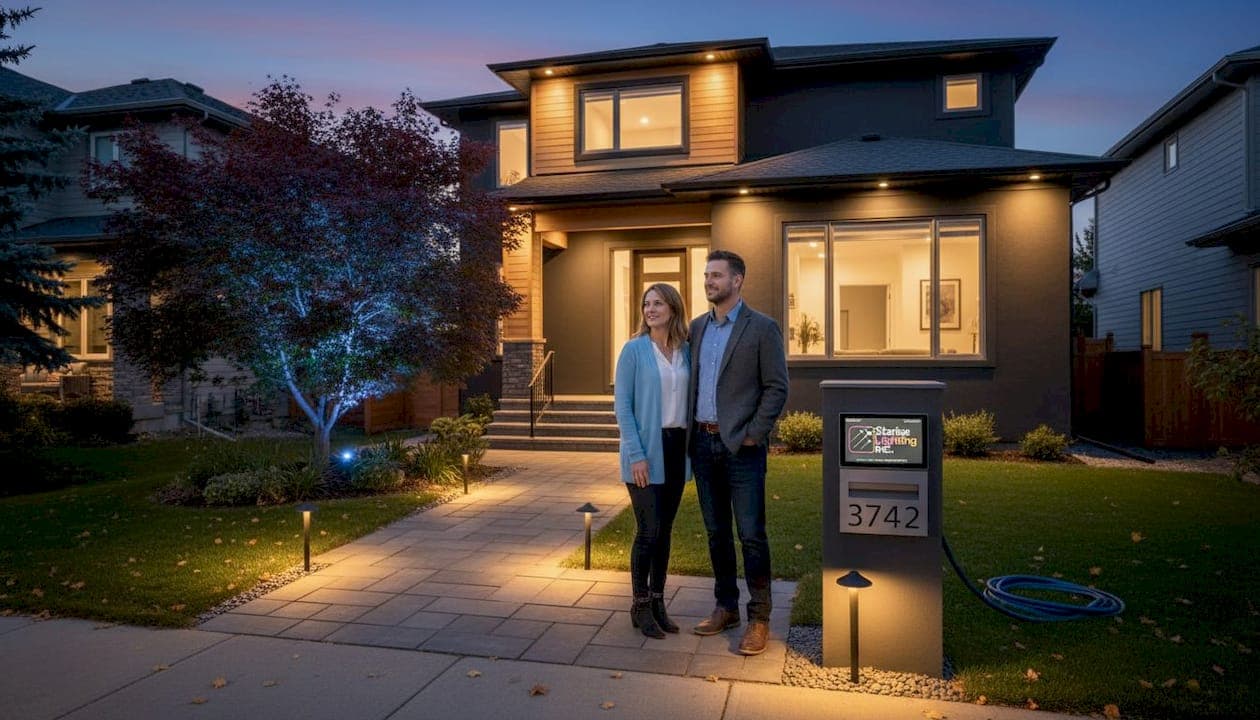
There are two types of homes on any Calgary street after dark: the ones that disappear into the shadows, and the ones you can't stop looking at. The difference rarely comes down to the size of the house or the quality of the landscaping. It almost always comes down to lighting. A well-lit home signals pride, security, and attention to detail to every neighbour, guest, and potential buyer who passes by. Yet most homeowners either skip outdoor lighting entirely or make costly mistakes that leave them with glare-filled driveways and frustrating dark spots. This guide walks you through everything from choosing the right system to installation, maintenance, and design, so you can avoid those pitfalls and get results that genuinely transform your property.
Table of Contents
- What you need: Tools, systems, and design essentials
- Step-by-step: Designing the perfect lighting layout
- Installation process: Bringing your design to life
- Troubleshooting and maintaining your lighting system
- Why great lighting is more than just decoration
- Get professional results with local expertise
- Frequently asked questions
Key Takeaways
| Point | Details |
|---|---|
| Strategic placement matters | Placing lights well is more important than just using brighter bulbs. |
| Layered lighting is best | Combine different types of lighting for both beauty and security. |
| Avoid common mistakes | Glare and patchy coverage lower safety and curb appeal. |
| Regular maintenance pays off | A yearly checkup extends the lifespan and effect of your system. |
| Pro help brings lasting results | Qualified installers create designs that boost value and satisfaction. |
What you need: Tools, systems, and design essentials
Before you purchase a single fixture or run a single wire, it pays to understand what kind of system will actually serve your home over the long term. Calgary's climate is not forgiving. Temperatures swing dramatically between summer and winter, and any hardware you install outside must handle freeze-thaw cycles, heavy snow loads, and intense UV exposure without degrading quickly.
Lighting system types worth knowing:
- LED systems: The gold standard for energy efficiency and longevity. High-quality LEDs last tens of thousands of hours and produce consistent colour throughout their lifespan. Look for fixtures with an IP65 or higher weatherproof rating for outdoor use.
- Low-voltage systems: These run on 12V or 24V power rather than mains voltage, making them safer to work with and far more energy-efficient. Modern Gen 2 24V systems offer superior brightness and colour accuracy compared to older 12V designs.
- Smart app-controlled systems: These allow you to schedule lighting, change colours, and adjust brightness from your phone. For Calgary homeowners who want to run festive colours in December and subtle white in the summer, smart control is a genuine game-changer.
- Solar-accent fixtures: Useful for low-stakes accent areas but not reliable as primary lighting in Calgary, where overcast days and long winters limit solar recharge.
Essential tools for the job:
A voltage tester, wire stripper, waterproof wire connectors, a drill with masonry bits, a cable staple gun, and a reliable spirit level are the basics. If you are working with a transformer-based low-voltage system, you will also need a tape measure to calculate total cable runs and fixture loads.
One of the most important design principles that gets overlooked is the relationship between brightness and placement. Avoiding glare and dark spots is fundamental to achieving both security and visual comfort. Adding more wattage is not a substitute for strategic positioning, and overshooting brightness in one zone often makes adjacent dark areas look worse by contrast.
Pro Tip: Before purchasing new fixtures, check whether your existing transformer or electrical infrastructure can support the added load. Overloading a transformer is a common and avoidable mistake that leads to flickering, premature burnout, and warranty issues.
Our light placement guide offers Calgary-specific advice on matching fixture types to zones like driveways, entries, and garden beds, so you can plan before you buy.
| Feature | Low-voltage LED | Mains-voltage halogen | Smart LED system |
|---|---|---|---|
| Energy use | Very low | High | Very low |
| Calgary weather suitability | Excellent | Moderate | Excellent |
| App control | Optional | No | Yes |
| Installation complexity | Moderate | Higher (licensed electrician) | Moderate |
| Colour flexibility | Limited to model | None | Full spectrum |
Step-by-step: Designing the perfect lighting layout
With the right materials assembled, the next step is a thoughtful lighting design for both beauty and effectiveness. Good layout design is what separates a lighting job that looks professional from one that looks like an afterthought.

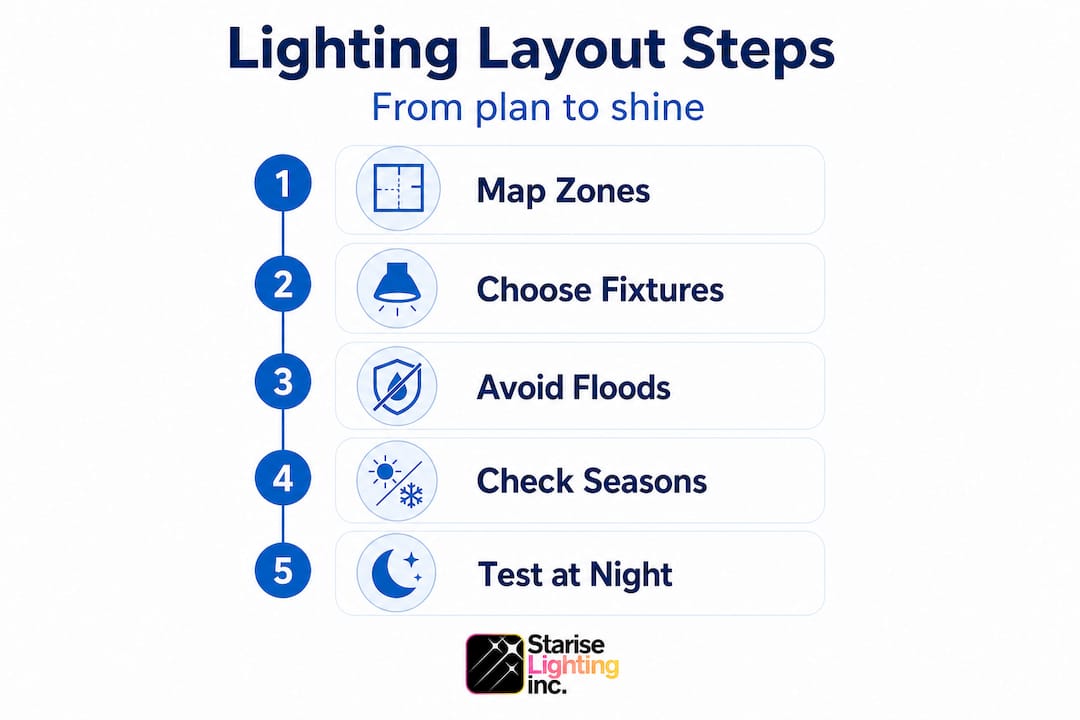
Step 1: Map your zones
Walk the full perimeter of your home and identify every zone that matters: the driveway approach, both sides of the walkway leading to your entry, the front door itself, any garden beds or mature trees you want to highlight, side gates, and any patio or deck areas at the rear. Sketch a rough overhead map, even on paper. It helps enormously when you start calculating cable runs and transformer loads.
Step 2: Apply the three-layer approach
Effective outdoor lighting uses three distinct layers working together.
- Ambient lighting provides the overall glow that makes a space feel welcoming and safe. Think softlit path fixtures, low bollards along a walkway, or a warm wash of light across the front façade.
- Task lighting is brighter and directional, used wherever people need to see clearly. Steps, the door keypad, the garage apron, and dark gate latches all benefit from focused task light.
- Accent lighting is where personality comes in. Uplighting a feature tree, grazing the texture of a stone wall, or framing your roofline with subtle colour all fall under accent lighting.
Step 3: Avoid the direct-flood mistake
Many homeowners assume that pointing a bright floodlight at the house creates presence and security. In practice, poor placement creates glare and dark zones that are uncomfortable for residents and no deterrent to intruders who simply avoid the lit areas. Aim for gentle, overlapping coverage rather than a single harsh source.
Step 4: Plan for seasonal changes
Calgary homes look very different in July versus January. Snow reflects light dramatically, which means fixtures positioned for summer use may create blinding reflections in winter. Adjustable fixtures and dimmable systems let you fine-tune output season by season.
Step 5: Evaluate your plan in the dark
"If security and visual comfort matter, careful placement always outperforms sheer brightness. The goal is to see everything without feeling blinded by anything."
This step is skipped constantly and it costs people real money. Walk your property at night before finalising anything. Note exactly where shadows pool, where the eye is drawn uncomfortably to a bright source, and where transitions between lit and unlit areas feel abrupt.
Pro Tip: Use a flashlight to simulate where fixtures would cast light before committing to drilling holes or buying hardware. It takes twenty minutes and can save you from a layout you will regret for years.
Our resources on security lighting tips and permanent LED lighting go deeper on how design choices affect both safety and long-term property value.
Installation process: Bringing your design to life
A solid plan is only as good as its execution, and here is what to expect as you move into installation. The physical installation of permanent outdoor lighting involves more decisions than most homeowners anticipate.
Typical installation steps:
- Shut off power to any circuits you are working near and confirm with a voltage tester before touching anything.
- Mount your transformer in a weatherproof location near your exterior electrical outlet, ideally protected from direct rain exposure.
- Run your cable routes according to your layout plan. For buried cable, the standard recommendation is at least 15 centimetres deep to protect against accidental damage.
- Connect fixtures to the cable, ensuring all connections are made with waterproof wire connectors rated for outdoor use.
- Set your transformer timer or app schedule before switching on for the first time.
- Do a full walkthrough at night to confirm coverage and adjust any fixtures that are creating glare or missing their intended target.
Safety non-negotiables:
Never splice outdoor wiring inside a wall cavity without proper weatherproof junction boxes. Always confirm that fixtures are rated for the climate conditions they will face. Do not exceed the wattage rating of your transformer, as this is a leading cause of early system failure.
Strategic lighting directly impacts both the comfort of your household and the perceived security of your property, which is why the installation phase deserves genuine care rather than rushing.
DIY vs. professional installation:
| Factor | DIY | Professional |
|---|---|---|
| Upfront cost | Lower | Higher |
| Risk of errors | Moderate to high | Low |
| Time required | Several days | One visit |
| Warranty protection | May be voided | Typically preserved |
| Outcome quality | Variable | Consistent |
| Ongoing support | Self-managed | Included |
For complex permanent systems with roofline integration, app control, or multi-zone transformers, professional installation is genuinely worth every dollar. The design phase benefits from professional eyes too. Our lighting consultation advice explains what to expect from a professional assessment and how it sets you up for better long-term results.
Troubleshooting and maintaining your lighting system
After installation, keeping your system running at its best requires just a few consistent habits. The good news is that permanent LED systems are remarkably low-maintenance compared to traditional halogen or incandescent setups. However, no system is entirely self-managing.
Common issues to watch for:
- Bulbs going out prematurely: Usually caused by voltage fluctuations or moisture ingress at the connection point. Check transformer output and reseal any exposed connections.
- Mismatched colour temperatures: This happens most often when replacement fixtures are purchased from a different product line than the originals. Always match colour temperature (measured in Kelvin) when adding or replacing units.
- Fixtures shifting out of alignment: Ground movement from freeze-thaw cycles in Calgary can shift stake-mounted fixtures significantly over a season. Check alignment every spring.
- Dimming or flickering: Often a sign of a loose connection, an overloaded transformer, or a failing driver in a smart LED unit.
Seasonal maintenance checklist:
- Clean lens covers with a soft cloth and mild solution each spring. Dirt and mineral deposits from snow can reduce output noticeably.
- Inspect all ground-level connections for moisture ingress after the spring thaw.
- Recheck fixture alignment and re-stake any units that have shifted.
- Test your transformer's timer settings after any power outage or daylight saving change.
- Inspect cable runs for any damage from lawn care equipment, garden tools, or animal activity.
Ongoing maintenance is what preserves both the security benefits and the curb appeal you invested in from day one. Neglecting it means gradual degradation that you often do not notice until the system looks significantly worse than it once did.
Pro Tip: Keep a small inventory of spare fixtures, connectors, and cable from your original installation. When a component fails, having matching replacements on hand means same-day repairs instead of waiting on orders. Read more about protecting your investment in our guide to high-end residential lighting.
Why great lighting is more than just decoration
Here is something we have observed over years of working with Calgary homeowners: the people who view outdoor lighting as purely decorative almost always underinvest in placement and almost always regret it. The ones who treat it as a strategic tool for shaping perception, safety, and property value consistently get results they are genuinely proud of.
Lighting is the first thing someone sees when they approach your home after dark. Before they notice the landscaping, the paint colour, or the front door hardware, they register whether the home feels welcoming or uninviting. That impression is formed in seconds and it is almost entirely a function of light. This matters enormously when you are selling. Real estate professionals consistently note that properties with thoughtful exterior lighting photograph better, show better at evening viewings, and attract stronger first impressions overall.
The security dimension is equally important and often misunderstood. A home that is simply very bright in one spot is not more secure than one with well-distributed, strategic coverage. Intruders are deterred by visibility, not intensity. Proper lighting increases both perceived safety and real property value, and these two outcomes reinforce each other powerfully.
"The difference between a good and great property is often as simple as expert lighting placement. Everything else stays the same, but the home tells a completely different story."
We also see homeowners significantly underestimate the year-round joy that well-designed permanent lighting delivers. It is not just about Christmas. It is about coming home on a dark February evening and having your property greet you warmly. It is about your family feeling safe walking from the car to the door on an icy night. It is about hosting in summer and having a backyard that looks designed rather than improvised. Explore the key advantages of exterior lighting to see how this investment pays off across every season.
Get professional results with local expertise
Permanent outdoor lighting is not a weekend project you want to redo in three years. It is a lasting improvement to your home, and the value it adds, in curb appeal, security, and daily enjoyment, should last just as long. Getting the design, placement, and installation right from the start is the single most important factor in achieving that.
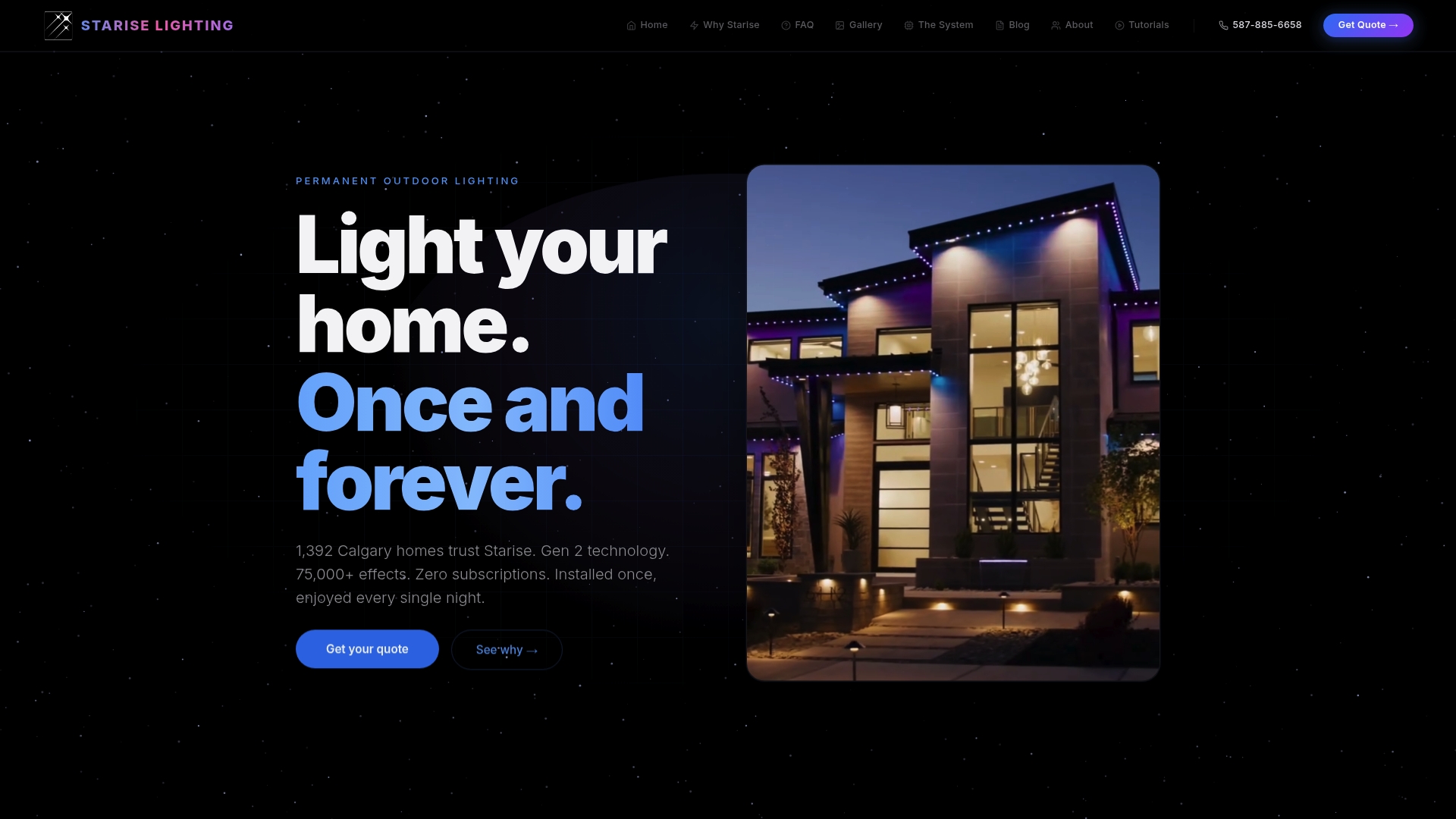
At co-starise.com, we specialise in exactly this kind of permanent, high-quality outdoor lighting for Calgary homeowners. Our Gen 2 24V LED systems are built specifically for Calgary's harsh winters, app-controlled for effortless seasonal changes, and installed by professionals who know how to eliminate glare, fill dark zones, and create genuinely stunning results. Whether you are ready to book a consultation, want to explore our system options, or would like to see a design demonstration, we make the next step easy and pressure-free. Your home deserves lighting that works every single night.
Frequently asked questions
What lighting effects increase curb appeal most effectively?
Layered lighting combining accent, ambient, and task lights placed to avoid glare offers the greatest impact. Strategic placement enhances curb appeal and visual comfort more reliably than simply increasing brightness.
How can outdoor lighting improve home security in Calgary?
Evenly distributed lighting reduces shadows and increases the visible coverage of your property, which deters unwanted activity. Proper placement prevents dark zones and boosts perceived safety far more effectively than a single bright floodlight.
Can I install permanent lighting myself or should I hire a professional?
Basic low-voltage systems are manageable for a confident DIYer, but permanent roofline or multi-zone systems benefit greatly from professional hands. Professional installation reduces errors like glare and patchy coverage that are difficult to correct after the fact.
How often do outdoor lighting systems need maintenance?
Annual checks each spring, combined with prompt replacement of worn components, keep systems running efficiently. Ongoing maintenance preserves both comfort and curb appeal over the full lifespan of the system.