
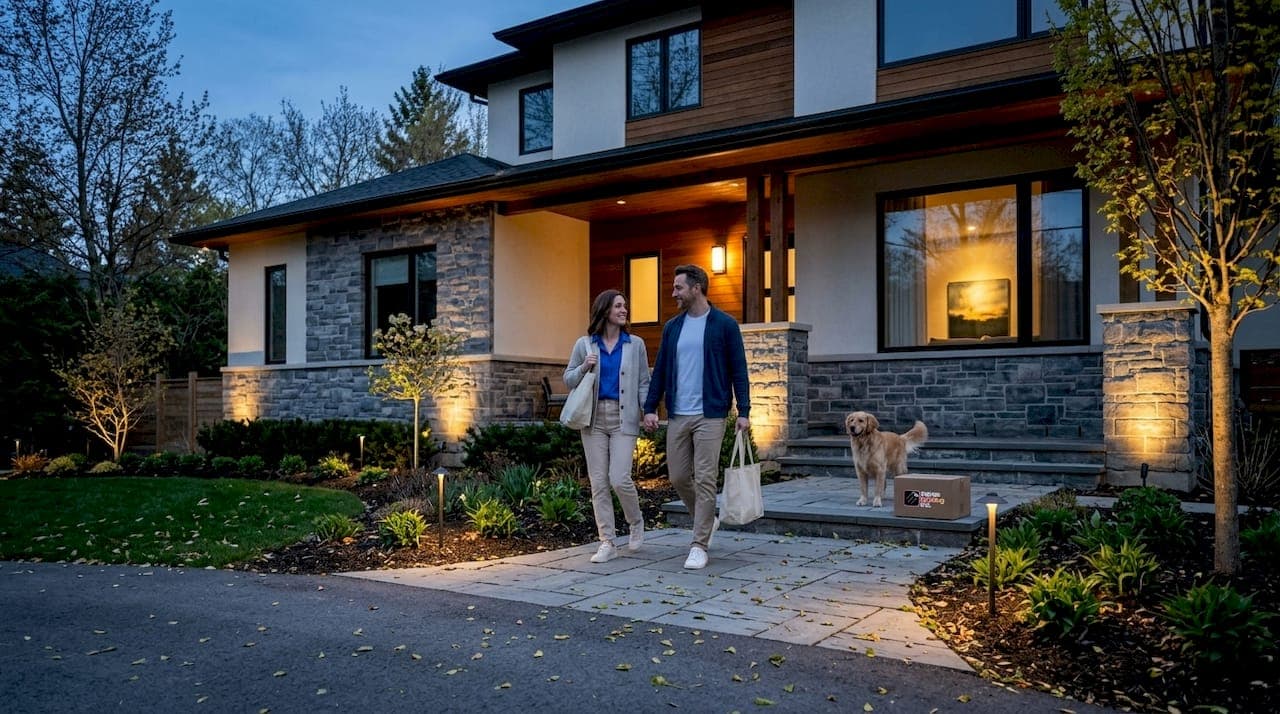
TL;DR:
- High-end outdoor lighting relies on design coherence, durable materials, performance, and standards compliance.
- Dark-sky principles, correct aiming, and verified photometric data are essential for luxury quality.
- Proper layering with smart controls and documented certifications ensures optimal performance and compliance.
Many Calgary homeowners assume that "high-end" exterior lighting simply means spending more on prettier fixtures. The truth is far more interesting. True luxury outdoor lighting is a layered system built from quality materials, smart technology, energy efficiency, and verifiable compliance with design standards. Getting this combination right transforms your home's exterior into something that genuinely stands out on the street, keeps your property safer through every season, and adds measurable value to your investment. This guide breaks down exactly what separates exceptional residential lighting from the ordinary, so you can make informed decisions before spending a dollar.
Table of Contents
- What defines high-end residential lighting?
- Dark-sky principles and lighting technology
- Control systems: Layering, timers, and smart scheduling
- Compliance and verification: The true mark of luxury
- Our take: What most homeowners miss when choosing 'high-end' lighting
- Bring high-end permanent lighting to your Calgary home
- Frequently asked questions
Key Takeaways
| Point | Details |
|---|---|
| True luxury lighting features | The best systems combine smart controls, warm light, and fully shielded fixtures for comfort and compliance. |
| Smart controls save energy | Advanced timers and zoning allow for beautiful lighting only where and when you need it, lowering costs. |
| Compliance sets the standard | Photometric data and certifications prove real high-end quality, not just stylish looks. |
| Calgary expertise matters | Local knowledge ensures your lighting is perfect for Calgary’s climate, regulations, and style needs. |
What defines high-end residential lighting?
Before we dive into the technical aspects and application, let's define what makes outdoor lighting truly high-end.
Most people walk into a lighting showroom and immediately focus on style. Does the fixture look expensive? Does it match the home's architecture? Those questions matter, but they only scratch the surface. High-end residential lighting is actually defined by four equally important pillars: design coherence, material durability, performance specifications, and standards compliance. Remove any one of these pillars, and the system no longer qualifies as truly luxury.
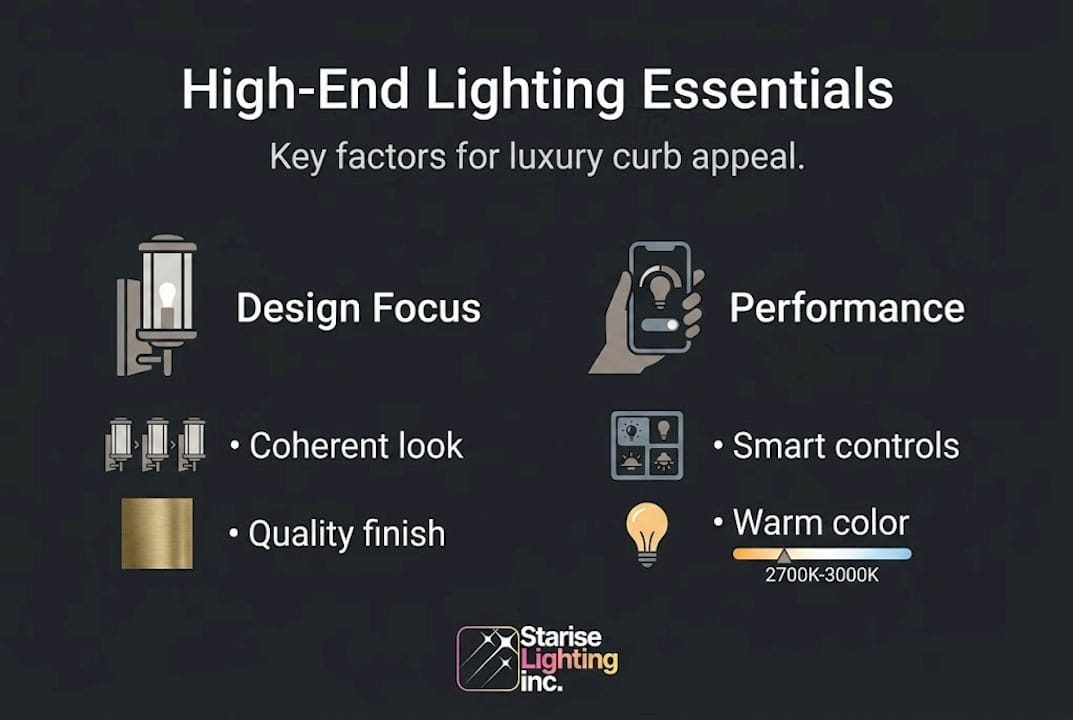
Design coherence means your lighting tells a visual story around your home's exterior. Path lights, wall-mounted fixtures, and roofline accents should feel like they belong together, guiding the eye and creating depth. If you need inspiration specific to Calgary properties, exploring Calgary exterior lighting ideas can reveal approaches that suit both modern and traditional architectural styles.
Material durability is non-negotiable in Calgary's climate. Fixtures rated for outdoor use in Canada must survive temperature swings from minus 40°C in January to over 30°C in July. Powder-coated aluminium housings, marine-grade stainless steel hardware, and optical-grade polycarbonate lenses are the materials you should expect from a premium system. Plastic housings and standard seals simply will not last.
Performance specifications cover light output, colour accuracy, and energy draw. Lumens per watt, colour rendering index (CRI), and rated lifespan in hours are the numbers that separate marketing claims from reality. The best lighting solutions for Calgary homes openly publish these figures so you can compare them objectively.
Standards compliance is where many homeowners are caught off guard. Lighting that meets dark-sky and low-glare requirements does two things simultaneously: it protects the night environment and it creates a more comfortable, flattering result for your property. According to dark-sky luminaire guidelines, dark-sky and low-glare optics are a defining element of high-end outdoor lighting quality. This is not a niche concern; it directly affects how good your home looks at night.
Key characteristics of a high-end system include:
- Fully shielded optics that direct light downward, eliminating unwanted glare
- High CRI (90+) for accurate, flattering colour rendering on landscaping and facades
- Weatherproof construction rated for IP65 or higher
- Smart controls that integrate with apps or home automation platforms
- Documented performance data from the manufacturer
- Compatibility with smart home lighting value frameworks that improve both safety and efficiency
"High-end outdoor lighting is not about intensity — it is about precision, quality of light, and proven performance."
The exterior lighting effects that genuinely impress visitors are created through thoughtful placement and quality optics, not simply by adding more brightness.

Dark-sky principles and lighting technology
Now that you know the essentials of high-end lighting, it's time to see how dark-sky principles and new technology set the standard.
Colour temperature is one of the most misunderstood specifications in residential lighting. Measured in Kelvin (K), it describes the warmth or coolness of the light source. Lower numbers (around 2700 K) produce a warm amber glow similar to incandescent bulbs. Higher numbers (5000 K and above) produce a harsh bluish white. For exterior residential applications, warm temperatures in the 2700 K to 3000 K range are the gold standard, both aesthetically and from a compliance standpoint.
The DarkSky Approved guidelines specify warm CCT (≤3000 K) and fully shielded fixtures as requirements for approved luminaires. This matters practically because warmer light is less disruptive to wildlife, less likely to create glare for your neighbours, and simply more flattering on brick, stone, and wood exteriors. It also reduces skyglow, the orange haze that obscures stars above cities.
Fully shielded fixtures are equally important. A "fully shielded" fixture means zero light is emitted above the horizontal plane. All output is directed where you actually want it: onto your driveway, garden beds, facade, or pathway. This precision creates the dramatic contrast and shadow play that makes luxury lighting look so striking in photographs and in person.
Here is a quick comparison of common exterior lighting technologies:
| Feature | Standard LED | High-end dark-sky LED | Traditional halogen |
|---|---|---|---|
| Colour temperature | 4000 K–6500 K | 2700 K–3000 K | 2700 K |
| Shielding | Often unshielded | Fully shielded | Varies |
| Energy efficiency | Moderate | High (Gen 2 24V) | Low |
| Rated lifespan | 25,000 hrs | 50,000+ hrs | 2,000 hrs |
| Smart control ready | Sometimes | Yes | Rarely |
| Dark-sky compliant | Rarely | Yes | No |
Smart lighting technology adds another dimension. Smart lighting for safety allows you to programme precise brightness levels, set colour-changing effects for seasonal occasions, and monitor your system remotely. Modern systems communicate via Wi-Fi or Bluetooth, meaning your smartphone becomes a full lighting control panel. This kind of adaptability is simply not possible with standard fixtures.
Pro Tip: If a supplier cannot provide the exact colour temperature (CCT) specification in writing, treat that as a red flag. Genuine high-end products always come with published photometric data.
The lighting effects for homes that create the most visual impact, such as colour washing across stone facades or subtle pathway illumination, depend entirely on the quality of the underlying technology. Excellent optics and precise CCT are what make those effects look polished rather than cheap.
Control systems: Layering, timers, and smart scheduling
With technology and compliance covered, let's explore how smart controls make high-end lighting truly adaptable and efficient.
If you have ever admired a home where the outdoor lighting seems to change subtly throughout the evening, that effect is the result of a layered control system. High-end lighting is not switched simply on or off. It is orchestrated. The DarkSky guidelines recognise layered control and scheduling (including timers, astronomical clocks, dimming, and zoning) as hallmarks of genuine high-end lighting design.
Here is how a properly layered exterior lighting system is structured:
- Zoning: Different areas of your property are grouped into independent zones. Your front entrance, driveway, backyard, and garden beds each operate on separate circuits, allowing you to brighten the entrance for a dinner party while keeping the backyard at a soft ambient level.
- Dimming: Rather than running at full brightness all night, high-end systems dim automatically after a set hour. This cuts energy consumption significantly and reduces light pollution during the late evening when neighbours are sleeping.
- Astronomical timers: These built-in clocks calculate the exact local sunset and sunrise times for Calgary every single day throughout the year. Your lights turn on precisely at dusk and off precisely at dawn, without any manual adjustment regardless of the season.
- Motion sensors: Integrated motion detection adds both security and efficiency. Pathways and driveways can brighten instantly when someone approaches, then return to a lower ambient level once the area is clear.
- App-based scheduling: Modern lighting control apps let you set scenes, schedules, and even colour effects directly from your phone. You can create a "holiday mode" that activates festive colours on specific dates, then revert to your standard white roofline lighting automatically.
A well-designed system following the installation workflow for Calgary homes ensures all these control layers are connected cleanly during installation, not retrofitted awkwardly after the fact.
Energy savings are measurable. Homes using smart dimming and astronomical timers typically see significant reductions in lighting-related electricity costs compared to manually controlled systems running at full power all night.
Pro Tip: Ask your installer to set your astronomical timer to dim the system to 30% brightness after midnight. You will barely notice the difference visually, but your energy bill and your neighbours will thank you.
The result of proper layering is a lighting environment that feels alive and intentional. It shifts from welcoming to secure to ambient as the evening progresses, all without you touching a switch.
Compliance and verification: The true mark of luxury
Even the smartest, best-looking lighting needs to meet standards — here is how verification separates the best from the rest.
There is a simple test to distinguish genuinely high-end lighting from expensive-looking standard products: ask for the documentation. Any reputable manufacturer producing true luxury exterior luminaires will readily supply photometric data files, spectral power distribution reports, and third-party certifications. If that paperwork does not exist or cannot be provided, the product does not belong in the high-end category, regardless of its price point.
The DLC LUNA Technical Requirements represent one of the most rigorous verification frameworks for outdoor lighting. Products meeting LUNA requirements must supply photometric and spectral data proving their light quality, efficiency, and dark-sky compatibility. This standard was developed specifically to help specifiers and homeowners identify genuinely superior products.
| Documentation type | What it proves | Why it matters |
|---|---|---|
| Photometric data file | Light distribution pattern | Confirms fixture aims light correctly |
| Spectral power distribution | Colour temperature accuracy | Verifies warm CCT compliance |
| DarkSky approval | Shielding and CCT compliance | Third-party confirmation |
| DLC LUNA certification | Overall quality benchmark | Recognised by inspectors and HOAs |
| IP rating certificate | Weatherproofing level | Critical for Calgary winters |
For homeowners in communities with Homeowners Associations (HOAs) or subject to City of Calgary outdoor lighting bylaws, this documentation is not optional. Inspectors and HOA boards increasingly request proof of compliance before approving permanent exterior lighting installations. Having certified products from the start avoids costly remediation later.
Key questions to ask before you upgrade your exterior lighting:
- Can the supplier provide the full photometric data file for every fixture?
- Is the system DarkSky approved or LUNA certified?
- What is the published IP rating, and is it certified rather than self-declared?
- Does the product carry a Canadian Standards Association (CSA) or UL listing for wet locations?
Using our home exterior lighting checklist during the planning stage helps you track these requirements systematically so nothing falls through the cracks.
Certification is not bureaucracy. It is the clearest signal that a product has been independently tested and proven to perform as advertised. For a permanent installation that will be part of your home for many years, that evidence is worth far more than a polished sales brochure.
Our take: What most homeowners miss when choosing 'high-end' lighting
After working with Calgary homeowners across dozens of neighbourhoods, we have noticed a consistent pattern: most people choose lighting based on how it looks in a showroom photo, then feel disappointed when the installed result does not quite match their expectations. The gap is almost always traceable to the same overlooked factors, specifically documentation, dark-sky compliance, and aiming strategy.
A fixture can be beautiful and still fail to perform if it is not aimed correctly, not properly shielded, or not paired with the right control system. We have seen premium-priced products installed without photometric data or aiming guidelines, and the result looks no better than a standard hardware store kit. Real luxury is verifiable through photometrics and aiming strategies, not assumed from the price tag.
Our advice: before committing to any permanent exterior lighting installation, request the output files, review the installation benchmarks for luxury lighting, and confirm third-party certifications. Ask specifically about dark-sky compliance, CCT specifications, and IP ratings. A reputable installer welcomes these questions. One who deflects them is a warning sign you should not ignore.
Bring high-end permanent lighting to your Calgary home
If you want lighting that looks as good as it performs, here is how we can help:
At Co-Starise, we specialise in permanent exterior lighting systems designed specifically for Calgary properties. Every system we install uses Gen 2 24V LED technology that meets dark-sky compliance standards, offers full app-based control, and is built to withstand decades of Prairie weather.
Our permanent lighting system is engineered for homeowners who want a single installation that delivers year-round curb appeal, genuine security enhancement, and the flexibility to customise colour and effects through an intuitive app. If you are ready to explore what truly high-end permanent lights in Calgary look like on your property, contact us today for a complimentary custom consultation. We bring the documentation, the expertise, and the results.
Frequently asked questions
What makes residential lighting 'high-end'?
High-end lighting combines quality materials, layered smart controls, and verifiable compliance with recognised standards — it is far more than just attractive fixtures or a high price point.
Is high-end lighting worth it for security and curb appeal?
Yes, because it delivers reliable all-weather operation, improves property value, deters intruders through smart motion-activated zones, and creates a polished exterior appearance that standard lighting simply cannot replicate.
Why does colour temperature matter in luxury outdoor lighting?
Warm light at ≤3000 K is gentler on human eyes and local wildlife, more flattering on home exteriors, and a specific requirement for dark-sky compliance — making it both an aesthetic and a regulatory consideration.
How can I tell if a lighting system is truly high-end?
Ask for photometric data files, spectral reports, and third-party certifications; photometric and spectral data alongside DarkSky or DLC LUNA approvals are the clearest proof that a product performs as advertised.