
TL;DR:
- Modern outdoor lighting in Calgary is permanent LED systems designed for year-round use.
- These systems enhance curb appeal, security, and energy efficiency, with a long lifespan.
- Proper weatherproof ratings and professional installation are essential due to Calgary's harsh climate.
Most Calgary homeowners think of outdoor lighting in two categories: the string lights that go up in November and come down in January, or the motion-sensor floodlight bolted above the garage. Both serve a purpose, but neither comes close to what modern permanent outdoor illumination can do for your home. This guide walks you through what these systems actually are, how they work in Calgary's demanding climate, what they cost, and how to choose the right approach for your property. Whether you're motivated by curb appeal, security, or energy savings, you'll find everything you need to make a confident decision.
Table of Contents
- What is outdoor home illumination?
- How permanent outdoor lighting systems work
- Why choose permanent outdoor lighting: value and ROI
- Critical considerations: installation, climate, and safety
- Tailoring your outdoor illumination for maximum impact
- The real game-changer: why permanent outdoor illumination isn't just a trend
- Ready to transform your Calgary home?
- Frequently asked questions
Key Takeaways
| Point | Details |
|---|---|
| Lasting value | Permanent outdoor home illumination boosts curb appeal, safety, and property value year-round. |
| Cost efficiency | LED systems save on energy and maintenance, with break-even often within 3–7 years. |
| Weather resilience | Choose IP67/IP68 and proper installation for reliable performance in Calgary's climate. |
| Smart control | Modern systems offer app controls for scheduling, colours, and tailored effects. |
| Expert advice matters | Professional installation ensures code compliance and maximizes the benefits of outdoor illumination. |
What is outdoor home illumination?
Outdoor home illumination has moved well beyond the seasonal clip-on bulb. In 2026, it refers to permanent LED lighting systems installed directly onto your home's exterior, typically mounted inside custom aluminium tracks along the soffits. These systems are designed to stay in place year-round, operating every night without you climbing a ladder or untangling a single wire.
The core difference from traditional lighting is permanence and precision. A typical setup includes low-profile LED pucks or strip lights recessed into soffit-mounted tracks, a low-voltage transformer, and a smart controller. You manage everything from your phone, choosing colours, setting schedules, and switching between effects for different seasons or occasions.
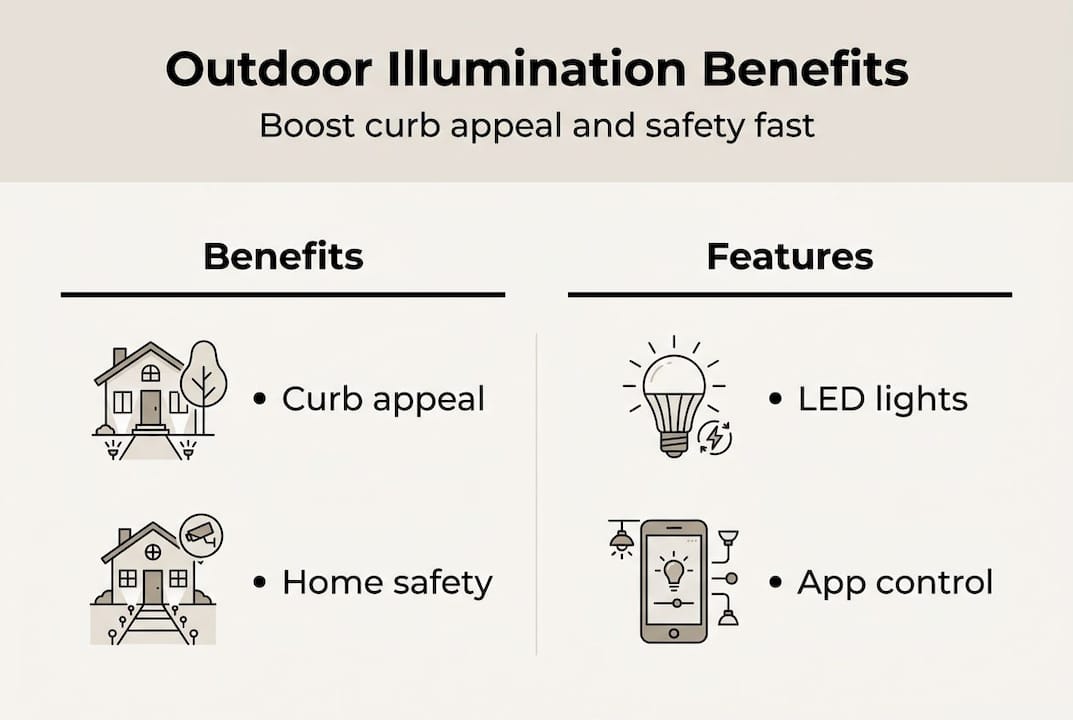
The appeal is growing fast among Calgary homeowners, and it's easy to see why. Curb appeal with outdoor LED lighting is immediate and dramatic, especially in winter when natural light disappears early. Security improves because your home is consistently lit rather than relying on motion triggers that leave gaps. And energy costs stay low because LEDs consume a fraction of what older halogen or incandescent fixtures use.
According to a Permanent Lighting ROI Breakdown, outdoor home illumination refers to permanent LED lighting systems installed on residential exteriors, particularly soffit-mounted tracks with low-profile LED pucks or strips for year-round use, enhancing curb appeal, security, and energy efficiency.
Here's what a standard permanent system includes:
- Soffit-mounted aluminium tracks colour-matched to your home's exterior
- RGBW or RGBIC LED pucks capable of millions of colour combinations
- Low-voltage transformer (12V or 24V) for safe, efficient power delivery
- Smart app control for scheduling, colour selection, and lighting effects
- Weatherproof housing rated for Calgary's extreme cold and precipitation
The advantages of exterior lighting go beyond aesthetics. Homes with well-lit exteriors are statistically less likely to be targeted by opportunistic crime, and the consistent glow adds perceived value when it comes time to sell.
How permanent outdoor lighting systems work
Understanding the mechanics helps you ask the right questions before you invest. A permanent outdoor lighting system is made up of several components that work together seamlessly once installed.
The foundation is the track system. Custom aluminium tracks are cut and colour-matched to your soffits, then fastened directly to the fascia or soffit board. Inside these tracks sit the LED pucks or strips, spaced typically 8 to 20 centimetres apart depending on the desired light density. Tighter spacing means richer colour saturation and fewer dark spots along your roofline.
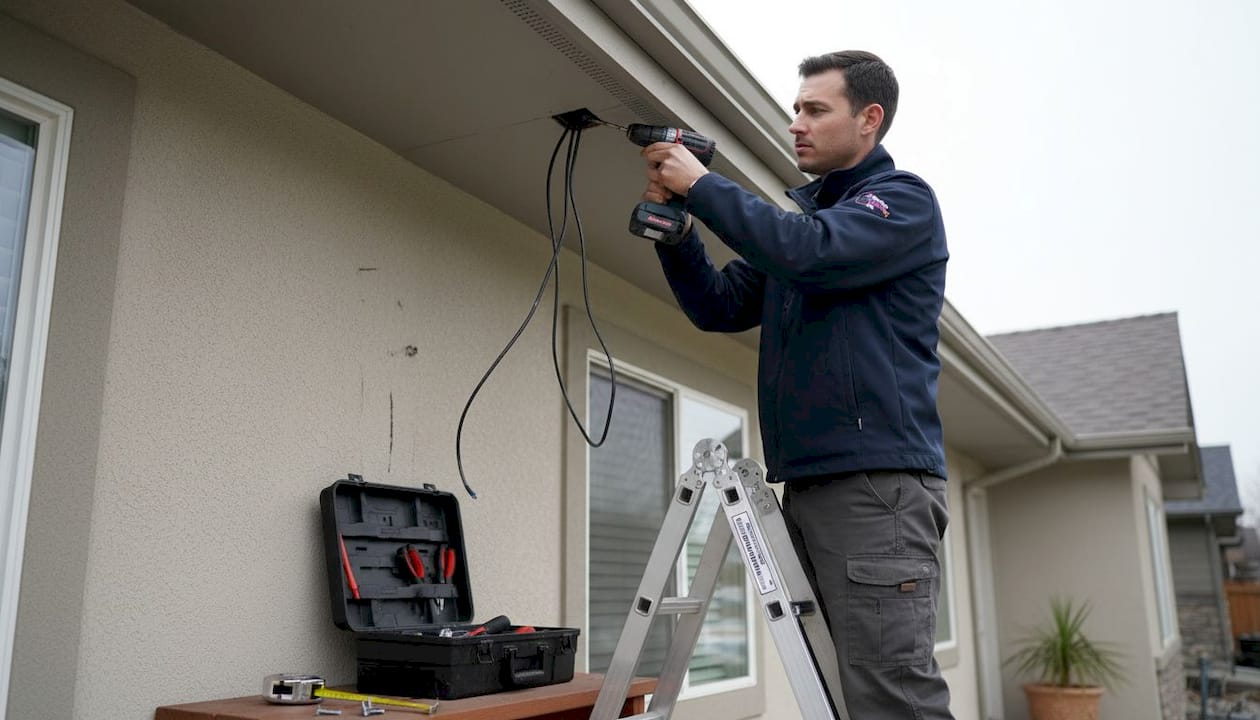
As detailed in the Best Permanent Lighting Calgary guide, mechanics involve custom aluminium tracks colour-matched to soffits, housing RGBW or RGBIC LEDs spaced 8 to 20cm apart, powered by low-voltage (12V/24V) transformers, app-controlled for colours, schedules, and effects.
| Feature | Standard system | Premium system |
|---|---|---|
| LED type | RGBW | RGBIC (individual control) |
| Voltage | 12V | 24V |
| Puck spacing | 20cm | 8 to 12cm |
| App control | Basic scheduling | Full effects and scenes |
| IP rating | IP65 | IP67 to IP68 |
| Warranty | 2 to 3 years | 5+ years |
For Calgary specifically, weatherproofing is non-negotiable. Systems must carry at least an IP67 rating and be tested to operate at temperatures as low as minus 40 degrees Celsius. Anything less and you risk LED failure mid-winter, which is exactly when you want your lights working most.
Pro Tip: If you're comparing quotes, always ask for the IP rating and operating temperature range in writing. A system that fails in January is no bargain regardless of the upfront price.
Control is where these systems genuinely shine. Most quality installations connect to a dedicated app that lets you set daily schedules, choose from preset holiday themes, or create custom colour combinations. Some systems allow individual puck control, meaning you can run animations and chasing effects across your entire roofline. For a deeper look at the installation process, the permanent light installation guide covers what to expect from start to finish. You can also review a thorough installation electrical guide for the technical side of planning your setup.
Why choose permanent outdoor lighting: value and ROI
Is permanent outdoor lighting worth the investment compared to renting a professional holiday light service or buying your own string lights? The numbers tell a clear story.
Professional temporary lighting services in Calgary typically run between $630 and $1,080 per year. Over five years, that's up to $5,400 spent with nothing to show for it at the end. A permanent system has a higher upfront cost, but once installed, your ongoing expenses drop dramatically. Electricity runs roughly $5 to $15 per month, and maintenance is minimal when the system is properly rated and installed.
Here's a side-by-side look:
| Cost factor | Permanent system | Professional temporary |
|---|---|---|
| Upfront cost | $2,500 to $6,000+ | $0 |
| Annual operating cost | $60 to $180 | $630 to $1,080 |
| Maintenance | Minimal | Included in service |
| Break-even point | Year 5 to 7 | Ongoing annual cost |
| Lifespan | 15+ years | N/A (rented annually) |
"Permanent systems ROI in 3 to 7 years versus professional temporary options costing $630 to $1,080 per year. Electricity runs just $5 to $15 per month, with break-even typically reached by year seven." Permanent Lighting ROI Breakdown
The value goes beyond the spreadsheet. Permanent lighting adds to your home's perceived value, operates 365 nights a year rather than just during the holiday season, and eliminates the annual hassle of installation and removal. For a detailed permanent vs traditional lighting comparison, the numbers strongly favour permanent systems for homeowners planning to stay three or more years.
Key financial benefits at a glance:
- No annual rental fees once the system is installed
- Lower electricity bills compared to incandescent or halogen alternatives
- Increased home resale appeal with a modern, well-lit exterior
- No labour costs for seasonal installation and removal
- Long-term warranty protection with quality systems
For a full 10-year ROI breakdown, the case for permanent outdoor illumination becomes even more compelling when you factor in rising service costs year over year.
Critical considerations: installation, climate, and safety
Appreciating outdoor illumination's value means tackling climate realities and installation nuances that can make or break your investment.
Calgary's winters are genuinely harsh. Temperatures regularly drop below minus 30 degrees Celsius, and freeze-thaw cycles put serious stress on any outdoor fixture. This is why upgrading exterior lighting without first checking the IP rating and cold-weather performance specs is a costly mistake. Systems rated IP67 or IP68 are sealed against dust and water immersion, making them the minimum standard for this climate.
As noted in this DIY Outdoor Lighting reference, Calgary winters require IP67 or higher and a minus 40 degree Celsius rating. Complex rooflines increase installation cost, and HOA or permit requirements apply for line-voltage systems. Poor placement causes glare and dark spots, and low-voltage is the safer choice for DIY projects.
Common pitfalls to avoid:
- Skipping permits for line-voltage installations, which can void insurance
- Ignoring HOA rules that restrict certain colours or lighting styles
- Poor puck placement that creates uneven light or glare toward windows
- Choosing budget fixtures without verified cold-weather ratings
- DIY line-voltage work without a licensed electrician
Pro Tip: Before purchasing any system, check with your municipality and HOA about permit requirements. Some Calgary communities have specific rules about exterior lighting colours, particularly for properties near busy roads or natural areas.
For improving home safety with outdoor lighting, GFCI (ground fault circuit interrupter) protection is essential for any exterior outlet. Low-voltage systems are generally safer for homeowners who want to handle portions of the install themselves. Avoid the outdoor lighting mistakes that professionals see repeatedly: lights aimed directly at entryways, fixtures mounted too low for snow clearance, and transformers installed without weatherproof enclosures.
Tailoring your outdoor illumination for maximum impact
Armed with expert advice, you can now actively plan and create a system tailored to your property's needs and preferences.
Choosing the right outdoor LED systems comes down to layering your lighting with intention. According to DIY Outdoor Lighting best practices, layering lighting across path, accent, and security zones delivers optimal curb appeal, security, and efficiency. Prioritise IP68, 24V systems, and tight puck spacing for the best longevity.
Follow these steps when planning your system:
- Map your roofline and identify soffit areas, entry points, and landscaping features worth highlighting
- Define your goals (security, aesthetics, or both) before selecting LED specs
- Choose your control preference (app-only, voice, or timer-based scheduling)
- Request multiple quotes and compare IP ratings, warranties, and puck spacing
- Ask about enhancing curb appeal and security with layered placement strategies
For added perimeter coverage, some homeowners supplement soffit lighting with solar security lights at ground level for a complete exterior lighting plan.
The real game-changer: why permanent outdoor illumination isn't just a trend
Stepping back from the technical details, here's what years of experience and hundreds of installs have taught our team: most homeowners underestimate how much a permanently lit exterior changes their relationship with their home.
It's not just about looking good for the neighbours. It's about coming home to a property that feels safe and welcoming every single night, not just during the holidays. The shift happening right now in Calgary is driven by three things: rising awareness of personal safety, a growing appetite for smart home technology, and the realisation that seasonal lighting is genuinely inconvenient.
What most DIY guides miss is the hidden cost of doing it halfway. A budget system that fails in February doesn't just leave you in the dark. It leaves you with a repair bill, a ladder in the snow, and the nagging feeling that you should have done it properly the first time.
Expert consensus is clear: permanent systems outperform temporary options long-term in cost, safety (no ladders each season), and aesthetics. They're ideal for homeowners planning a three-year-plus stay, though you should assess roof complexity and HOA rules first.
The homeowners who get the most from permanent lighting are those who treat it as infrastructure, not decoration. When you view your exterior lighting the same way you view your roof or your insulation, the investment calculus changes entirely. You're not buying lights. You're buying peace of mind that pays for itself with every season. Compare your options carefully with a permanent lighting vs temporary breakdown before committing.
Ready to transform your Calgary home?
If this guide has you thinking seriously about upgrading your exterior, the next step is a conversation with people who know Calgary homes inside and out.
Starise has completed hundreds of permanent lighting installs across Calgary and the surrounding area, working with homeowners to design systems that fit their roofline, their goals, and their budget. Whether you're drawn to the security benefits, the year-round curb appeal, or simply want to stop renting holiday lights every season, permanent lights in Calgary are a straightforward upgrade with lasting returns. Explore the full Starise system details to see the Gen 2 24V technology, available effects, and what a professional install looks like from start to finish. Request a quote and let our team build a solution designed specifically for your property.
Frequently asked questions
How long does permanent outdoor home illumination last?
Quality permanent LED systems can last 15 or more years with minimal maintenance, provided they carry an IP67 or IP68 rating and are professionally installed to handle Calgary's winters.
Are these systems energy efficient compared to traditional lighting?
Yes. Permanent outdoor LEDs typically cost just $5 to $15 per month to run, making them far more efficient than halogen or older incandescent fixtures over time.
Can I install outdoor home illumination myself?
DIY is practical for low-voltage systems, but complex rooflines and any line-voltage work should be handled by a licensed electrician to meet safety codes and protect your warranty.
What types of controls do these systems have?
Most permanent systems include app-based controls that let you choose colours, set daily schedules, and run lighting effects, making it simple to customise year-round for any season or occasion.
Will winter weather impact my outdoor illumination?
Not when the system is properly rated. Fixtures built to IP67 or higher and tested to minus 40 degrees Celsius handle Calgary's cold and snow without issue.