
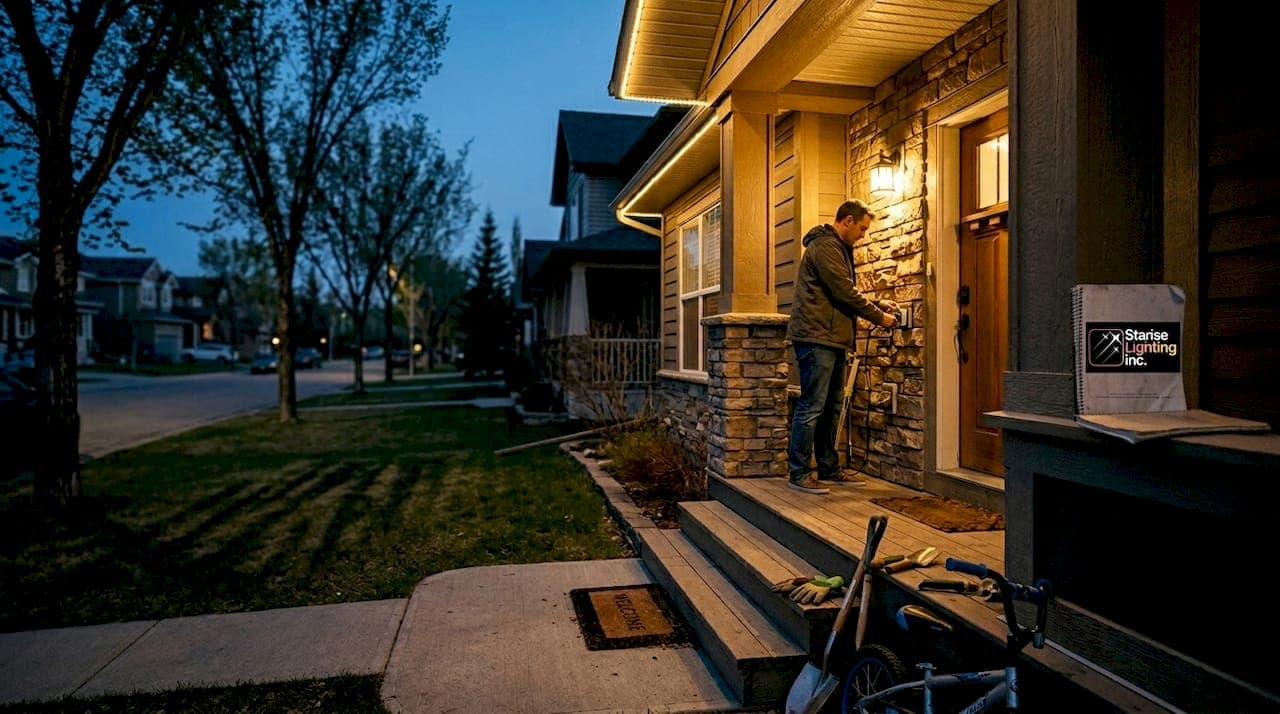
Calgary's winter extremes push outdoor lighting to its limits, yet many homeowners still rely on generic systems never tested for our climate. When temperatures swing from minus 40°C to plus 50°C, your lighting choice becomes critical. Permanent LED systems engineered specifically for Alberta conditions deliver both the curb appeal and security you want, without the constant replacements and failures typical of standard outdoor lights. This guide reveals how to select durable, high-performance permanent lighting that truly protects your investment and enhances your home's exterior year-round.
Table of Contents
- Key Takeaways
- Why choose permanent lighting designed for Calgary's climate
- How permanent exterior lighting improves home security and safety
- Comparing DIY kits versus professional permanent lighting systems
- Planning your permanent lighting installation: practical tips and considerations
- Explore professional permanent lighting solutions in Calgary and area
- Frequently asked questions
Key Takeaways
| Point | Details |
|---|---|
| Calgary climate design | Calgary climate specific lighting is engineered to operate from minus 40 C to plus 50 C with UV stabilised housings and robust sealing for year round reliability. |
| Professional installation advised | IP67 or IP68 protection with sealed electrical connections and UV stabilised materials ensure performance in snow and melt, and professional installation is advised for best results. |
| Long lifespan benefits | Quality permanent lighting delivers 50,000 hours or more of LED life, reducing maintenance time and ladder climbs. |
| Crime reduction impact | Well lit exteriors deter crime and can reduce nighttime crime by about 15 percent, with gun violence dropping up to 21 percent. |
Why choose permanent lighting designed for Calgary's climate
Calgary's weather doesn't compromise. Your outdoor lighting shouldn't either. Generic LED systems might work in temperate regions, but Alberta's conditions demand purpose-built solutions. Systems engineered for Calgary's extreme cold withstand temperatures from minus 40°C to plus 50°C, ensuring your investment performs reliably through every season.
Weather protection starts with proper ratings. IP67 and IP68 certifications guarantee complete protection against dust infiltration and water immersion. When Calgary's spring melt sends water cascading off your roof, or winter storms coat everything in ice, these ratings mean your lights keep working. Standard outdoor lights with lower IP ratings fail quickly under these conditions, leaving you with dark exteriors and costly replacements.
UV resistance matters more than most homeowners realise. Alberta's high elevation and clear skies create intense UV exposure that degrades plastic housings and wiring insulation on unprotected fixtures. Professional permanent lighting systems use UV-stabilised materials that maintain structural integrity and colour for decades. You won't see the yellowing, cracking, or brittleness common in cheaper alternatives.
Pro Tip: Check the manufacturer's tested temperature range before purchasing any outdoor lighting system. If the spec sheet doesn't explicitly mention minus 40°C operation, it's not designed for Calgary winters.
LED technology provides exceptional longevity when properly engineered. Quality permanent lighting systems deliver 50,000+ hour lifespans, translating to roughly 11 years of nightly operation. This durability eliminates the annual ladder climbs to replace failed bulbs or entire fixture replacements every few years. Your lighting investment pays dividends through reduced maintenance time and costs.
Systems like Five Star and Celebright undergo rigorous testing specifically for Alberta conditions. These manufacturers validate their products against freeze-thaw cycles, heavy snow loads, and extreme temperature fluctuations. When you choose Calgary cold climate LED lights, you're selecting technology proven to handle our unique environmental challenges.
"The difference between consumer-grade and climate-engineered lighting becomes obvious during the first Calgary winter. Proper systems maintain full brightness and colour accuracy at minus 30°C, while generic options dim significantly or fail completely."
Key technical features to verify:
- IP67 or IP68 ingress protection rating
- Operating temperature range from minus 40°C to plus 50°C
- UV-stabilised housing materials
- Sealed electrical connections
- Thermal management systems for LED longevity
How permanent exterior lighting improves home security and safety
Darkness creates opportunity for crime. Well-lit properties eliminate that advantage. Research demonstrates that improved outdoor lighting reduces nighttime crime by approximately 15% overall, with gun violence incidents dropping by up to 21%. These aren't marginal improvements. They represent substantial risk reduction for your family and property.
The deterrent effect works on multiple levels. Potential intruders avoid well-lit areas because visibility increases their risk of identification and capture. Your security cameras capture clearer footage when proper lighting eliminates shadows and dark zones. Neighbours notice suspicious activity more easily when your exterior remains consistently illuminated. The compound effect creates a protective barrier that passive security measures alone cannot match.
Lighting works best as part of an integrated security approach. Combine permanent LED systems with motion sensors that trigger additional illumination when movement occurs. Position lights to eliminate hiding spots near entry points, windows, and garage doors. Coordinate your lighting zones with camera coverage to ensure every angle receives adequate illumination for clear video capture.
"Security professionals consistently rank exterior lighting among the top three crime deterrents for residential properties, alongside alarm systems and visible cameras. The key is consistent, reliable illumination rather than sporadic or motion-only lighting."
Long-term crime reduction studies show sustained benefits. Unlike temporary interventions that lose effectiveness as criminals adapt, permanent lighting maintains its deterrent impact year after year. Entire neighbourhoods benefit when multiple homes install quality exterior lighting, creating an environment where criminal activity becomes notably riskier and less attractive.
Maximise your security lighting effectiveness:
- Illuminate all entry points including side doors and basement windows
- Eliminate shadow zones where intruders could hide
- Use warm white (3000K) for better colour recognition on cameras
- Maintain consistent nightly operation rather than motion-only activation
- Coordinate lighting zones with security camera fields of view
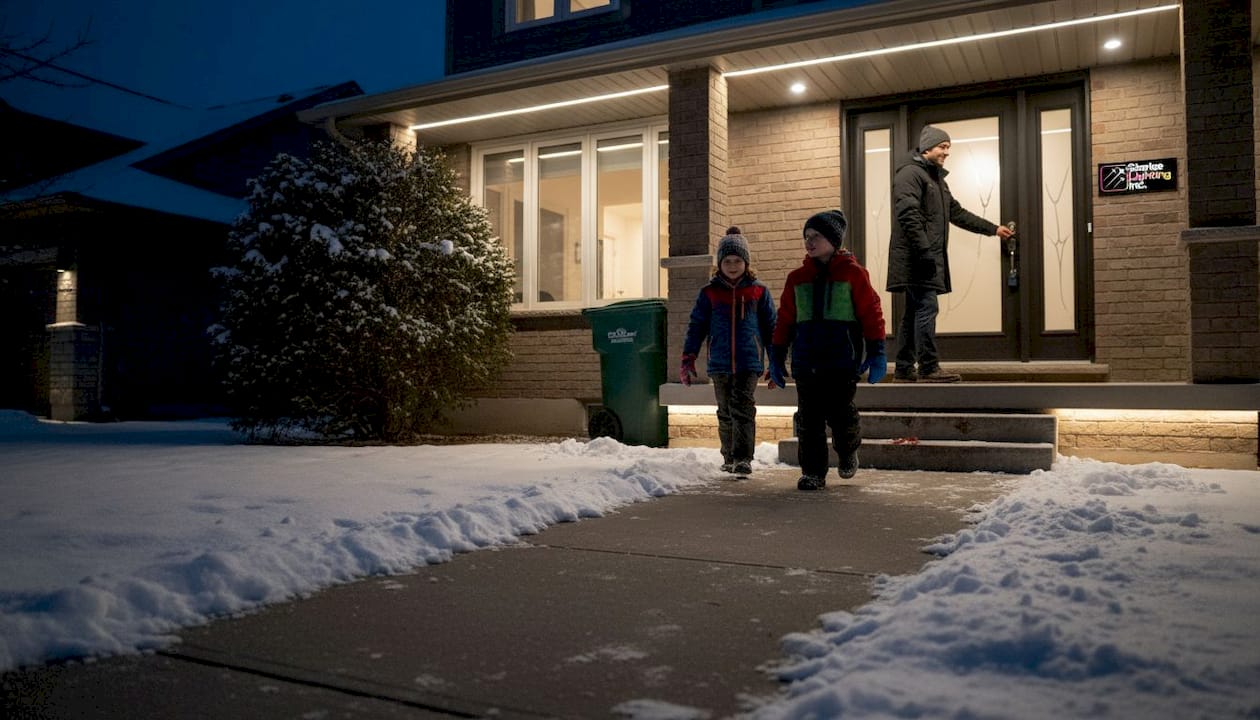
Beyond crime deterrence, proper exterior lighting prevents accidents. Well-lit walkways, steps, and driveways reduce slip and fall risks during Calgary's icy winters. Guests navigate your property safely. Delivery drivers find the correct address easily. These daily safety improvements add substantial value to home safety outdoor LED lighting installations.
Comparing DIY kits versus professional permanent lighting systems
The permanent lighting market offers two distinct paths: consumer DIY kits and professionally installed systems. Understanding the real differences helps you make an informed choice that matches Calgary's demands. Price alone tells an incomplete story.
DIY kits from brands like Govee and Eufy appeal through lower upfront costs, typically ranging from $200 to $800 for basic installations. However, most consumer kits lack robust IP ratings needed for Calgary winters. IP65 ratings common in DIY products protect against water jets but not sustained immersion or extreme temperature cycling. When spring melt creates standing water or ice dams form, these systems often fail.
Professional permanent lighting systems use low-voltage wiring that significantly reduces electrical hazards during installation and operation. Standard household voltage (120V) poses serious shock and fire risks when improperly installed on roof edges and soffits. Low-voltage systems (12V or 24V) eliminate these dangers whilst maintaining excellent performance. DIY installations using line voltage create liability issues and potential insurance complications.
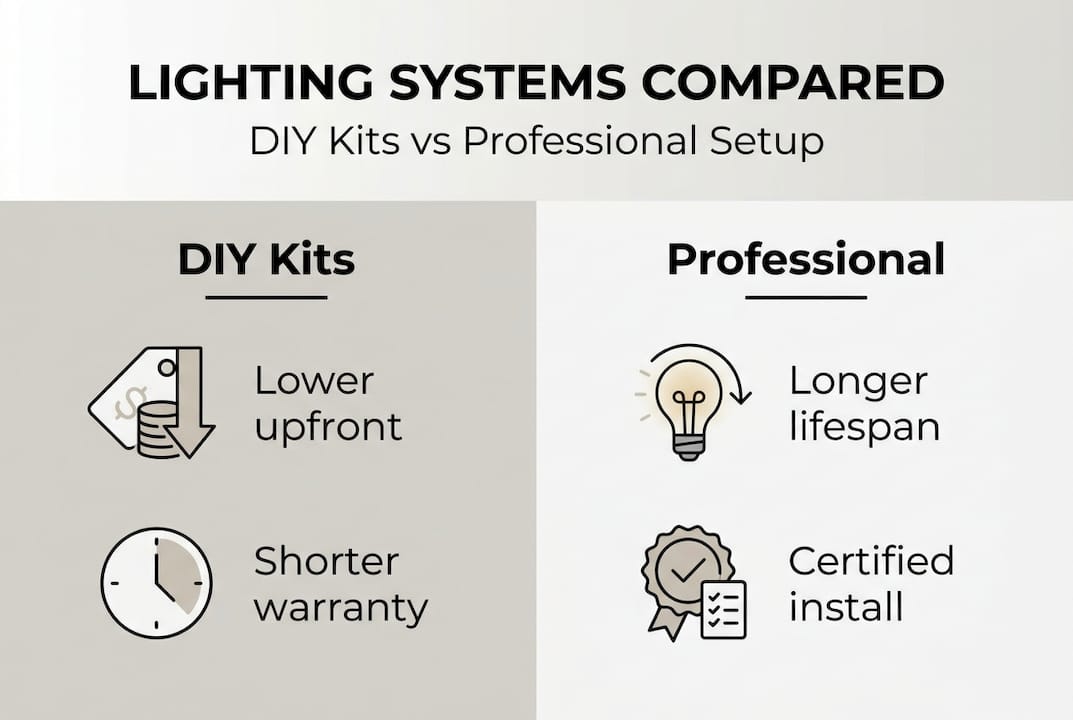
Warranty coverage differs dramatically between approaches. Professional installations typically include 3 to 5 year warranties covering both equipment and labour. If a component fails, you receive prompt replacement and service. DIY kits offer limited manufacturer warranties that require you to diagnose issues, order parts, and perform repairs yourself. During Calgary winters, climbing on icy roofs to troubleshoot lighting problems isn't appealing.
| Feature | DIY kits | Professional systems |
|---|---|---|
| Upfront cost | $200-$800 | $2,000-$6,000 |
| IP rating | Typically IP65 | IP67 or IP68 |
| Voltage | Often 120V | 12V or 24V |
| Warranty | 1-2 years, parts only | 3-5 years, parts and labour |
| Installation safety | Homeowner assumes risk | Licensed professionals |
| Calgary winter performance | Limited durability | Engineered for extreme cold |
Home complexity significantly impacts DIY feasibility. Single-storey homes with simple rooflines and accessible soffits suit DIY approaches better than multi-storey properties. Complex architectural features, steep roof pitches, and heights above two storeys create serious safety hazards for untrained installers. Professional teams use proper fall protection equipment and techniques that most homeowners lack.
Pro Tip: If your home has three or more storeys, intricate rooflines, or you're uncomfortable working at heights, professional installation isn't just recommended, it's essential for your safety.
Electrical code compliance represents another crucial distinction. Licensed electricians understand local building codes and ensure installations meet safety standards. DIY installations may violate codes, creating issues during home sales or insurance claims. Municipalities increasingly scrutinise exterior electrical work, and non-compliant installations can trigger expensive remediation requirements.
Consider the Starise versus DIY permanent lighting decision through a total cost lens. Factor in your time for installation, potential repairs, earlier replacement cycles, and safety risks. Professional systems cost more initially but deliver superior performance, safety, and longevity. For most Calgary homeowners, especially those planning to stay in their homes long-term, professional installation proves worth the investment.
Planning your permanent lighting installation: practical tips and considerations
Successful permanent lighting projects start with thorough planning. Rushing into installation without assessing your specific situation leads to disappointment and unnecessary expenses. Take time to evaluate key factors that influence both installation complexity and long-term satisfaction.
Roof complexity directly affects installation costs and timelines. Multi-storey homes and complex rooflines require more labour hours, specialised equipment, and additional safety measures. Count the linear metres of roofline, soffits, and architectural features you want illuminated. Professional installers price projects based on these measurements plus accessibility challenges. Homes with dormers, multiple roof planes, or intricate trim work cost more than simple rectangular designs.
Homeowners' association approvals deserve early attention if you live in a managed community. Some HOAs restrict exterior modifications or require architectural review committee approval before installation. Submit your lighting plan with specifications and design renderings well before scheduling installation. HOA approval processes can take 30 to 60 days, so factor this timeline into your project schedule.
Your homeownership duration influences the investment decision. If you plan to sell within two years, permanent lighting enhances curb appeal and may increase sale price, but you won't fully enjoy the security and aesthetic benefits. Homeowners planning to stay five years or longer maximise their return through extended use and reduced maintenance costs compared to temporary lighting solutions.
Pro Tip: Request detailed quotes from at least three licensed installers. Compare not just pricing but warranty terms, equipment specifications, and estimated project timelines. The lowest bid often uses inferior components or lacks proper insurance coverage.
Licensed electricians bring essential expertise beyond basic installation skills. They understand load calculations, proper circuit protection, and weatherproofing techniques that prevent failures. Verify contractors carry liability insurance and workers' compensation coverage. Request references from recent Calgary-area projects and inspect completed installations when possible. Quality workmanship shows in clean wiring runs, secure mounting, and professional finishing details.
Design your lighting layout strategically:
- Identify primary goals (security, curb appeal, or both)
- Map all areas requiring illumination including walkways and entry points
- Select colour temperatures appropriate for each zone
- Plan control zones for flexible operation
- Consider seasonal display capabilities if desired
- Ensure adequate electrical capacity for the complete system
Maintenance planning extends system lifespan significantly. Even quality permanent lighting benefits from annual inspections checking connections, cleaning lenses, and verifying proper operation. Schedule maintenance before Calgary's winter season to address any issues whilst weather permits safe roof access. Professional installers often offer maintenance contracts that include routine service and priority repairs.
Budget for the complete project including installation, electrical upgrades if needed, and smart controls. Quality permanent lighting represents a significant investment, typically $2,000 to $6,000 for average homes. However, this cost spreads over decades of reliable service. Compare this to replacing temporary string lights every few years plus the labour and safety risks of annual installation and removal.
Timing matters for installation scheduling. Spring and autumn offer ideal conditions with moderate temperatures and dry weather. Summer works well but high demand may extend wait times. Avoid winter installations when possible, as frozen materials and icy working conditions increase costs and safety risks. Book your lighting installation several weeks in advance during peak seasons.
Explore professional permanent lighting solutions in Calgary and area
Ready to transform your home's exterior with lighting that handles Calgary's extremes whilst delivering stunning curb appeal and enhanced security? Starise Lighting specialises in permanent lighting systems engineered specifically for Alberta's challenging climate. With over 1,300 local installations completed, their team understands exactly what Calgary homeowners need.
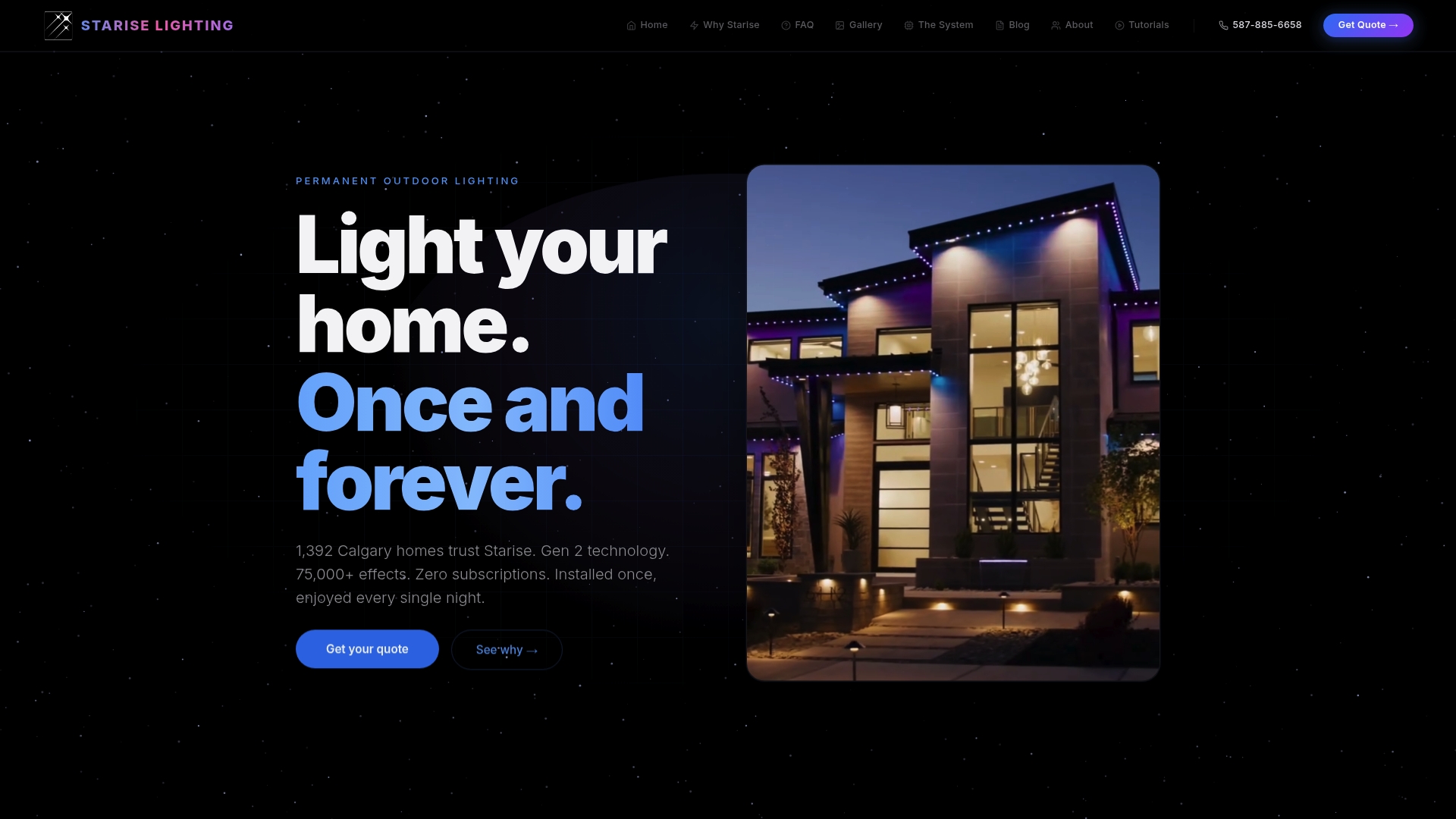
Their permanent lighting system features Gen 2 24V LED technology with extensive colour and effect options, all controlled through an intuitive mobile app. Every installation includes weatherproof construction rated for Calgary winters, professional design consultation, and comprehensive warranties. Service extends throughout Calgary and surrounding communities including Okotoks, ensuring local support when you need it. Let their experienced team handle everything from initial design through final installation and ongoing maintenance, delivering results that enhance your property value and security for years to come.
Frequently asked questions
What is the lifespan of permanent outdoor LED lights?
Quality permanent LED lights deliver 50,000+ hours of operation when properly engineered for Calgary's climate. This translates to approximately 11 years of nightly use before requiring replacement. Systems designed specifically for extreme temperature cycling maintain full performance throughout their lifespan, unlike generic outdoor lights that degrade quickly in harsh conditions. The extended lifespan of permanent LED lights significantly reduces maintenance costs and eliminates the annual hassle of replacing failed fixtures.
Can DIY permanent lighting kits survive Calgary winters?
Most consumer DIY kits lack the robust IP67/IP68 ratings necessary for Calgary's snow, ice, and extreme cold. Whilst these systems work adequately in mild climates, they often fail during Alberta winters when temperatures plunge below minus 30°C or ice dams create sustained water exposure. Professional permanent lighting systems undergo specific testing for freeze-thaw cycles and extreme temperature operation. For reliable performance through Calgary winters, professionally installed systems provide the durability and weather resistance DIY kits cannot match.
Do permanent lights really reduce crime around homes?
Research confirms that improved outdoor lighting reduces crime by approximately 15% overall, with gun violence incidents dropping up to 21% in well-illuminated areas. The deterrent effect stems from increased visibility that raises detection risk for potential intruders. Permanent lighting works most effectively when combined with motion sensors and security cameras, creating multiple layers of protection. Studies show these crime reduction benefits persist long-term rather than diminishing as criminals adapt. Implementing comprehensive lighting for home safety delivers measurable security improvements for your property and entire neighbourhood.
How much does professional permanent lighting installation cost in Calgary?
Professional permanent lighting installations typically range from $2,000 to $6,000 for average Calgary homes, depending on linear metres of coverage, roof complexity, and system features selected. Multi-storey homes with intricate rooflines cost more due to increased labour and safety equipment requirements. This investment includes quality LED components rated for extreme weather, low-voltage wiring for safety, professional design consultation, and comprehensive warranties covering parts and labour. Whilst upfront costs exceed DIY alternatives, professional systems deliver superior longevity and performance that justify the price difference through decades of reliable operation and minimal maintenance requirements.
What maintenance do permanent outdoor lights require?
Permanent LED lighting systems require minimal maintenance compared to traditional outdoor lighting. Annual inspections checking electrical connections, cleaning lenses, and verifying proper operation help maximise system lifespan. Schedule these inspections before winter when roof access remains safe and weather permits outdoor work. Professional maintenance contracts typically include routine service, priority repairs, and replacement of any failed components under warranty. Quality permanent lighting systems need no bulb replacements for 10+ years, eliminating the dangerous annual ladder climbs required by traditional holiday and accent lighting. This low maintenance requirement represents a significant advantage for busy homeowners and contributes to the long-term value proposition of permanent lighting investments.