
TL;DR:
- Sustainable home lighting involves energy-efficient bulbs, smart controls, and durable fixtures that reduce waste and unnecessary electricity use.
- Implementing simple upgrades like LED swaps, timers, and outdoor sensors can significantly cut costs and environmental impact for both homeowners and renters.
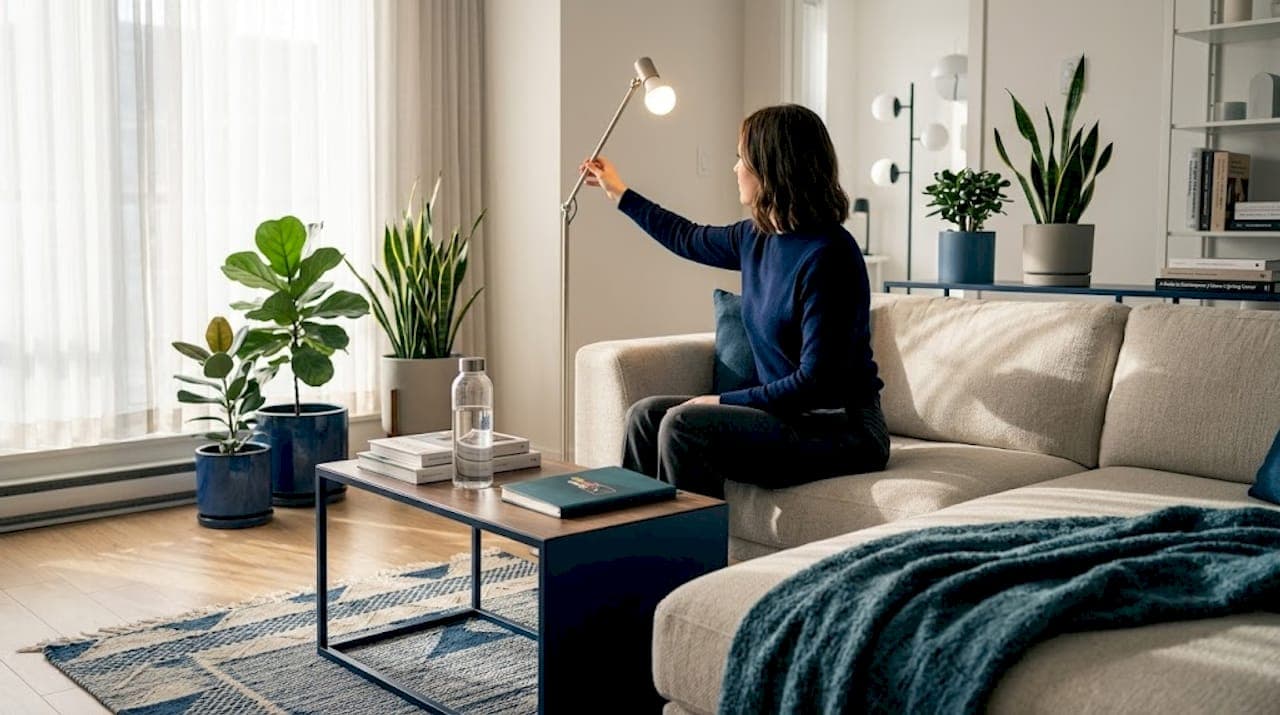
Sustainable home lighting is one of those topics most people think they already understand. Swap your old bulbs for LEDs and you're done, right? Not quite. What is sustainable home lighting actually covers a much broader territory: the bulbs you choose, the controls that manage when and how brightly lights run, the materials your fixtures are made from, and the overall design of how light gets delivered through your space. This guide breaks it all down in practical terms, whether you own your home or rent it.
Table of Contents
- Key takeaways
- What is sustainable home lighting, really?
- Materials and design in sustainable lighting
- Practical tips for renters and homeowners
- Benefits of sustainable lighting: the numbers
- My honest take on sustainable lighting
- How Co-starise can help
- FAQ
Key takeaways
| Point | Details |
|---|---|
| It goes beyond bulbs | Sustainable lighting includes controls, fixture materials, and runtime management, not just bulb type. |
| Controls are underrated | Timers, dimmers, and occupancy sensors often deliver bigger savings than fixture upgrades alone. |
| Renters can participate too | Bulb swaps and plug-in controls require no rewiring and are allowed in most rental units. |
| Durability matters | Longer-lasting fixtures and LEDs reduce waste and lower replacement frequency over time. |
| Outdoor lighting is critical | Motion sensors and automatic daylight shutoff prevent some of the most common energy waste at home. |
What is sustainable home lighting, really?
Most people picture a single LED bulb when they hear this phrase. The reality is broader. Sustainable home lighting combines energy-efficient light sources with controls that reduce unnecessary runtime and prevent waste. It is about how light gets produced, how it gets directed, how long it stays on, and what happens to the fixture at the end of its life.
Think of it like fuel economy in a car. You would not say a vehicle is fuel-efficient if it idles in the driveway for hours every night. The same logic applies to home lighting. A premium LED bulb running 18 hours a day in an empty room is not a sustainable choice, regardless of its wattage.
The three core pillars are worth understanding clearly:
- Energy-efficient light sources. ENERGY STAR-rated LEDs use at least 75% less energy and last up to 25 times longer than incandescent bulbs. They also emit directional light, which reduces wasted illumination by concentrating output where it is actually needed rather than scattering it in every direction.
- Smart controls. Timers, dimmers, motion sensors, and daylight shutoff switches reduce wasted lighting runtime across every room and especially outdoors. These are the tools that prevent lights from running when no one is home or when natural daylight is already sufficient.
- Fixture design and materials. How a fixture is built determines how long it stays out of a landfill. Well-designed fixtures that direct light efficiently waste less energy per lumen delivered.
| Bulb type | Energy use | Lifespan | Mercury content |
|---|---|---|---|
| Incandescent | Baseline (100%) | ~1,000 hours | None |
| CFL | ~75% less | ~10,000 hours | Yes |
| LED | ~75–80% less | 25,000–50,000 hours | None |
Pro Tip: When comparing bulbs, look at lumens rather than watts. Lumens measure actual light output. A 10-watt LED producing 800 lumens replaces a 60-watt incandescent producing the same output.
Materials and design in sustainable lighting
Choosing energy-efficient bulbs is the easy part. The harder, less-discussed dimension of eco-friendly home lighting is what your fixtures are made of and how long they are designed to last.
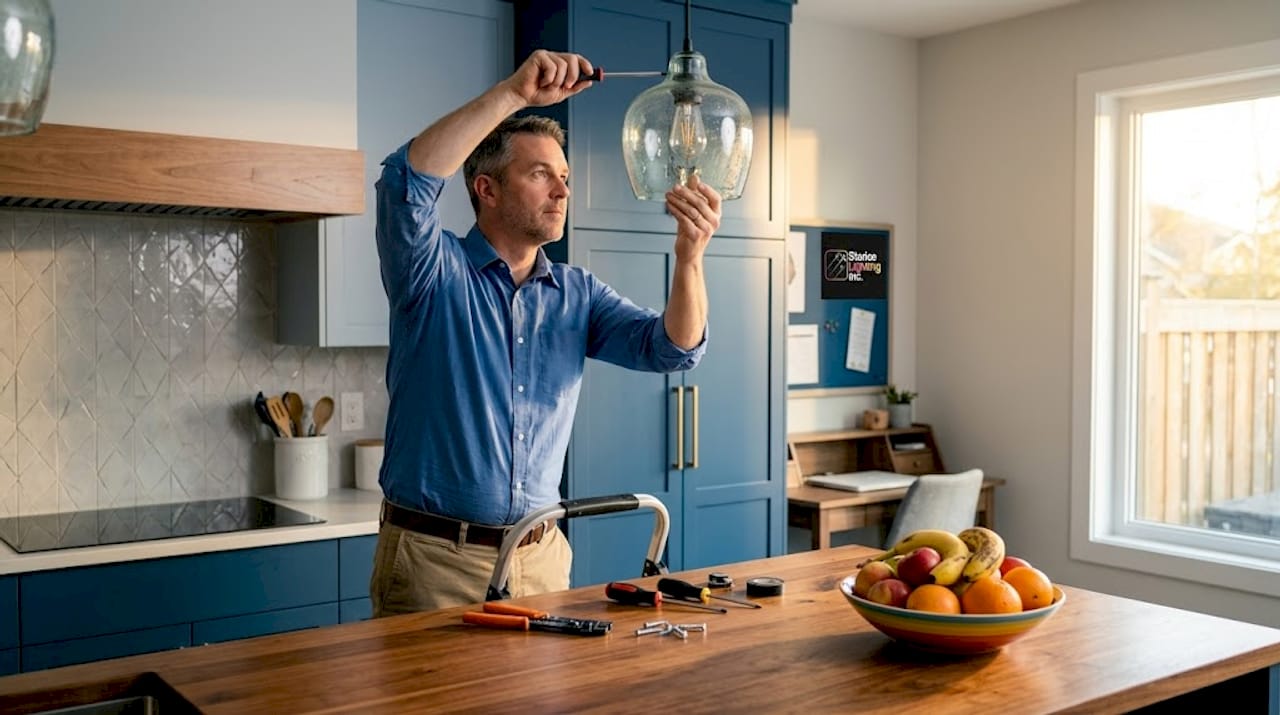
Handcrafted lighting using reclaimed materials, such as recycled plastic or upcycled copper, supports circular economy principles by keeping materials in use rather than sending them to landfill. These fixtures often carry a higher upfront cost, but they carry a story and a significantly longer functional life.
Beyond reclaimed materials, look for these qualities when evaluating fixture sustainability:
- Repairability. Can you replace a component, such as a driver or lens, without replacing the whole fixture? Repairable lighting dramatically reduces waste.
- Recyclable components. Aluminium housings, glass lenses, and steel fittings are all highly recyclable at end of life. Avoid fixtures made primarily of non-recyclable mixed plastics.
- Biodegradable elements. Some manufacturers now incorporate bamboo, cork, and natural fibres into decorative elements, reducing environmental impact further.
- Durability ratings. For outdoor use particularly, look for weather resistance ratings (IP65 or higher) that prevent early failure from moisture and debris.
One design strategy worth highlighting is acoustic lighting. These fixtures combine illumination with sound-absorbing panels, meaning one well-designed product serves two functions. Fewer products, less material, less waste overall.
Pro Tip: Ask manufacturers or retailers about spare parts availability before you buy. A fixture with no replacement parts available will end up in a landfill the first time a component fails.
Practical tips for renters and homeowners
Whether you own your space or rent it, there are meaningful changes you can make today. The practical path to home lighting for sustainability looks slightly different depending on your situation, but the core steps apply broadly.
-
Swap your bulbs first. Replacing incandescent bulbs with ENERGY STAR-certified LEDs is the fastest and least invasive upgrade available. Lighting accounts for about 15% of average home electricity use, and switching to LEDs can save up to $225 annually on energy costs. No tools, no landlord approval required.
-
Add plug-in timers and dimmers. Renters can improve sustainability without touching the wiring. Plug-in lamp timers and inline dimmers work with most LED bulbs and require zero installation. Set them to match your actual schedule and watch your electricity consumption drop.
-
Use smart lighting where it counts. Smart lighting systems with occupancy sensors and daylight detection automatically adjust brightness and on/off timing based on real usage. Install these in high-traffic areas like hallways, kitchens, and living rooms first, where lights are most likely to be left on unnecessarily.
-
Prioritise outdoor lighting upgrades. Outdoor LED fixtures with motion sensors and automatic daylight shutoff break the habit loop of lights running all night. This is one of the most impactful changes most homes can make, because outdoor lights are frequently left running for 10 or more hours at a stretch.
-
Think about maintenance and lifespan. LEDs can last 25,000 to 50,000 hours compared to roughly 1,000 hours for incandescent bulbs. Choosing quality products upfront means fewer replacements, less packaging waste, and lower long-term costs.
Benefits of sustainable lighting: the numbers
Understanding why choose sustainable lighting is easier when you look at the actual figures. The environmental and economic case is strong, and it holds up at the household level without needing to cite abstract global statistics.
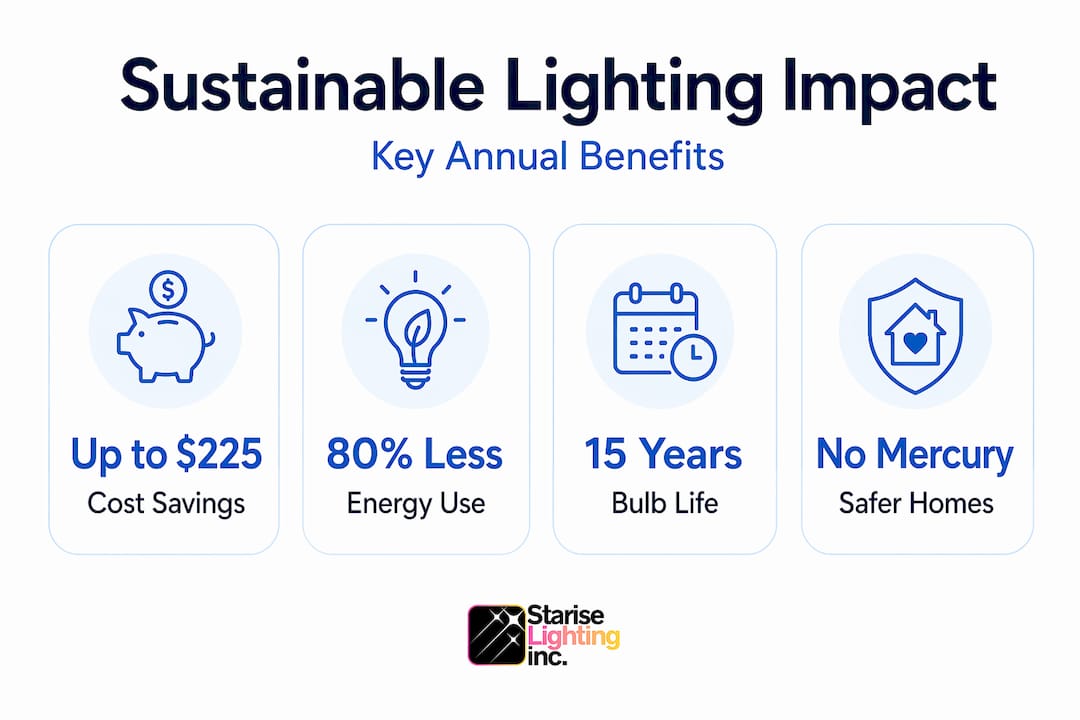
Energy savings are the most immediate benefit. Switching a home from incandescent bulbs to LED equivalents cuts lighting electricity use by roughly 75 to 80%. On an average Canadian electricity bill, that translates to real, measurable monthly savings. Add smart controls on top, and the reduction compounds.
The environmental picture is equally compelling. Fewer watts consumed means fewer emissions from electricity generation. Beyond that, LEDs contain no hazardous mercury, unlike CFLs, which means safer disposal and no risk of mercury contamination in municipal waste streams.
"The most sustainable choice is not always the most efficient bulb. It is the right bulb, in the right fixture, controlled so it only runs when someone actually needs it."
There are also health and comfort benefits worth noting. LEDs emit very little UV radiation compared to older bulb types, which reduces fading of furniture, artwork, and flooring over time. For outdoor spaces, well-designed lighting with proper directional control reduces light pollution, which affects sleep quality and local wildlife. You can read more about how these principles apply to exterior spaces in this overview of smart outdoor illumination.
| Improvement | Estimated annual saving | Additional benefit |
|---|---|---|
| Switch to LED bulbs | Up to $225 | 25x longer lifespan |
| Add dimmer controls | 10–50% further reduction | Extends bulb life |
| Motion sensors outdoors | Reduces outdoor runtime by 50%+ | Improved security |
| Daylight shutoff switches | Eliminates daytime waste | Reduces light pollution |
My honest take on sustainable lighting
I have worked with enough homeowners to know that the conversation around sustainable lighting almost always starts and ends with bulbs. Someone replaces their fixtures with LEDs, feels good about it, and moves on. What they miss is that runtime control is often the bigger lever.
In my experience, a home with average-quality LEDs and well-programmed timers and sensors will consistently outperform a home with premium bulbs that run 14 hours a day because no one bothered to set a schedule. The focus should be on light delivered per watt-hour used, and that equation only improves when you reduce unnecessary operation.
I also want to address renters directly. You are not locked out of this. I have seen renters reduce their electricity bills significantly through nothing more than bulb swaps and a few plug-in timers from a hardware store. You do not need to own the walls to make meaningful progress.
The one mistake I see most consistently is people buying cheap LEDs to save money upfront. Those bulbs fail faster, get replaced more often, and generate more packaging and product waste than a quality bulb purchased once. Quality and sustainability are not in tension here. They are the same thing.
— Starise
How Co-starise can help
If outdoor lighting is where you want to make your next sustainable upgrade, Co-starise builds permanent LED lighting systems specifically designed for long-term performance in Calgary's demanding climate.
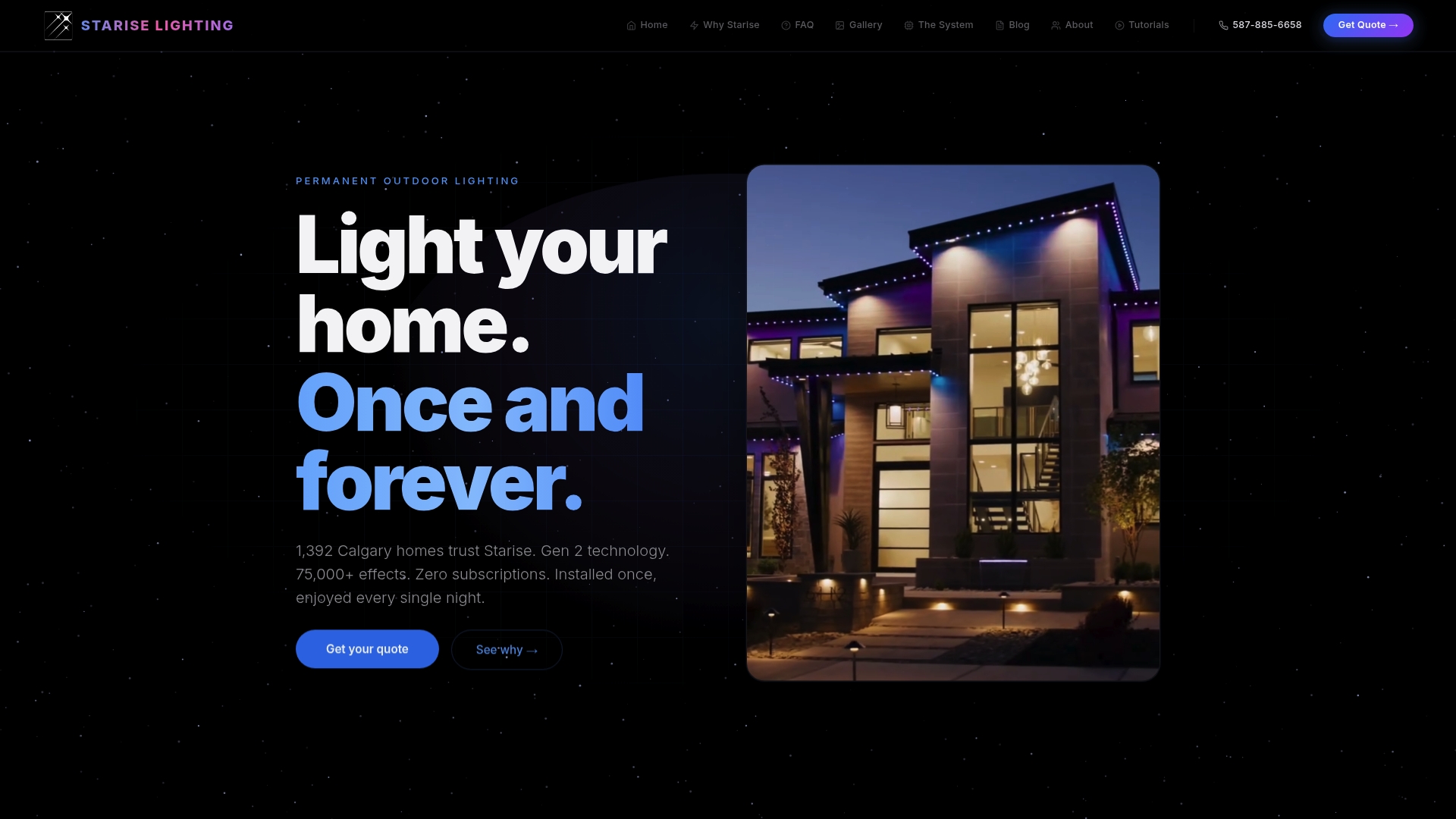
Co-starise's permanent lighting solutions use Gen 2 24V LED technology with built-in smart controls, including motion-activated and timer-based operation that eliminates wasted runtime automatically. These are not seasonal strings you reinstall every year. They are installed once, rated for extreme weather, and managed through an app that lets you set schedules, adjust colour output, and control every zone from your phone. For homeowners who want sustainable outdoor lighting that genuinely lasts, this is what purpose-built durability looks like. Request a quote to see what a permanent installation could look like for your property.
FAQ
What is sustainable home lighting in simple terms?
Sustainable home lighting means choosing energy-efficient bulbs, using controls to prevent waste, and selecting durable fixtures made from responsibly sourced materials. It covers both how light is produced and how it is managed.
Are LEDs really more sustainable than CFLs?
Yes. LEDs use similar or less energy than CFLs, last significantly longer, and contain no hazardous mercury, making them safer to dispose of and more environmentally friendly throughout their lifecycle.
Can renters implement sustainable lighting without renovating?
Absolutely. Renters can swap bulbs for ENERGY STAR-rated LEDs and add plug-in timers and dimmers without any rewiring or landlord approval, making it one of the most accessible eco-friendly upgrades available.
How much can sustainable lighting actually save?
Switching to LEDs alone can save up to $225 per year on electricity costs. Adding smart controls like dimmers and motion sensors can reduce energy use further, often cutting lighting consumption by an additional 10 to 50%.
What lighting controls matter most for sustainability?
Timers, dimmers, motion sensors, and automatic daylight shutoff are the most impactful controls. They reduce unnecessary runtime, which is often a larger source of waste than the bulb type itself.