
TL;DR:
- Permanent outdoor lighting is a highly impactful upgrade that boosts security, extends usability, and adds resale value for Calgary homeowners.
- Key criteria include energy efficiency, weatherproofing, electrical code compliance, and appropriate colour temperature to ensure durability and aesthetic cohesion.
- Using layered fixtures like floodlights, bollards, and eaves lighting, combined with professional planning and installation, creates a reliable and visually appealing outdoor system adapted to Calgary's harsh climate.
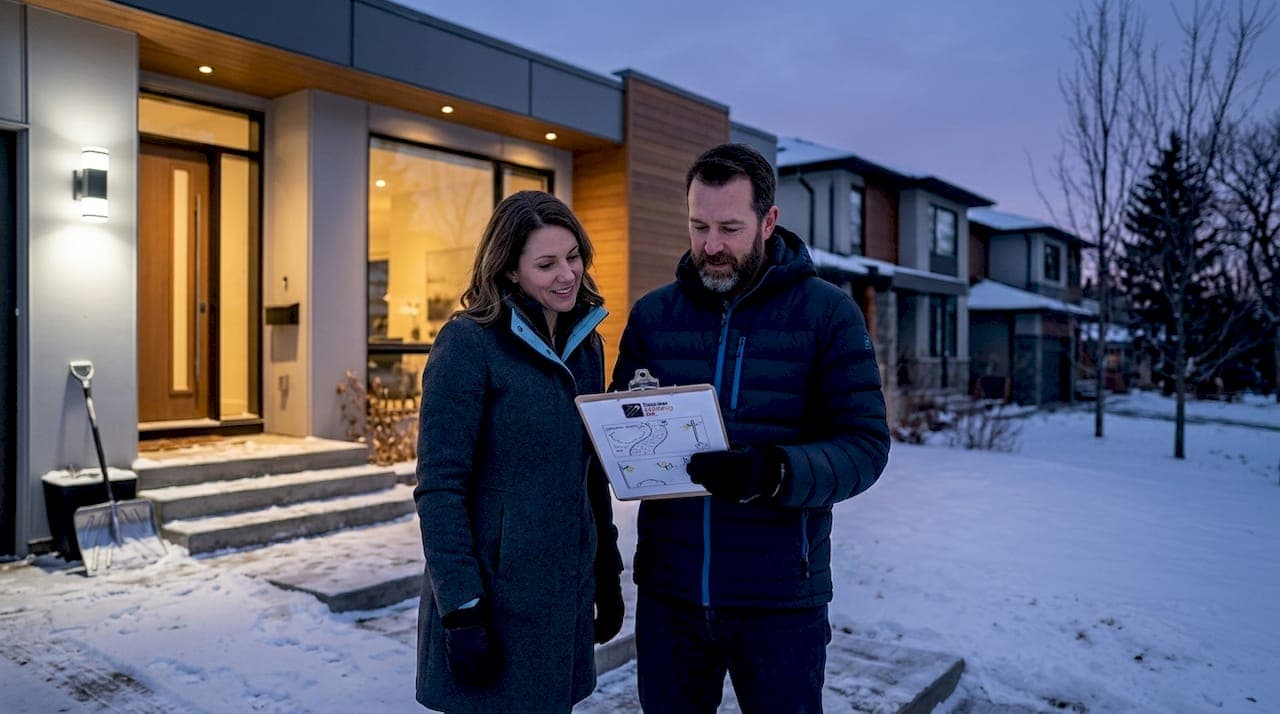
Permanent outdoor lighting is one of the most overlooked yet highest-impact upgrades a Calgary homeowner can make. The right home lighting improvement strategies do more than brighten your driveway. They deter intruders, extend your usable outdoor space through dark winters, and add measurable resale value. The challenge is that Calgary's conditions, from -40°C cold snaps to heavy snowfall, demand fixtures that most generic lighting guides never account for. This article walks you through exactly what to look for, what to avoid, and how to build an outdoor lighting plan that performs year-round without wasting energy or running afoul of Alberta's electrical codes.
Table of Contents
- Key criteria for choosing permanent outdoor lighting
- Top permanent outdoor lighting options for Calgary homes
- Comparing permanent outdoor lighting options: features, energy use, and value
- Implementing your home lighting improvement strategy
- Rethinking outdoor lighting: balancing efficiency, aesthetics, and compliance in Calgary
- Discover permanent lighting solutions tailored for Calgary homes
- Frequently asked questions
Key Takeaways
| Point | Details |
|---|---|
| Energy-efficient lighting | LEDs with motion sensors and timers save significant electricity by only lighting when needed. |
| Durability for Calgary | Choose fixtures with IP65 ratings and cold-weather resilience to withstand harsh winters. |
| Code compliance | Hiring licensed electricians and obtaining permits ensures safety and legal installation. |
| Colour temperature matters | Neutral 3000K lighting balances security needs with a welcoming residential atmosphere. |
| Layered lighting strategy | Combining bollards, floodlights, and eave lights creates effective and attractive outdoor illumination. |
Key criteria for choosing permanent outdoor lighting
Getting permanent outdoor lighting right starts well before you pick a fixture. The decisions you make at the planning stage determine whether your lighting looks polished and lasts a decade, or ends up as an expensive, mismatched repair project inside two years.
Energy efficiency is your first priority. LED fixtures with motion sensors and timers reduce energy use for outdoor security lighting dramatically, with ENERGY STAR rated LEDs recommended for any fixture running more than two hours daily. Motion sensors ensure lights activate only when needed, which matters when you are heating a home through a Calgary winter and every dollar on the energy bill counts.
Weatherproofing is non-negotiable in Calgary. Fixtures rated IP65 or higher are sealed against dust and water jets, meaning snow, freezing rain, and ice will not compromise the housing or the circuitry. Look for fixtures with die-cast aluminium housings and UV-resistant lenses. Cheap plastic housings crack in deep cold. You will notice the failure the first February after installation.
Compliance with Alberta electrical code is mandatory. Outdoor lighting installations require permits handled by licensed electricians to ensure compliance with Alberta electrical code. This is not a bureaucratic inconvenience. Unpermitted wiring creates liability issues when you sell your home, and it voids most homeowner insurance policies in the event of a fire.
Colour temperature shapes both security and atmosphere. A neutral white around 3000K is the sweet spot for residential exteriors. It renders faces clearly enough for security cameras and the human eye, without the harsh industrial feel of 5000K daylight bulbs that make your home look like a parking garage. Warmer tones below 2700K are beautiful for accent lighting but too amber for security zones.
Key criteria to keep on your checklist before purchasing any fixture:
- IP65 or higher waterproof rating for Calgary weather extremes
- ENERGY STAR certification for long-term energy savings
- Full cutoff design to direct light downward and reduce glare for neighbours
- Compatible with timers or smart controls for energy management
- Colour temperature between 2700K and 3000K for residential areas, 3000K for security zones
- Calgary exterior lighting compliance confirmed before installation begins
Pro Tip: Choose fixtures with a listed operating temperature range of at least -40°C to +50°C. Fixtures rated only to -20°C are common in big-box stores and will underperform or fail in a severe Calgary winter.
With these essential criteria in mind, you can explore specific lighting options ideal for Calgary homes.
Top permanent outdoor lighting options for Calgary homes
Not all outdoor lighting serves the same purpose. Layering different fixture types is what separates a thoughtful exterior from one that is either too dark or blindingly bright with no nuance.
Motion-activated LED floodlights are the workhorse of residential security lighting. Quality models deliver 1800 to 2500 lumens with wide detection angles and IP65 waterproof ratings, making them suitable for Calgary's temperature extremes. Mount them at the corners of your garage, above back gates, and at any entry point that lacks natural visibility from the street.
Pathway bollards serve a different purpose entirely. They operate at 100 to 300 lumens with colour temperatures of 2700K to 3000K, which is enough to guide guests safely along a walkway without washing out your landscaping or bothering neighbours. Their warm, low-level glow complements the floodlights rather than competing with them.
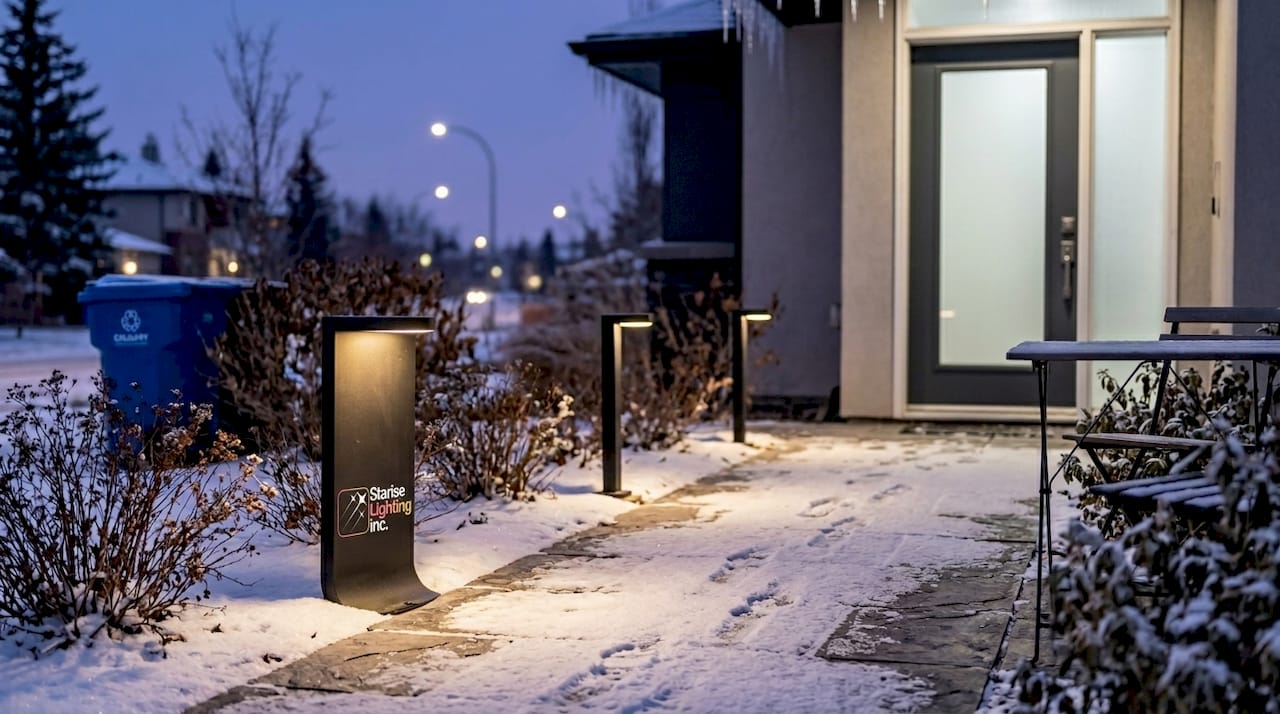
Permanent eaves lighting is the option most Calgary homeowners have not fully considered. Installed under the roofline, eaves lights deliver consistent, even illumination along the full face of your home. They create curb appeal that is difficult to achieve with standard post or wall lights, and because they are protected from direct snow accumulation, they tend to last longer in Calgary conditions.
Here is the order in which to plan your lighting layers:
- Identify all security zones first, including entry points, garage corners, and blind spots
- Select and position motion-activated floodlights to cover those zones with overlapping detection fields
- Plan pathway and bollard lighting to guide movement from the street to your door
- Add eaves or soffit lighting to create ambient illumination across the full facade
- Choose a single colour temperature for all visible fixtures to maintain visual cohesion
Pro Tip: Motion sensors require careful aiming and lux adjustment to avoid false triggers and energy waste. Aim the sensor head toward foot traffic zones, not toward bushes or tree branches that move in wind. Set the lux threshold so lights do not trigger in daylight, and use a hold time of three to five minutes to balance responsiveness with energy conservation.
Additional tips for getting the most from each lighting layer:
- Match all visible fixtures to the same colour temperature family (all 3000K, for example)
- Use outdoor LED lighting safety tips to position fixtures at heights that maximise detection range
- Avoid mounting floodlights where they shine directly into neighbouring bedrooms
- Test each motion zone on installation night before finalising sensor positions
- Consider illuminating outdoor features such as trees and architectural details with separate accent fixtures
Now that you know the key options available, let's compare their features and benefits to help you decide the best fit.
Comparing permanent outdoor lighting options: features, energy use, and value
The table below compares the three primary fixture types so you can see exactly where each one fits into your budget and your design plan.
| Fixture type | Lumen output | Colour temperature | Energy draw | Weather rating | Primary benefit |
|---|---|---|---|---|---|
| Motion floodlight | 1800 to 2500 lm | 3000K to 5000K | 20 to 30W | IP65 | Security and deterrence |
| Pathway bollard | 100 to 300 lm | 2700K to 3000K | 3 to 8W | IP44 to IP65 | Navigation and aesthetics |
| Eaves/soffit light | 400 to 800 lm | 2700K to 3000K | 8 to 15W | IP65 | Curb appeal and ambient light |
| Smart controlled system | Variable | Adjustable | Variable | IP65+ | Automation and energy savings |
The biggest financial argument for choosing outdoor lighting with smart controls is the energy reduction. Intelligent lighting systems reduce home energy consumption by over 15%, optimising brightness without increasing power use. Over a five to ten year lifespan for quality LED fixtures, those savings compound meaningfully.
Key takeaways from this comparison:
- Motion floodlights cost more upfront but pay back quickly through deterrence value and motion-only activation
- Pathway lighting uses so little power that energy cost is almost irrelevant. Its value is primarily visual
- Eaves lighting offers the best aesthetic return per dollar when you want consistent nightly impact
- Smart controls benefit every fixture type by ensuring nothing runs longer than it needs to
- LED lifespan across all types typically runs 25,000 to 50,000 hours, meaning most fixtures installed in 2026 will still be running in the mid-2030s with minimal maintenance
With a clearer comparison in hand, you can now consider how to implement these strategies effectively in your home.
Implementing your home lighting improvement strategy
Planning is where most homeowners save the most money. The decisions you make before a single fixture is ordered determine whether installation is straightforward or expensive.
Follow these steps to move from plan to finished installation:
- Conduct an electrical walk-through before any walls are closed. Pre-install electrical rough-in planning before drywall reduces costly retrofits and permit issues. Identify where conduit runs will go, confirm your panel has capacity, and mark all fixture locations while you still have easy access.
- Obtain permits before work begins. New outdoor lighting wiring requires Alberta electrical permits and must be performed by licensed electricians with inspections. Budget two to four weeks for permit processing in Calgary.
- Select all fixtures before the electrician arrives. Having confirmed dimensions, mounting requirements, and wire gauge specifications on hand prevents the costly scenario of a licensed electrician waiting on a supplier.
- Confirm the lighting installation workflow with your installer, including the sequence for rough-in, inspection, and trim-out. This avoids scheduling gaps that leave your exterior half-finished through a cold stretch.
- Calibrate sensors and controls after installation is complete. Walk every motion detection zone yourself. Adjust lux thresholds and hold times. Programme timer schedules to match sunrise and sunset for the current season.
Pro Tip: Run all outdoor wiring in weatherproof conduit even when code only requires direct burial cable. Conduit makes future upgrades and repairs far simpler, and in Calgary's freeze-thaw soil cycles, it protects wire insulation from mechanical stress over time.
Understanding the installation process completes your foundation, leading into a fresh perspective on navigating outdoor lighting challenges.
Rethinking outdoor lighting: balancing efficiency, aesthetics, and compliance in Calgary
Here is the uncomfortable reality most lighting guides skip: most homeowners get outdoor lighting wrong not because they chose bad fixtures, but because they treated each fixture as an isolated decision.
A motion floodlight at 5000K next to eaves lighting at 2700K does not just look mismatched. It actively undermines both. Your eye is drawn to the conflict rather than to your home. The result is a property that looks busy and unintentional, even with expensive fixtures. Cohesion in colour temperature is not an aesthetic preference. It is the difference between lighting that elevates a home and lighting that clutters it.
The second issue is treating property value with lighting as a bonus rather than as the primary return on investment. Quality permanent outdoor lighting, installed correctly with permits and professional wiring, adds to your assessed home value and is a genuine selling feature. Buyers in Calgary notice dark driveways and poorly lit entries. They also notice homes that feel safe and finished at night.
Finally, compliance is not just about avoiding fines. Unpermitted electrical work creates real financial exposure at resale and in insurance claims. The cost of a permit and a licensed electrician is trivial compared to the cost of retrofitting work that failed inspection or a claim denial after a wiring-related incident.
Calgary's winters demand a plan, not just products. Fixtures that work in Vancouver fail in a January cold snap here. The homes with outdoor lighting that still looks great in year five are the ones where someone thought through the full system: weatherproof ratings, sensor calibration for cold-weather false triggers, and colour temperature unity from the front walkway to the back fence.
Discover permanent lighting solutions tailored for Calgary homes
If you have been mapping out your outdoor lighting plan while reading this, the next practical step is finding a provider who already understands everything covered here: Calgary's climate demands, Alberta's electrical code, and the difference between a fixture catalogue and a genuine lighting system.
Starise Lighting specialises in permanent outdoor lighting for Calgary homeowners, with over 1,300 successful local installations. Their permanent lighting system uses Gen 2 24V LED technology with weatherproof construction rated for extreme cold, app-based controls, and layered fixture options that cover everything from security floodlighting to full eaves illumination. Professional installation handles permits and code compliance from start to finish, so you get a finished system that performs and protects your investment.
Frequently asked questions
What type of outdoor lighting is best for Calgary winters?
Durable LED fixtures rated IP65 or higher with weather-resistant housing and motion sensors properly adjusted for extreme cold are best for Calgary winters. Quality models are rated to perform at -40°C, which matches Calgary's most severe conditions.
Do I need a permit to install outdoor lighting in Calgary?
Yes, any new outdoor lighting wiring or additions require permits and must be completed by licensed electricians following Alberta electrical code. Outdoor lighting installations without permits create liability and insurance risks that surface when you sell your home.
How can I reduce energy costs with outdoor lighting?
Use LED fixtures with motion sensors and timers to ensure lights operate only when needed. Smart lighting systems reduce energy use significantly, and intelligent controls have been shown to slash home energy consumption by over 15% without reducing brightness.
What colour temperature is recommended for outdoor security lighting?
A neutral white colour temperature around 3000K balances effective facial recognition for security with a comfortable residential look. At 3000K, facial recognition improves for both cameras and the human eye while keeping your home's exterior from feeling harsh or industrial.
How do I avoid false triggers from motion sensors outdoors?
Adjust sensor aiming toward foot traffic zones rather than wind-prone vegetation, set appropriate lux thresholds so the sensor ignores daylight, and configure hold times between one and ten minutes to prevent repeated false activations from animals or blowing branches.