
TL;DR:
- Calgary outdoor lighting systems face unique challenges from freeze-thaw cycles and environmental stress.
- Proper installation with rated components and sheltered controllers is key for reliability in cold climates.
- Regular troubleshooting and seasonal maintenance prevent most failures, saving time and costs.
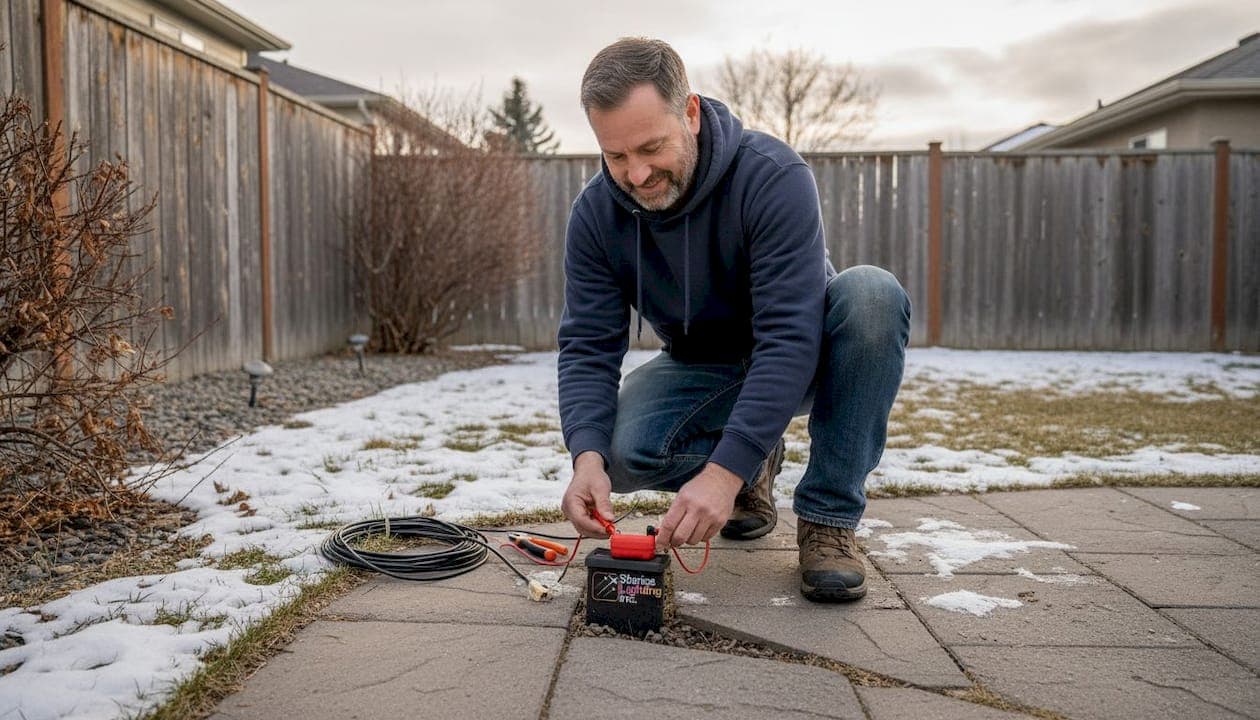
Your outdoor lights go dark on a cold January night, and suddenly your front walkway is pitch black and your home looks unoccupied. For Calgary homeowners, a failing permanent lighting system is more than an inconvenience. It affects security, curb appeal, and the value you invested in your property. This guide walks you through understanding why Calgary's climate creates unique lighting challenges, how to gather the right tools, diagnose the root cause, fix the problem, and keep your system running reliably through every season.
Table of Contents
- Understanding Calgary outdoor lighting challenges
- Gathering tools and system information
- Diagnosing common outdoor lighting issues
- Resolving issues and preventive maintenance
- Why cold climate troubleshooting is different: Lessons from Calgary homes
- Get professional help or explore permanent lighting solutions
- Frequently asked questions
Key Takeaways
| Point | Details |
|---|---|
| Cold boosts LED performance | Cold Calgary winters can enhance LED outdoor lights, but poor seals cause most failures. |
| Voltage drop is main culprit | Dimming and outages are most often caused by voltage drop rather than wiring faults. |
| No winter removal needed | Permanent outdoor lighting does not require removal during Calgary winters if rated correctly. |
| Routine checks matter | Checking IP68 rating, controller location, and seal integrity prevents most lighting problems. |
Understanding Calgary outdoor lighting challenges
Calgary's climate is genuinely unlike most Canadian cities. You get extreme cold, intense UV exposure in summer, and the notorious freeze-thaw cycles that happen repeatedly throughout spring and fall. Each of these factors stresses outdoor lighting systems in different ways, and knowing which one is at play helps you fix the right problem.
The cold itself is actually not the enemy of LED technology. IP68 LEDs thrive in cold because lower temperatures reduce heat buildup inside the fixture, which is one of the main causes of LED degradation over time. What cold weather does attack is poor-quality seals, connectors, and housings. When moisture gets inside a fixture and then freezes, it expands and cracks the seal permanently. This is why cheap lights fail Alberta winters at a much higher rate than properly rated systems.
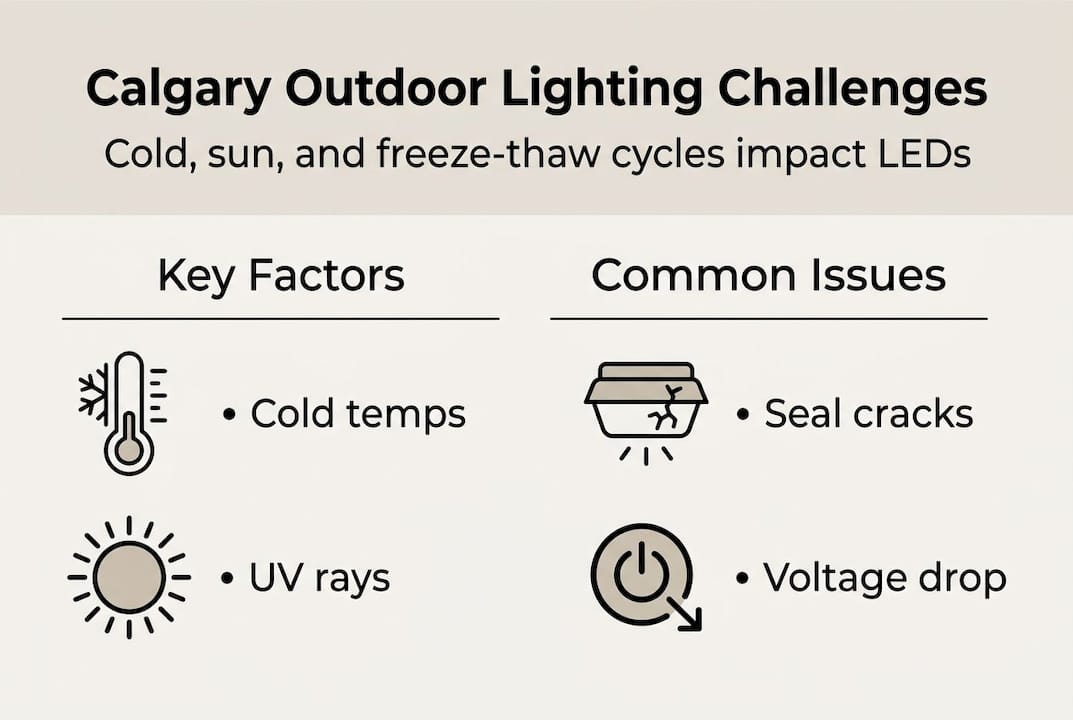
Freeze-thaw cycles are the most underestimated threat. Calgary can swing from below freezing overnight to above zero the next afternoon, sometimes multiple times in a single week during shoulder seasons. Each cycle puts mechanical stress on every joint, seal, and connection in your system.
Here is a quick look at the most common failure types and their typical causes in Calgary:
| Failure type | Most likely cause | Calgary-specific factor |
|---|---|---|
| Flickering lights | Loose connector or voltage drop | Thermal expansion of wiring |
| Dead fixture | Broken seal, water ingress | Freeze-thaw cycle damage |
| Dimming across zones | Voltage drop along run | Long cable runs in cold |
| Controller unresponsive | Moisture or cold exposure | Unsheltered placement |
The placement of your controller matters enormously in Calgary. Controllers installed in unheated garages or exposed eaves can fail when temperatures drop below their rated range. Always check where yours is located before assuming a fixture is the problem.
Key environmental factors to keep in mind:
- IP rating: IP68 is the minimum standard for Calgary permanent lighting
- Seal integrity: Silicone seals degrade faster with repeated freeze-thaw stress
- Voltage drop: Cold increases wire resistance slightly, worsening existing drop issues
- Controller placement: Must be sheltered from direct exposure to precipitation and extreme cold
"Properly rated permanent LED systems are built to stay outside year-round in Calgary. The cold actually helps LED longevity by reducing heat stress, but the freeze-thaw cycle will find any weak seal in the system."
Understanding these factors also helps you see why curb appeal and security depend so directly on choosing and maintaining the right system from the start.
Gathering tools and system information
Before you touch a single fixture, take 20 minutes to gather your tools and pull together your system documentation. Rushing into troubleshooting without the right information is how small problems become expensive ones.
Here is a comparison of what a prepared homeowner brings to a troubleshooting session versus someone who wings it:
| Prepared approach | Unprepared approach |
|---|---|
| System spec sheet on hand | Guessing at voltage and IP rating |
| Multimeter and voltage tester ready | Testing with visual inspection only |
| Controller location documented | Searching the property for the unit |
| Original install photos or notes | No reference for original wiring |
| Replacement connectors available | Multiple trips to the hardware store |
For Calgary permanent LED systems, the two specs that matter most are IP68 rating and -40C tolerance. If your system documentation does not confirm both of these, that is your first finding. A system without these ratings is not built for this climate, and recurring failures will be the result regardless of how well you troubleshoot.
Your basic tool kit should include:
- Multimeter: For checking voltage at the controller output and at individual fixtures
- Non-contact voltage tester: For safely confirming live circuits before handling wiring
- Insulated gloves: Cold weather makes hands less sensitive, increasing accident risk
- Waterproof flashlight: Inspecting under eaves and in junction boxes in winter conditions
- Replacement waterproof connectors: Most seal failures can be fixed on the spot with the right connectors
- Notepad or phone: Document every reading and observation as you go
System information to collect before you start:
- Total number of zones and fixtures per zone
- Controller model and its current location
- Voltage specification (24V is standard for quality permanent systems)
- Date of original installation and any previous repairs
Knowing how your system was installed also helps you understand its expected lifespan. Permanent LED light longevity depends heavily on correct installation and the quality of components used from day one.
Pro Tip: Take photos of your controller wiring and all junction box connections before you start. If you accidentally disturb a connection during inspection, you will have a clear reference to restore it correctly.
Diagnosing common outdoor lighting issues
With your tools ready and system information in hand, work through diagnosis in a logical order. Starting at the controller and moving outward saves time because most failures originate or show up first at the source.
- Check the controller first. Confirm it is powered and showing normal status indicators. A controller that has lost its settings or is showing an error code is often the entire problem, especially after a power surge or extended cold snap.
- Measure output voltage at the controller. For 24V systems, you should read between 23.5V and 24.5V. A reading below this range points to a power supply issue rather than a wiring or fixture fault.
- Test voltage at the first fixture in each zone. If voltage is correct at the controller but low at the first fixture, you have a wiring fault between those two points. If voltage is low at the controller and at the fixture, the power supply is the issue.
- Walk each zone and note which fixtures are affected. A single dead fixture in the middle of a working zone usually means a failed seal or broken connector at that unit. Multiple dim fixtures across a zone point to voltage drop as the cause.
- Inspect connectors and seals on affected fixtures. Look for discolouration, corrosion, cracking, or visible moisture inside the housing. In Calgary, freeze-thaw damage often shows as a hairline crack along the seal edge.
- Check cabling along the roofline and eaves. Ice dams and heavy snow loads can pinch or damage cable runs. Look for kinks, abrasion marks, or sections where the cable has been compressed.
LED systems rated for 50,000+ hours of operation rarely fail from age alone in the first several years. When you see failures in a relatively new system, the cause is almost always environmental stress, a wiring fault, or a voltage issue rather than the LEDs themselves wearing out.
Pro Tip: Address voltage drop before replacing any fixtures. A fixture that appears dead may simply be receiving too little voltage to activate. Correcting the drop often brings multiple fixtures back online without any hardware replacement.
If you want to understand how a well-functioning system should look and perform, reviewing permanent vs traditional lighting gives you a useful benchmark for what reliable output looks like.
Resolving issues and preventive maintenance
Once you have identified the problem, most fixes fall into a few categories. Voltage drop, seal failures, and controller issues each have straightforward solutions when caught early.
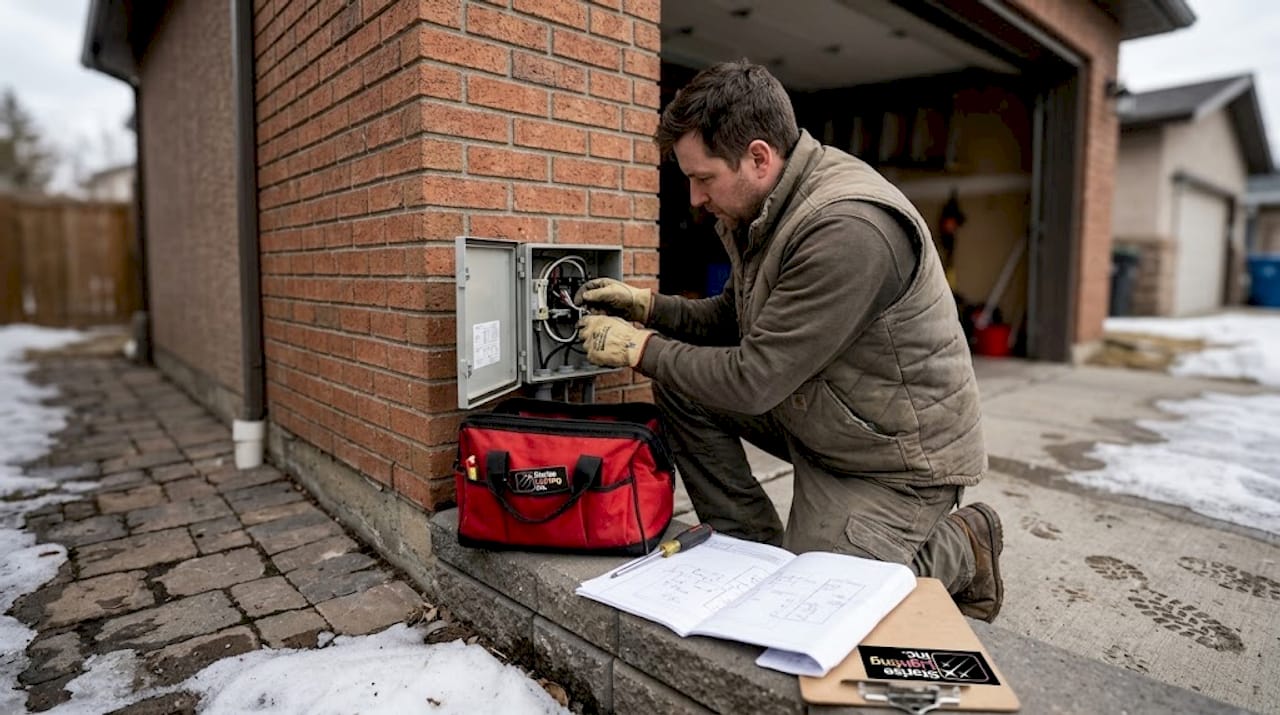
Fixing voltage drop: Shorten cable runs where possible by repositioning the controller or adding a secondary power supply for longer zones. Upgrade undersized cable to a heavier gauge. Ensure all connectors are fully seated and corrosion-free, as a single corroded connector can create enough resistance to dim an entire zone.
Repairing seals and waterproofing: Replace any connector or housing with visible cracking or moisture ingress. Use only waterproof, UV-stable connectors rated for outdoor use. Apply dielectric grease to connector pins before reassembly to prevent future corrosion.
Protecting your controller: If your controller is in an exposed location, move it to a sheltered spot such as inside a heated garage or a weatherproof enclosure. Most controllers are not rated for direct exposure to precipitation or temperatures below a certain threshold.
Here is a seasonal maintenance schedule that keeps Calgary systems running reliably:
| Season | Maintenance task |
|---|---|
| Late autumn | Inspect all connectors and seals before freeze-up |
| Mid-winter | Check controller operation after extended cold snaps |
| Early spring | Walk the roofline for cable damage from ice and snow |
| Summer | Test all zones and update app settings or schedules |
Additional maintenance tasks to do annually:
- Clean fixture lenses with a soft cloth to maintain light output
- Check mounting clips for corrosion or loosening caused by thermal cycling
- Review voltage readings at the start and end of each zone to catch developing drop issues early
- Update controller firmware if your system supports it, as updates often improve cold-weather performance
Properly rated LEDs require no seasonal removal in Calgary. Leaving them in place year-round is not just convenient, it is actually better for the system because repeated removal and reinstallation stresses connectors and mounting points far more than winter weather does.
Pro Tip: Schedule your annual inspection for late September, before the first hard freeze. This gives you time to order replacement parts and complete repairs while working conditions are still comfortable.
For a detailed look at how a proper installation sets up a system for long-term reliability, the permanent lighting installation workflow is worth reviewing. And if you want to understand why reliable lighting matters beyond aesthetics, outdoor lighting in Calgary winters covers the safety and security case in depth.
Why cold climate troubleshooting is different: Lessons from Calgary homes
Most generic lighting guides treat cold weather as simply a harsher version of normal conditions. In Calgary, that assumption leads homeowners to the wrong diagnosis repeatedly. The real lesson from years of working with permanent lighting systems here is that cold is not the problem. Thermal cycling, moisture intrusion, and poor component ratings are the problems. Cold just reveals them faster.
The biggest misconception we see is that winter failures mean the system needs to be removed or replaced entirely. In almost every case, a targeted fix to a seal, connector, or voltage issue restores full performance. IP68 LEDs actually perform better in cold because heat is the primary driver of LED degradation, and Calgary winters eliminate that stress entirely.
Another underappreciated lesson: the homes with the fewest lighting problems are not the ones with the most expensive fixtures. They are the ones where the installation was done correctly the first time, with proper cable management, sheltered controllers, and rated connectors throughout. Good troubleshooting always starts with asking whether the original install met those standards. Reviewing Calgary lighting curb appeal and security shows what a well-installed system can deliver when it is working as intended.
Get professional help or explore permanent lighting solutions
Sometimes a troubleshooting guide gets you most of the way there, but the problem needs a trained eye or a system upgrade to fully resolve.
If your current system keeps failing despite correct maintenance, it may simply not be rated for Calgary conditions. Modern Calgary permanent lighting systems use Gen 2 24V LED technology with IP68 weatherproofing, app-based control, and components built specifically for Alberta's climate. Exploring the full permanent lighting system options at Starise Lighting gives you a clear picture of what a properly engineered solution looks like. Whether you need a professional diagnosis or a complete upgrade, the right support is available for Calgary homeowners.
Frequently asked questions
How do Calgary winters affect outdoor LED lighting systems?
Cold winters improve LED performance by reducing heat degradation, but freeze-thaw cycles put stress on poor-quality seals and connectors, which is where most failures originate.
What is the most common cause of outdoor light dimming?
Voltage drop is the leading cause of dimming in permanent LED systems, occurring more frequently than wiring faults or fixture failures.
Is it necessary to remove permanent outdoor lights for winter in Calgary?
No. Properly rated permanent LEDs are designed to stay installed year-round in Calgary and do not require seasonal removal.
What ratings should I check when troubleshooting outdoor lighting?
Always verify IP68 rating and -40C tolerance on your fixtures and connectors to confirm the system is built for Calgary's climate conditions.