
TL;DR:
- Calgary's extreme cold and weather conditions require exterior lighting to have IP67/IP68 ratings and operate down to -40°C.
- Regular inspection, cleaning, and sealing of fixtures ensure durability and prevent costly repairs during harsh winters.
- Proper planning, including sheltered controllers and low-profile channels, helps maintain reliable outdoor lighting all year.
Calgary winters are brutal on exterior lighting. When temperatures plunge past -30°C and a chinook rolls through the next afternoon, your outdoor fixtures take a serious beating. Flickering lights, moisture-damaged connectors, and blown circuits are not just inconvenient — they leave your home darker, less secure, and frankly less attractive to anyone driving past. The good news is that with the right knowledge, the right products, and a simple seasonal routine, you can keep your exterior lighting looking sharp and working reliably all year long. This guide walks you through everything you need, from local regulations to hands-on maintenance steps.
Table of Contents
- Understand Calgary's climate and regulations for exterior lighting
- Gather the right tools and products for Calgary homes
- Step-by-step: How to inspect, clean, and test your exterior lighting
- Troubleshooting common exterior lighting issues in Calgary
- Expert insights: What most guides miss about exterior lighting in Calgary
Key Takeaways
| Point | Details |
|---|---|
| Choose climate-ready fixtures | Opt for IP67/IP68-rated LEDs that excel in Calgary’s extreme cold and weather swings. |
| Follow city regulations | Shield lighting to prevent glare and avoid neighbour disputes, following by-law requirements. |
| Routine maintenance matters | Inspect, clean, and test systems seasonally for reliable performance and curb appeal. |
| Use the right tools | Proper gear and replacement parts simplify quick repairs and safe upkeep. |
| Permanent LEDs reduce hassle | Modern permanent lighting needs less winterizing, just regular checks. |
Understand Calgary's climate and regulations for exterior lighting
Calgary is not a forgiving city for outdoor fixtures. The combination of deep freezes, heavy snowfall, and the dramatic temperature swings caused by chinook winds creates conditions that will expose every weakness in a poorly chosen or poorly maintained lighting system. Most Canadian cities deal with cold, but Calgary's freeze-thaw cycles are particularly aggressive. A fixture that handles a steady -20°C in Winnipeg may crack and fail when temperatures swing 30 degrees in 24 hours along the foothills.
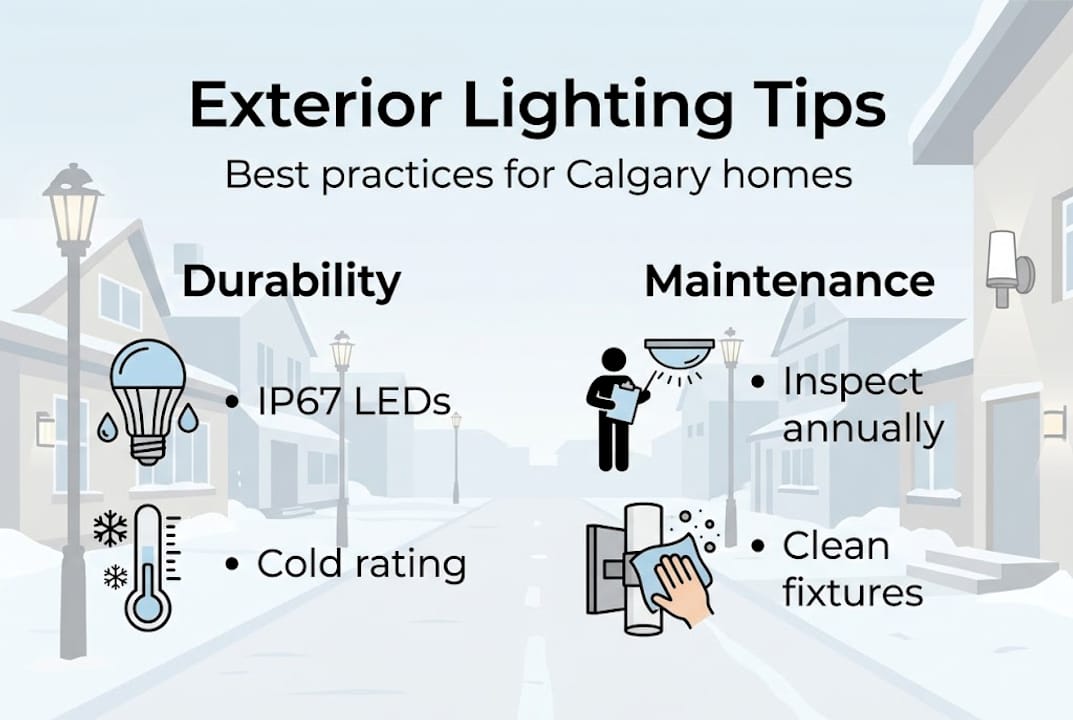
The key spec to look for is the IP (Ingress Protection) rating. For Calgary specifically, IP67/IP68-rated fixtures rated to -40°C are the standard you should insist on. These ratings mean the fixture is fully dust-tight and can withstand prolonged water submersion. LEDs actually perform better in cold temperatures than incandescent bulbs, because the cold slows electron movement and extends the lifespan of the diodes. That said, the housing and connectors around those LEDs still need to be built for Calgary's extremes.
Here is a quick summary of what Calgary's climate demands from your exterior lighting:
- IP67 or IP68 rating on all fixtures and connectors
- Operating range down to -40°C confirmed by the manufacturer
- Low-profile channels that shed snow rather than accumulate it
- Weatherproof wire seals at every junction point
- Sheltered controller placement, such as inside a garage, to prevent freeze damage to electronics
Beyond weather, you also need to stay on the right side of Calgary's municipal rules. Calgary bylaws require shielded lights to prevent light spill and glare, and no fixture should direct light into a neighbour's windows. This is not just a courtesy issue. Violations can result in complaints and orders to modify your installation. The good news for holiday decorating fans: temporary seasonal lights are generally exempt from these rules, provided they are installed safely and removed promptly.
Statistic to know: Calgary regularly records temperatures below -30°C, and quality outdoor lighting for Calgary winters must be rated to handle that range without failure.
Understanding these rules upfront saves you money and headaches. A shielded, properly rated system installed correctly from the start is far easier to maintain than one that needs constant retrofitting to meet code.
Now that you understand why exterior lighting is challenging in Calgary, let's look at what you need to keep it running smoothly.
Gather the right tools and products for Calgary homes
With the right background, you'll want to assemble everything needed for routine and urgent maintenance. Having the correct tools on hand before a problem strikes is what separates a quick 20-minute fix from a week of dark eavestroughs waiting for a parts order.
Here is your essential maintenance kit for Calgary exterior lighting:
- Insulated work gloves rated for cold temperatures
- Extension ladder with non-slip feet for icy or wet surfaces
- IP-rated replacement bulbs and connectors matching your system specs
- Wire brush for removing corrosion from metal contacts
- Non-abrasive cleaner safe for polycarbonate lens covers
- Silicone sealant for re-sealing any compromised junction boxes
- Spare controller fuses and a basic multimeter for electrical checks
Choosing the right fixture type matters just as much as having the right tools. Here is a quick comparison to help you make informed decisions for your home:
| Fixture type | IP rating | Cold rating | Best use for Calgary |
|---|---|---|---|
| Permanent LED roofline | IP67/IP68 | To -40°C | Year-round, low maintenance |
| Temporary string lights | IP44 | To -20°C | Short-term holiday use only |
| Surface-mount spotlights | IP65 | To -30°C | Accent and security lighting |
| Pathway lights | IP67 | To -40°C | Driveways and walkways |
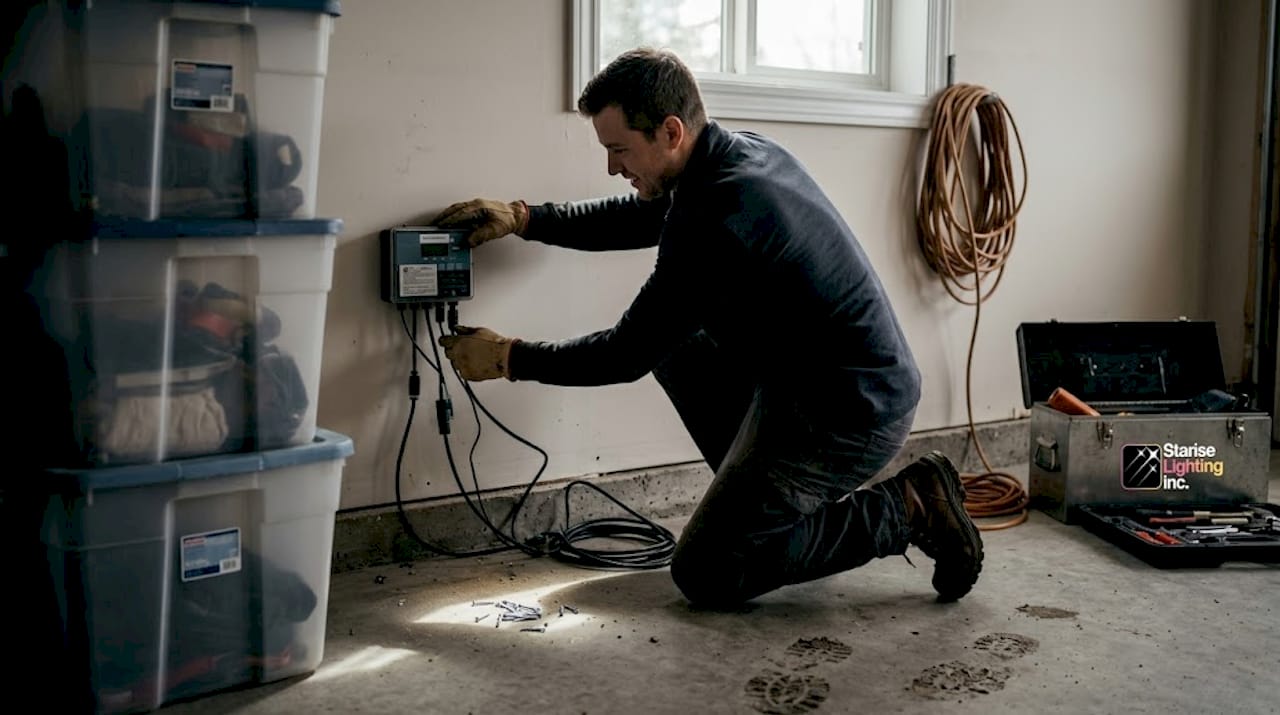
For best permanent lighting solutions for Calgary, the controller placement is often overlooked. Mounting your controller inside a garage or a sheltered utility space keeps it out of direct freeze-thaw exposure. Controllers mounted on exterior walls can develop condensation inside the housing, which leads to circuit failures that are both frustrating and expensive to diagnose.
Low-profile channels are another detail worth prioritising. A channel that sits flush against the roofline sheds snow naturally. A bulky channel catches snow and ice, adding weight and trapping moisture against the fixture seal. It is a small design choice that makes a significant difference over a Calgary winter.
Pro Tip: Stock at least two spare connectors and one replacement driver for your system. After a major chinook or ice storm, supply chains for specialty parts can slow down, and having spares on hand means you restore your lighting the same day rather than waiting.
You can find lighting ideas for Calgary homes that balance aesthetics with practical durability, and reviewing best residential lighting solutions will help you compare options before your next upgrade.
Step-by-step: How to inspect, clean, and test your exterior lighting
Once your kit is ready, follow these practical steps to keep your system in peak condition. Routine maintenance does not need to take more than an hour or two per season, but skipping it is how small issues become expensive repairs.
- Visual inspection first. Walk the full perimeter of your home and look for cracked housings, discoloured lenses, or any fixture that has shifted out of alignment. Pay close attention to areas where snow slides off the roof, as impact damage is common there.
- Check all connectors and seals. Gently tug each connector to confirm it is seated firmly. Look for any white residue or corrosion around metal contacts, which signals moisture has been getting in.
- Test the controller and timer. Run through all programmed scenes or schedules to confirm they execute correctly. A controller that hesitates or skips a zone often has a loose connection or a firmware issue that is easy to resolve early.
- Clean the fixture lenses. Use your non-abrasive cleaner and a soft cloth. Dirty lenses can reduce light output by 20 to 30 percent over a season, which defeats the purpose of having a quality system.
- Check for code compliance. Confirm that no fixture has shifted to direct light toward a neighbour's property. Wind and ice can nudge spotlights off their original angle.
- Replace any faulty components. Swap out damaged bulbs or connectors using your spare parts kit. Always power down the circuit before handling any component.
- Document what you find. A quick photo log of your system each season helps you spot gradual changes, like a fixture slowly tilting or a seal beginning to discolour.
For systems using IP67/IP68-rated fixtures rated to -40°C, you will find that most seasonal checks come back clean. That said, the advantages of exterior lighting are only fully realised when the system is actually working at full capacity.
Safety warning: Never service exterior lighting during icy conditions or with wet hands. Even low-voltage systems carry risk when moisture is present, and a fall from a ladder on an icy surface is a serious hazard.
Pro Tip: Set two calendar reminders each year, one in late April and one in early October. These align with Calgary's shoulder seasons, catching any damage from winter before summer and preparing the system before the first hard freeze.
Troubleshooting common exterior lighting issues in Calgary
With routine maintenance in place, sometimes issues still arise. Here is how to solve them fast.
| Problem | Likely cause | Solution |
|---|---|---|
| Flickering lights | Loose connector or voltage drop | Re-seat connectors; check wire gauge |
| Water ingress in fixture | Failed seal or cracked housing | Replace seal with silicone; swap housing if cracked |
| Ice damage to channel | Snow accumulation and freeze | Install low-profile channel; clear snow promptly |
| Complete power loss to zone | Tripped breaker or failed driver | Reset breaker; test driver with multimeter |
| Remote or app not responding | Controller firmware or Wi-Fi drop | Restart controller; check firmware update |
| Light spill onto neighbour's property | Fixture shifted by wind or ice | Realign fixture; add shield if needed |
For glare and spill issues specifically, Calgary bylaws require shielded fixtures to prevent light from crossing property lines. If a neighbour raises a concern, address it promptly. A simple shield or angle adjustment usually resolves the issue without any cost.
When deciding between permanent versus temporary lights, keep in mind that permanent systems generally have fewer failure points because they are engineered for continuous outdoor exposure rather than occasional seasonal use.
Here are the preventative habits that cut down on problems significantly:
- Clear snow from low-profile channels after heavy falls
- Inspect all seals after every major chinook event
- Keep the controller area dry and ventilated
- Avoid using pressure washers directly on fixtures
- Review your choosing outdoor lighting for Calgary homes checklist annually
Know when to call a professional. If you find repeated tripping on a single circuit, signs of arcing or burn marks near any connector, or water inside the controller housing, stop and call a licensed electrician. These are not DIY fixes.
Expert insights: What most guides miss about exterior lighting in Calgary
Most maintenance guides stop at the technical checklist. What they miss is the mindset trap that catches Calgary homeowners off guard: the belief that a quality LED system basically takes care of itself.
It is true that modern permanent LED systems are far more durable than the string lights of a decade ago. But