
TL;DR:
- Choosing the correct outdoor fixture materials is crucial for ensuring longevity and reducing maintenance costs in harsh climates.
- Aluminium, brass, and stainless steel are the top options, with coatings and seals playing key roles in durability.
Choosing the wrong outdoor fixture materials is one of the most common and costly mistakes homeowners make when upgrading their exteriors. What looks great in a showroom can corrode, yellow, or fall apart within a few seasons if the material is poorly matched to your local climate. So, what are outdoor fixture materials exactly? They are the structural and optical components that make up any outdoor light fitting, including the housing, finish, and lens, and each one directly affects how long your fixture lasts and how much upkeep it demands. This guide gives you the practical knowledge to choose wisely.
Table of Contents
- Key takeaways
- What are outdoor fixture materials: common metals explained
- How climate shapes your material choice
- Lens materials: glass versus polycarbonate
- IP ratings and sealing: the overlooked layer of protection
- Practical steps for choosing and maintaining outdoor fixtures
- What I have learned after years of watching fixtures fail and last
- Why Co-starise permanent lighting is built to last
- FAQ
Key takeaways
| Point | Details |
|---|---|
| Material choice drives longevity | Aluminium, brass, and stainless steel each offer distinct advantages depending on your climate and budget. |
| Coatings matter as much as the base metal | Powder coat quality and finish colour affect how well a housing resists corrosion over time. |
| Lens type affects more than light quality | Tempered glass outlasts polycarbonate in UV-heavy or high-wattage applications and holds its clarity longer. |
| IP ratings only work with intact seals | A high IP rating means nothing if gaskets degrade from temperature cycling or poor maintenance. |
| Climate is your most important variable | Coastal, humid, and dry climates each demand different material strategies to avoid premature failure. |
What are outdoor fixture materials: common metals explained
The industry term for the housing components of outdoor luminaires is "fixture body materials," and metals are chosen primarily for corrosion resistance, weight, and finish compatibility. Understanding the strengths and weaknesses of each metal is the foundation of making a smart purchase.
Aluminium is the most widely used material in outdoor fixtures today. It is lightweight, naturally resistant to rust, and takes powder coating exceptionally well. Most mid-range and premium fixtures you will find at a lighting retailer are aluminium. It handles freeze-thaw cycles well, which matters a great deal in Canadian climates.
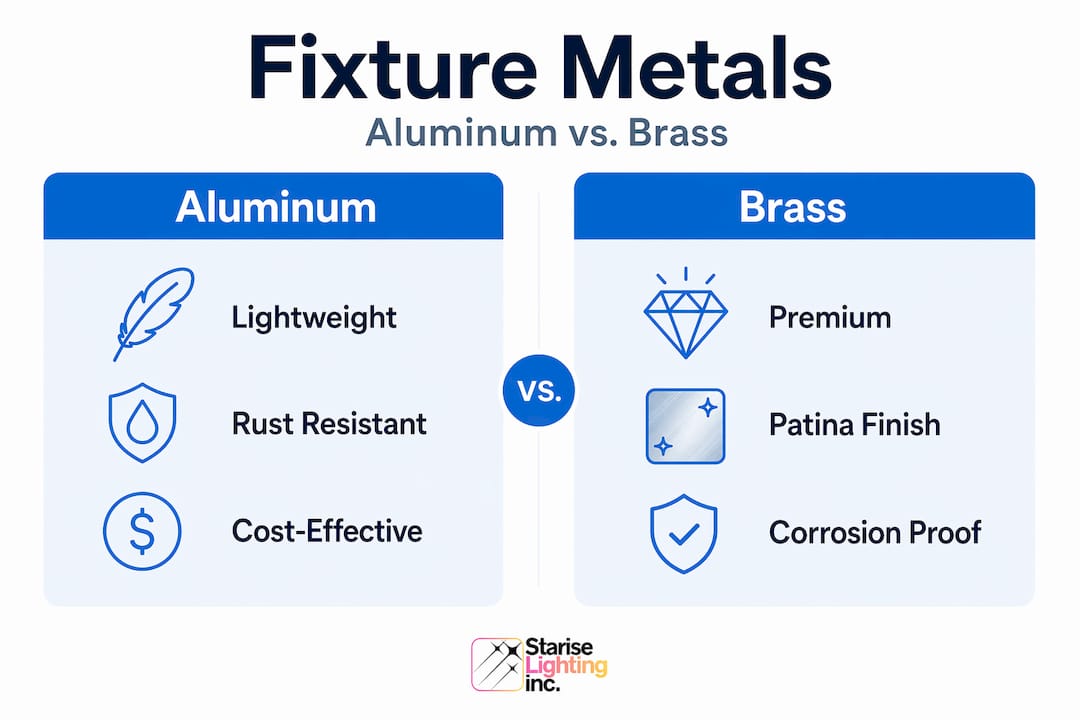
Brass and copper are the premium end of the spectrum. Both develop a protective patina over time rather than rusting, which is part of their appeal. Brass is particularly durable and is commonly used in coastal and high-humidity applications. Copper is favoured for decorative lanterns and accent pieces. Both come at a higher price point, but that cost reflects genuine longevity.
Stainless steel offers a clean, modern look and strong corrosion resistance. Marine-grade stainless (grade 316) is the specification you want near saltwater or in very humid environments. Standard grade 304 stainless works well in most other outdoor settings.
Mild steel is where many budget fixtures cut corners. Steel is strong, but without a high-quality coating it will rust. It can work in covered, dry locations, but avoid it anywhere it might face rain, snow, or salt air.
- Aluminium: lightweight, rust-resistant, budget-friendly, excellent with powder coating
- Brass: premium durability, natural patina, best for coastal or decorative use
- Copper: beautiful weathering, highly corrosion resistant, higher cost
- Stainless steel (316 grade): strong and salt-resistant, suits modern exterior styles
- Mild steel: strong but rust-prone, only suitable for protected, dry locations
Pro Tip: Run a magnet along the fixture housing before you buy. Aluminium and brass are non-magnetic. If the magnet sticks, the housing contains steel, which is a red flag for any exposed outdoor application.
Coatings and finishes change the performance of any base metal. Powder coating adds a protective layer that resists chips and UV fading far better than standard paint. Anodising on aluminium creates a surface that is part of the metal itself rather than sitting on top, making it particularly durable in harsh conditions.
How climate shapes your material choice
Your local environment is the single most important factor when selecting durable outdoor fixture options, and yet most homeowners skip this step entirely. A fixture that thrives in Calgary can fail in two seasons if it were installed near Halifax harbour.
Coastal and salt-air environments
Salt air is aggressive. It accelerates corrosion on any metal that is not specifically suited to it. Steel substrate fixtures fail within three to five years in coastal conditions even when they carry a quality coating. Marine-grade anodised aluminium is rated 9 out of 10 for coastal durability, solid brass scores 8 out of 10, while standard powder-coated aluminium sits at 7 out of 10. Plain steel scores just 3 to 4 out of 10.
There is also a nuance in finish colour worth knowing. Neutral black pigments outperform bronze-style powder coat finishes in salt air because bronze pigments are more vulnerable to the chemical reactions triggered by airborne chloride.
Humid and temperate climates
Humidity encourages condensation inside fixture housings, which accelerates corrosion from the inside out. This is where the quality of the substrate metal beneath the coating matters most. A thin powder coat on a steel housing will eventually let moisture in through micro-cracks, especially where the metal is cut or drilled. Good edge sealing and anodising quality often dictate real-world durability far more than the visible finish.
Dry and UV-intensive climates
Dry regions spare you from corrosion but introduce UV fading and thermal stress. Powder coat finishes lose their gloss and colour over time under intense sun. Clear-coated brass and anodised aluminium hold up better than painted finishes because the protective layer is either chemical (anodising) or deeply bonded (powder coat versus standard spray paint). For Canadian homes that face strong summer sun along with freezing winters, aluminium with a quality powder coat is typically the best value balance.
| Material | Coastal rating | UV resistance | Cold weather performance |
|---|---|---|---|
| Marine-grade anodised aluminium | 9/10 | High | Excellent |
| Solid brass | 8/10 | High | Very good |
| Powder-coated aluminium | 7/10 | Moderate to high | Good |
| Stainless steel (316) | 8/10 | High | Excellent |
| Mild steel | 3/10 | Low | Poor without coating |
Lens materials: glass versus polycarbonate
The lens or diffuser on an outdoor fixture does more than direct light. It protects the internal components from moisture and debris, and its material choice affects heat management, clarity, and lifespan.
Tempered glass is the premium choice for most permanent outdoor applications. It offers better UV stability and chemical resistance than plastic alternatives, and it does not yellow over time. It is the preferred option in coastal and high-wattage fixture applications precisely because of this consistency.
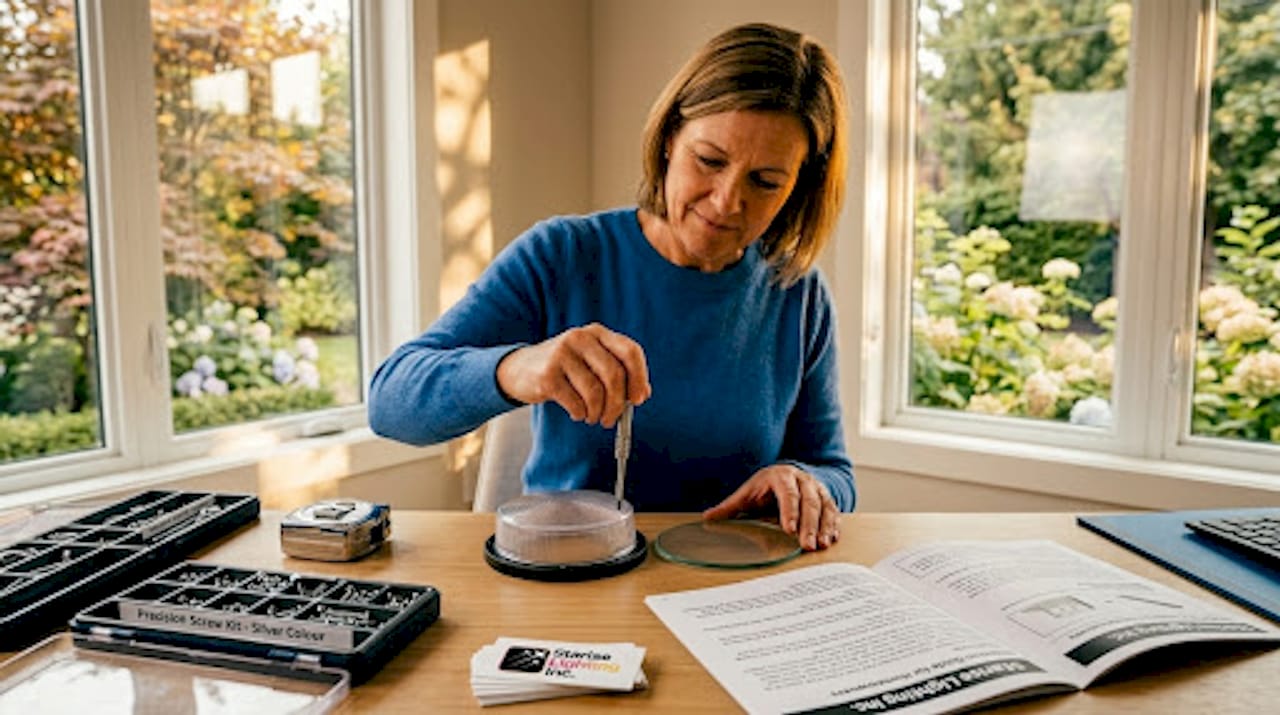
Polycarbonate is lighter, less expensive, and offers impressive impact resistance, reaching IK10 ratings in some formulations. That said, polycarbonate requires UV-stabilised hard coating to prevent yellowing and surface etching. A UV hard coating rated for 10 years or more is the minimum acceptable specification for outdoor use. Without it, the lens clouds over within a few years, reducing light output and looking unsightly.
There is also a thermal issue worth knowing about. Thermal expansion differences between an aluminium housing and a polycarbonate lens can stress the gasket seal in fixtures over 150 watts. Tempered glass expands less, maintaining gasket compression over time and supporting a longer-lasting IP seal.
Pro Tip: If you are choosing a fixture for a location with direct sun exposure and no overhead shelter, always choose tempered glass over polycarbonate. The cost difference is modest but the clarity and longevity gap widens significantly after three or four years outdoors.
For pathway fixtures, lanterns, and decorative pieces in sheltered spots, polycarbonate is a reasonable and cost-effective choice as long as the UV coating specification is confirmed with the supplier.
IP ratings and sealing: the overlooked layer of protection
Material quality gets you most of the way to a durable outdoor fixture, but the sealing system determines whether moisture ever reaches the components that material is protecting. The IP rating is a standardised measurement of how well a fixture resists dust and water ingress.
IP65 means the fixture is dust-tight and protected against low-pressure water jets. This is the standard minimum for most exposed outdoor fixtures. It covers rain, garden hose spray, and snow melt but not immersion.
What most homeowners do not realise is that the IP rating is only as reliable as the seals maintaining it over time. The components that actually do the work include:
- Gaskets between the lens and housing frame
- Cable entry glands that prevent moisture tracking along the wire
- Lens-to-frame compression seals that maintain contact under temperature cycling
- Thread or snap-lock closure integrity where the fixture opens for maintenance
Gasket material compatibility with UV, temperature extremes, and cleaning chemicals determines how long a fixture holds its rating in real-world use. A fixture opened for a bulb change and not properly reseated can lose its IP65 status entirely.
IP66 and IP67 ratings are worth specifying in areas with driven rain, pressure washing, or standing water risk. IP67 adds protection against temporary submersion, useful for ground-level fixtures in areas prone to pooling after heavy rain.
Routine maintenance of seals is straightforward. Inspect gaskets annually for cracking or compression loss, particularly after Calgary winters where freeze-thaw cycles stress every sealing surface. Replace any gasket that shows visible cracking before the next wet season.
Practical steps for choosing and maintaining outdoor fixtures
Knowing the theory is useful. Putting it into practice at a hardware store or showroom is what actually protects your investment.
- Run the magnet test. Hold a magnet to the housing body before purchasing any fixture. Non-magnetic means aluminium, brass, or stainless. Magnetic means steel. Do not buy steel for any exposed outdoor location.
- Confirm the IP rating and ask about gasket material. Any fixture claiming IP65 should have documentation. Ask the retailer what the gaskets are made of. Silicone outperforms standard rubber for UV and temperature resistance.
- Match the material to your location. For exposed coastal areas, specify marine-grade anodised aluminium or solid brass. For sheltered suburban entryways, standard powder-coated aluminium is usually sufficient and cost-effective.
- Check the lens specification. Confirm whether lenses are tempered glass or polycarbonate, and if polycarbonate, verify the UV coating rating. Any reputable manufacturer will disclose this.
- Factor in total cost of ownership. A brass fixture at twice the upfront price of steel can last four to five times as long. Learning about long-lasting lighting systems before you buy changes how you think about price per year rather than price per unit.
Pro Tip: Clean fixture housings twice a year with mild soapy water and a soft cloth. Avoid abrasive cleaners on powder-coated finishes as they damage the outer layer and accelerate corrosion from that point forward.
For homeowners looking at exterior lighting materials for Calgary homes, the climate demands particular attention to cold-weather performance alongside corrosion resistance, since fixtures here face both.
What I have learned after years of watching fixtures fail and last
From where I sit, the most persistent mistake I see homeowners make is treating fixture material as a detail rather than the decision. You spend weeks choosing the style and ten minutes on the spec sheet.
The fixtures that come back to haunt people are almost always the ones where someone picked a bronze-finish fitting without checking whether the housing beneath was steel or aluminium. The finish looks identical for 18 months. Then the rust bleeds through the coating at the mounting holes, the finish flakes, and the whole thing needs replacing. That lesson costs real money.
My honest take is that material quality matters more than aesthetics for anything that faces rain, UV, or temperature swings. Style choices narrow your field of options. Material specification sets a floor on how long the fixture performs.
The good news is that once you understand what to look for, the decisions become fast and clear. Aluminium or brass for the housing. Tempered glass for the lens in exposed locations. Silicone gaskets. IP65 or above. That combination will outlast almost anything else in the residential price range, regardless of what style you choose within it.
— Starise
Why Co-starise permanent lighting is built to last
If this article has made one thing clear, it is that material quality is where outdoor lighting either holds up or falls apart. Co-starise designs its permanent lighting systems around exactly this principle. Every fixture uses aluminium housing with weather-rated finishes and meets or exceeds IP65 standards for protection against Calgary's freeze-thaw winters and year-round precipitation.
The Gen 2 24V LED technology Co-starise installs is built for permanent outdoor use, not seasonal or temporary applications. You are not replacing these fixtures every few years. The materials are chosen to match the climate they are installed in, and the installation is handled by people who understand what that actually means for long-term performance. If you want lighting that looks as good in year five as it did on install day, that starts with the right materials and the right team.
FAQ
What metals are best for outdoor light fixtures?
Aluminium and brass are the top choices for most residential outdoor fixtures. Marine-grade anodised aluminium leads for coastal durability at 9 out of 10, while solid brass offers a close second with the benefit of a natural protective patina over time.
What does IP65 mean for outdoor fixtures?
IP65 means a fixture is fully dust-tight and protected against low-pressure water jets such as rain and garden spray. It is the standard minimum rating for exposed outdoor residential lighting applications.
How long do polycarbonate lenses last outdoors?
Polycarbonate lenses with a UV-stabilised hard coating rated for 10 or more years can hold up well outdoors. Without that coating, they typically yellow and lose optical clarity within three to four years of sun exposure.
Can I use standard steel fixtures outdoors?
Steel fixtures can work in covered, dry locations but will corrode rapidly in exposed settings. In coastal or humid environments, steel substrate fixtures typically fail within three to five years even when coated.
How do I know if a fixture will hold its IP rating over time?
Check the gasket material specification. Silicone gaskets resist UV and temperature cycling better than standard rubber, making them more reliable for maintaining long-term seal integrity on outdoor fixtures.