
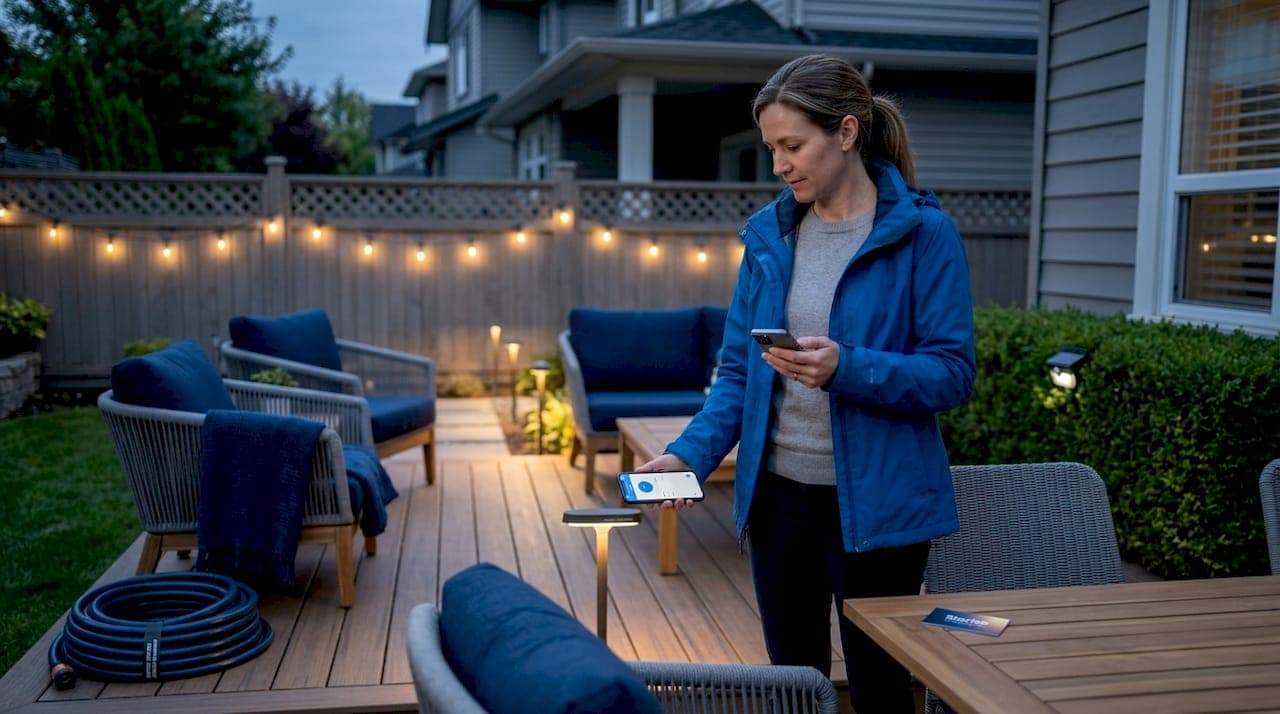
TL;DR:
- Next-gen outdoor lighting combines LED technology with intelligent controls, wireless connectivity, and security features to optimize energy efficiency and safety. Proper design, ecosystem compatibility, and weatherproofing are essential for long-term reliability and homeowner satisfaction. Investing thoughtfully in a professionally installed system offers significant energy savings, enhanced security, and property value increases over time.
Most homeowners assume outdoor lighting comes down to two things: how bright it is and whether you can control it from your phone. That framing misses most of what makes next-gen outdoor lighting genuinely worth your attention. What is next-gen outdoor lighting, really? It is a convergence of outdoor LED lighting technology, intelligent automation, weather-resistant construction, and security integration that does far more than light a pathway. This guide breaks down how it works, what it saves you, and how to approach it without making expensive mistakes.
Table of Contents
- Key takeaways
- What is next-gen outdoor lighting, really?
- Energy efficiency: the numbers that matter
- Security advantages of smart outdoor lighting
- Design principles for next-gen lighting installations
- How smart outdoor lighting actually works
- My honest take on next-gen lighting as a long-term investment
- Permanent smart lighting built for Canadian homes
- FAQ
Key takeaways
| Point | Details |
|---|---|
| LEDs are the foundation | Solid-state outdoor LED technology uses up to 70% less energy than traditional lighting while lasting significantly longer. |
| Automation beats manual control | The best smart features work on their own after setup, including daylight harvesting, scheduling, and motion response. |
| Security goes beyond brightness | Motion-triggered lighting integrated with sensors deters intruders more effectively than static floodlights ever could. |
| Design requires layering | Single-point uplighting is a common mistake; proper installations use multiple fixture angles and lighting types. |
| System compatibility matters most | Choosing fixtures compatible with your existing smart home ecosystem saves you cost and frustration long term. |
What is next-gen outdoor lighting, really?
Next-gen outdoor lighting is not a single product. It is a category of technology that combines solid-state LED light sources with intelligent controls, wireless connectivity, and smart home integration into a single exterior system. The result is something fundamentally different from the motion-sensor floodlight your parents bolted above the garage door.
The hardware foundation is outdoor LED lighting technology, specifically solid-state lighting that produces light by passing current through a semiconductor. Compared to incandescent or halogen bulbs, LEDs produce far less heat, last tens of thousands of hours longer, and can be tuned precisely for colour temperature and intensity. Smart lighting can reduce household lighting energy use by 40 to 70%, and that number only grows when you layer in automation.
Controls are where next generation lighting solutions start to separate themselves. Modern systems use:
- Motion sensors that trigger lighting only when movement is detected, eliminating waste during unoccupied periods
- Daylight harvesting that automatically adjusts output based on ambient light levels throughout the day
- Astronomical scheduling that ties on/off times to actual sunrise and sunset data for your location
- Remote dimming and zoning that let you group fixtures and control them independently
Connectivity protocols matter more than most homeowners realise. The current generation of fixtures uses Wi-Fi, Zigbee, Thread, or the newer Matter standard. Matter in particular is worth understanding because it is a unified protocol designed to let devices from different manufacturers work together without hubs or compatibility headaches. Products built on Zigbee and Thread also form mesh networks, meaning each device helps extend the signal range across your property.
Pro Tip: Before purchasing any smart outdoor fixture, check which protocol it uses and whether it is compatible with your existing smart home hub. Changing ecosystems later is costly and frustrating.
Energy efficiency: the numbers that matter
Energy savings are the most concrete return on investment for next-gen outdoor lighting, and the numbers are more persuasive than most homeowners expect.
| Lighting type | Estimated energy use | Typical lifespan |
|---|---|---|
| Incandescent | Baseline | 1,000 hours |
| Halogen floodlight | 10% less than incandescent | 2,000 hours |
| Standard LED | 60% less than incandescent | 25,000 hours |
| Smart LED with automation | Up to 70% less than incandescent | 25,000+ hours |
The savings compound quickly. A home running eight outdoor fixtures for six hours per night sees a meaningful reduction in monthly bills when switching to smart LEDs with scheduling. Federal efficiency standards now mandate advanced controls such as occupancy sensors and daylight harvesting in public facilities, and those standards have accelerated product development across the residential market too.
Beyond the bill, there is the environmental side. Outdoor lighting is a significant source of light pollution in most urban and suburban areas. Fixtures with asymmetric optics and astronomical scheduling reduce unnecessary sky glow, keeping light where it belongs and cutting energy use during low-traffic overnight hours. You can read more about how to maximise LED energy savings on the Co-starise blog for a deeper look at automation-driven reductions.
Pro Tip: Payback periods for smart LED outdoor systems typically range from two to four years depending on current energy costs and hours of use. After that, every year is pure savings.
Residential property values also respond to quality exterior upgrades. Quality lighting upgrades have been linked to property value increases of 3 to 5%. That changes the calculation from "how much does this cost?" to "how much does this return?"
Security advantages of smart outdoor lighting
The benefits of smart outdoor lights for security go well past simply keeping your property visible at night. The real advantage is behavioural deterrence combined with system integration.
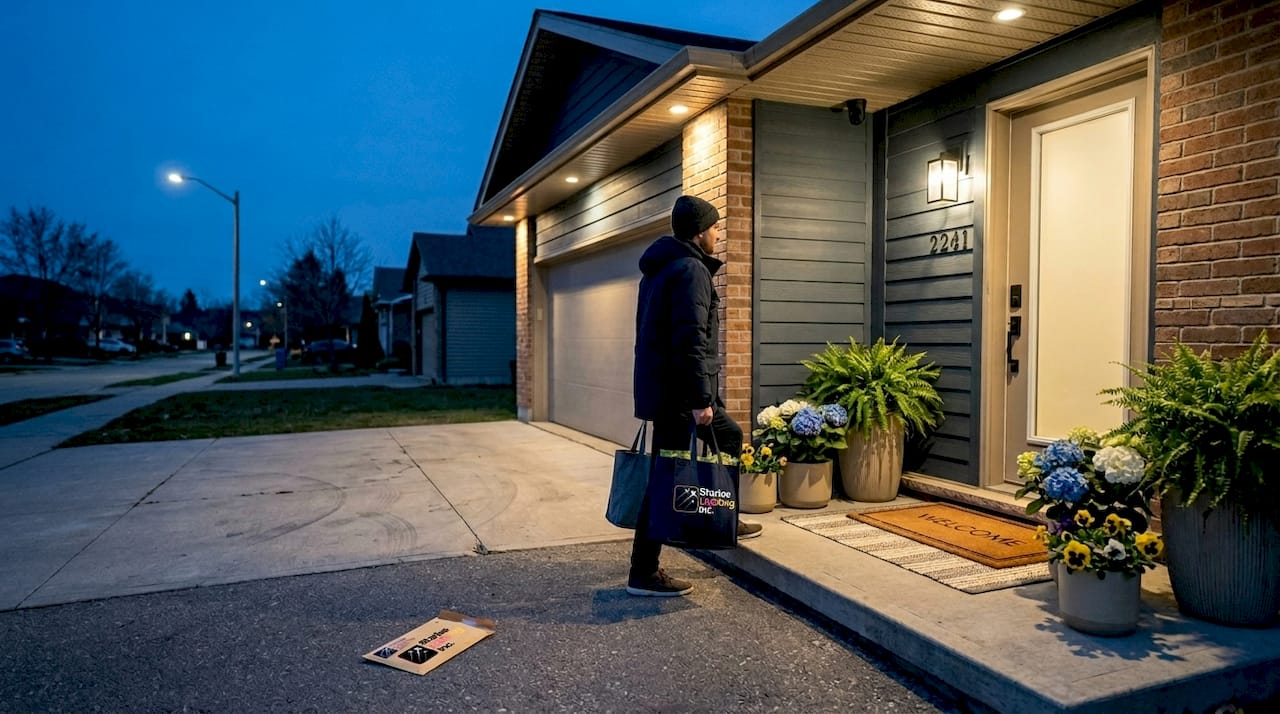
Motion-triggered lighting startles intruders and draws attention far more effectively than static floodlighting that is on all night. A light that suddenly activates signals that the property is monitored and responsive. A light that never changes signals nothing at all.
Here is what a properly integrated smart security lighting system can do:
- Trigger on motion detected by passive infrared sensors, activating the exact fixtures nearest to the intrusion point rather than flooding the entire property
- Alert your phone simultaneously, so you know about movement in real time whether you are home or not
- Link to camera systems to automatically begin recording when lighting activates, giving you timestamped footage
- Simulate occupancy through randomised scheduling when you are travelling, making the property appear lived-in to anyone watching from the street
- Integrate with alarm systems so that a triggered alarm can activate all exterior lights at full brightness simultaneously
The security effectiveness of these systems improves significantly when lighting is paired with sensors and surveillance rather than used as a standalone measure. Think of lighting as one layer in a broader strategy, not the whole strategy. For a closer look at how lighting controls boost security alongside energy savings, Co-starise has a detailed post worth reading.
Design principles for next-gen lighting installations
Getting the technology right is only half the job. Poorly designed smart lighting is still poorly designed lighting. The advancements in exterior lighting mean nothing if fixtures are aimed incorrectly or installed without a plan.
Professional lighting design rests on three pillars. Architectural lighting design relies on revealing form, layering ambient and accent light, and controlling glare. Applying those principles to a residential exterior looks like this:
- Reveal architectural form by positioning fixtures at angles that create depth and shadow rather than flat, uniform illumination. A single uplight at the base of a tree creates an unnatural, theatrical look. Two fixtures at different heights and angles create dimension.
- Layer your lighting types. Path lights handle safety and wayfinding. Wall-wash fixtures handle ambient brightness. Accent lights handle focal points like trees, entryways, and architectural features. No single fixture type can do all three jobs well.
- Control glare rigorously. Fixtures aimed directly at eye level or positioned without shielding cause discomfort and reduce visibility. Honeycomb louvers and asymmetric optics keep light directed at surfaces rather than into eyes.
- Plan for Canadian winters. LEDs emit minimal radiant heat, which means snow and ice can accumulate on fixture lenses and obstruct output. Fixture housing design and mounting angles matter for year-round performance in climates like Calgary's.
| Common mistake | Better approach |
|---|---|
| Single uplight per tree | Two fixtures at different angles for natural dimension |
| All fixtures on one circuit | Zoned circuits for independent control of areas |
| No glare shielding | Louvers or recessed fixtures to direct light at surfaces |
| App-only control | Wall override switch for network outage resilience |
How smart outdoor lighting actually works
Understanding how smart lighting works removes a lot of the confusion homeowners bring to the buying process. The short version: a smart outdoor fixture connects to your home network or a dedicated hub and can then be controlled by an app, a voice assistant, automated schedules, or physical sensors.
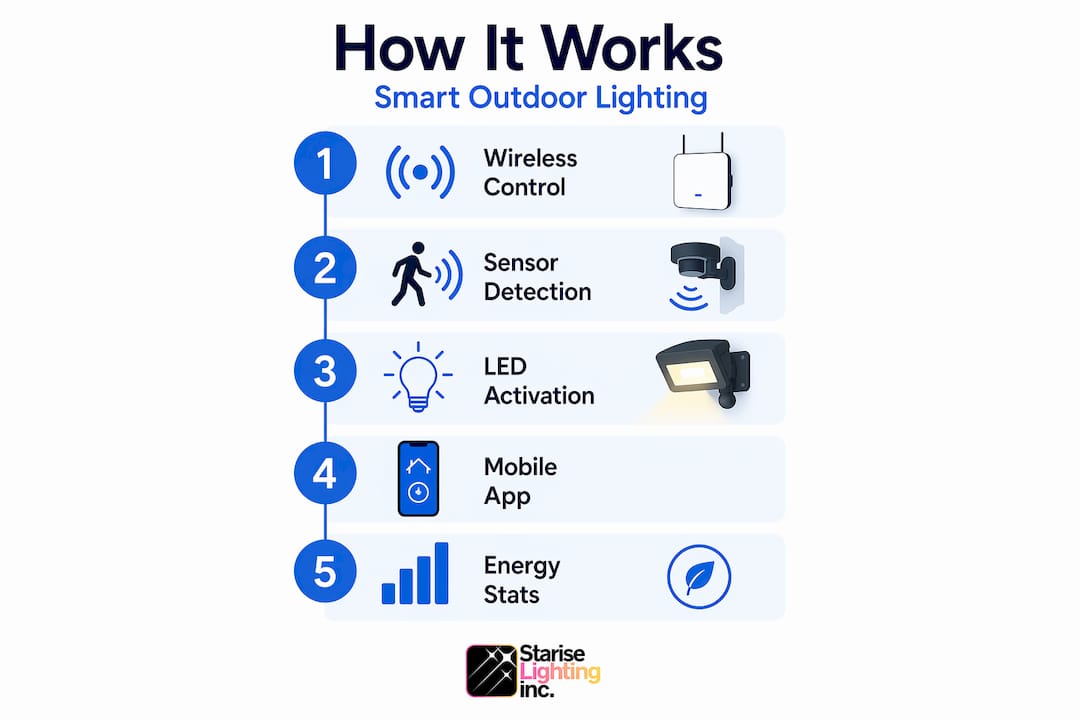
Most homeowners start with app-based control and discover fairly quickly that manually adjusting lights every evening defeats the purpose. The real value comes from automation. Once you configure a schedule tied to astronomical data and set motion sensor sensitivity, the system runs itself. Automations require zero user input once configured, which reshapes what homeowners expect from their lighting over time.
Voice control through Alexa, Google Home, or Apple Home works well for on-demand adjustments. But it should not be your primary control method for outdoor lighting. Outdoor lights serve safety and security functions, and those functions need to work even when your Wi-Fi is down. Smart systems should include a manual override or smart wall control to maintain operation during app or network outages.
Ecosystem compatibility with Alexa, Google Home, and Apple Home alongside stable firmware update paths is now one of the primary criteria by which smart outdoor products are judged. A fixture that works brilliantly today but is abandoned by its manufacturer in three years is not a smart investment.
My honest take on next-gen lighting as a long-term investment
I have worked with enough homeowners to know that the biggest mistakes in smart outdoor lighting happen before a single fixture is installed. Someone gets excited about a product, orders it without checking protocol compatibility, and ends up with an island device that will not talk to anything else in their home. That is an expensive lesson.
My experience tells me that next-gen outdoor lighting is genuinely one of the highest-return home upgrades available right now. Not because it looks impressive at a dinner party, though it does. Because the combination of energy savings, security integration, and property value lift means the system pays you back in measurable ways over time.
What I find homeowners consistently underestimate is long-term usability. A system that is a pleasure to use in year one but feels clunky or requires manual workarounds in year three is not a good system. Long-term homeowner satisfaction depends on system reliability, intuitive control, and adaptability. Those are the criteria I would prioritise above brightness specs or the number of colour options.
My advice: plan your zones and design intent before you shop. Know your ecosystem. Prioritise weatherproofing for your specific climate. And resist the urge to buy piecemeal. A thoughtfully designed system installed once will outperform a collection of disconnected smart gadgets added over several years every single time.
— Starise
Permanent smart lighting built for Canadian homes
If you are ready to move from researching to installing, Co-starise specialises in permanent outdoor lighting systems designed specifically for residential properties in Calgary and the surrounding region. The systems use Gen 2 24V LED technology, built for the kind of winters that render ordinary fixtures useless by February. Every installation integrates energy efficiency, motion-triggered security features, and full app control from day one, with weatherproof construction rated for long-term outdoor use in harsh climates.
Unlike buying individual fixtures and trying to make them work together, Co-starise designs the full system as a single solution. You get professional consultation, expert installation, and a lighting setup that works reliably season after season without the piecemeal frustration. Explore the full system overview to understand the technology and see how it fits your property, or request a quote directly to get a personalised recommendation for your home.
FAQ
What is next-gen outdoor lighting?
Next-gen outdoor lighting combines solid-state LED technology with smart controls, wireless connectivity, and security integration to create exterior lighting systems that automate energy savings, enhance safety, and improve curb appeal beyond what traditional fixtures offer.
How does smart outdoor lighting work?
Smart outdoor lighting connects to your home network via Wi-Fi, Zigbee, Thread, or Matter protocols, allowing control through an app, voice assistant, or automated schedules and sensors. Once configured, most systems operate entirely on their own without manual input.
What are the main benefits of smart outdoor lights?
The main benefits include energy savings of 40 to 70% compared to traditional lighting, improved security through motion-triggered responses and camera integration, increased property value, and the ability to customise lighting scenes and schedules to suit your lifestyle.
How much can smart outdoor lighting reduce my energy bill?
Smart LED outdoor systems can reduce household lighting energy consumption by 40 to 70% depending on usage patterns and the level of automation configured. Payback periods typically fall between two and four years.
Is smart outdoor lighting worth it in cold climates like Calgary?
Yes, provided you choose fixtures with appropriate weatherproofing and housing designed for temperature extremes. LEDs emit minimal heat, so fixture design must account for snow and ice accumulation on lenses. Permanent systems built for Canadian climates address these factors in the hardware specifications.