
TL;DR:
- LED outdoor lighting can reduce energy use by up to 90% compared to traditional bulbs.
- Smart controls like timers and motion sensors significantly enhance energy savings.
- Proper design and owner management optimize long-term benefits and return on investment.
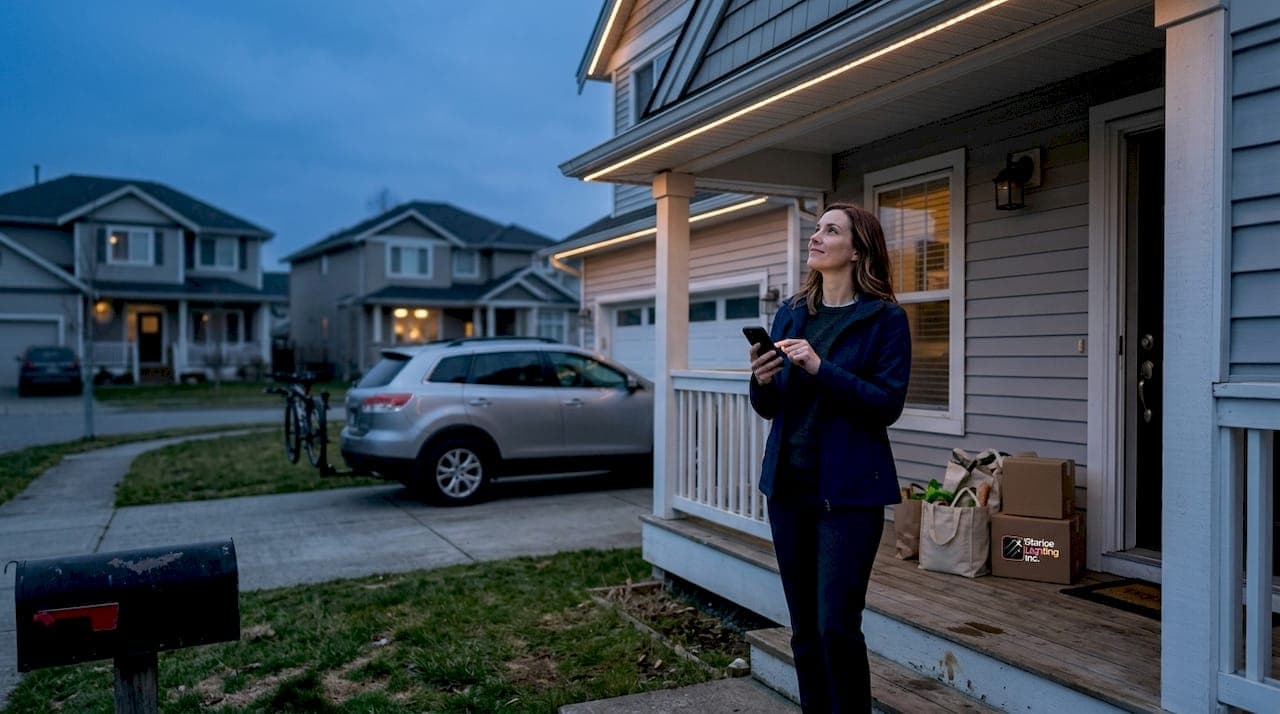
Keeping your Calgary home bright, secure, and beautiful year-round sounds straightforward until your hydro bill arrives in January. Many homeowners assume that installing permanent outdoor lighting will automatically mean high energy costs, but that thinking overlooks how dramatically LED technology has changed the equation. The real story is more nuanced: the right system, paired with smart controls and thoughtful design, can deliver stunning curb appeal and genuine long-term savings. What follows is a clear-eyed look at what actually drives those savings and how to get the most from your investment.
Table of Contents
- How much energy can permanent LED lighting actually save?
- Smart controls: The secret multiplier for energy savings
- Comparing permanent lighting systems: What really saves most?
- Bonus factors: Design, daylight, and targeted use
- The real secret to energy savings with permanent lighting
- Ready to upgrade? Get permanent lighting plus energy savings
- Frequently asked questions
Key Takeaways
| Point | Details |
|---|---|
| LEDs cut energy use | Permanent LED outdoor lighting can reduce your energy use by up to 90% compared to old bulbs. |
| Controls amplify savings | Adding timers, sensors, and dimmers makes a bigger impact than LEDs alone for cost reduction. |
| Smart system choices matter | Choose outdoor-rated, ENERGY STAR-qualified LEDs and a reliable control system for the best results. |
| Design and habits count | How you use and place lighting is as important as what you install for long-term energy savings. |
How much energy can permanent LED lighting actually save?
Let's start with something concrete. LEDs use up to 90% less energy than traditional incandescent bulbs and can last up to 25 times longer. That's not a minor improvement. That's a transformation in how your home consumes electricity over weeks, months, and years.
For Calgary homeowners who light their rooflines, eaves, or landscaping from dusk until late evening, that efficiency gap adds up fast. Think about a home running 20 traditional incandescent outdoor bulbs at 60 watts each. That's 1,200 watts per hour. Swap those for equivalent LEDs, and you're looking at roughly 120 to 180 watts per hour for the same light output. Over a single winter season, where darkness falls by 4:30 p.m., the difference in kilowatt hours is significant.
Key advantages of LED permanent outdoor lighting include:
- Up to 90% reduction in energy consumption compared to incandescent alternatives
- Lifespans of 25,000 to 50,000 hours, dramatically reducing replacement frequency
- Consistent performance in cold temperatures, unlike some older bulb technologies
- Lower heat output, which reduces the risk of overheating in enclosed fixtures
- Outdoor-rated weatherproof housings suited for Calgary's freeze-thaw cycles
Municipal data backs this up at scale. When Canadian cities upgrade streetlights to LEDs, energy reductions of 40 to 60% are typical. Understanding the permanent LED hydro bill impact for residential applications mirrors these kinds of results, particularly when lights run for long hours throughout our long winters.
"The efficiency gains from LED technology aren't incremental. For homeowners running outdoor lights six or more hours per night across a Calgary winter, the savings are measurable within the first billing cycle."
Outdoor-rated LEDs are non-negotiable for year-round Calgary performance. Fixtures not built for temperature extremes degrade faster, lose lumens (their brightness), and ultimately cost more in replacements and wasted energy. Always look for IP65 or higher weatherproof ratings when selecting permanent exterior systems.
Smart controls: The secret multiplier for energy savings
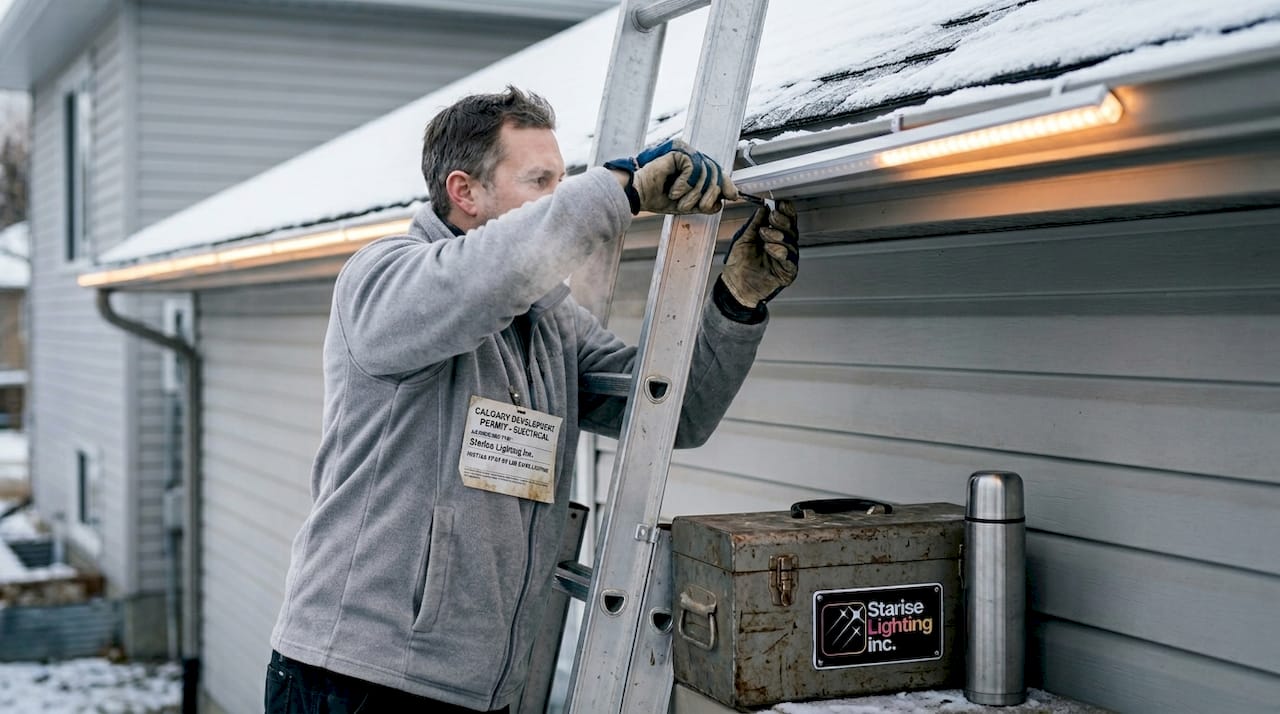
Understanding how much LEDs save is important, but your choice of controls decides whether you unlock their full potential. A highly efficient LED system left running at full brightness from sunset to sunrise every single night is still wasting energy. Controls are where the real multiplier effect lives.
The DOE recommends ENERGY STAR-qualified fixtures with features like automatic daylight shut-off and motion sensors, particularly for outdoor lights left on for long stretches. This isn't just bureaucratic advice. It reflects real-world data showing that controls consistently push savings beyond what the LED technology achieves on its own.
Here are the top control features to look for, in order of impact:
- Automatic timers set lights to operate only during the hours you actually need them, preventing the common mistake of leaving lights on until 3 a.m. when the street is empty.
- Daylight sensors detect natural light levels and shut lights off automatically when dawn arrives, removing any reliance on manual switching.
- Motion detectors activate lights only when someone approaches, which is ideal for pathways, garage areas, and side yards that don't need constant illumination.
- Dimmers and brightness scheduling allow you to run lights at 30 to 50% capacity during low-traffic hours, cutting consumption without eliminating the security and aesthetic benefits.
- App-based controls let you monitor, schedule, and adjust your entire system remotely, which is especially useful when you're travelling or when daylight hours shift dramatically between seasons.
Understanding smart outdoor lighting controls reveals just how granular your scheduling can get. Modern systems allow different zones of your home to follow completely independent schedules, so your front entrance runs differently from your backyard pathway lighting.
Pro Tip: Pair your LED system with energy-saving smart home controls that integrate across multiple home systems. When your blinds, thermostat, and lighting all communicate, the whole-home energy savings become genuinely impressive.
The benefits of smart lighting extend beyond just your hydro bill. Homes with automated exterior lighting also benefit from enhanced security and increased perceived home value, making smart controls a genuine two-for-one investment.
Comparing permanent lighting systems: What really saves most?
Choosing the right controls is crucial, but not all permanent lighting systems are created equal. The market offers a wide range of products at different price points, and the differences in long-term energy performance can be dramatic.
The City of Vernon cut energy use by approximately 1.09 million kWh and saved about $100,000 annually after switching to LED streetlights. While residential scale is smaller, the ratio of investment to return follows a similar pattern.
| Feature | Standard outdoor lighting | Permanent LED system | Permanent LED with smart controls |
|---|---|---|---|
| Energy consumption | High (incandescent/halogen) | Up to 90% lower | Up to 90% lower plus additional 15 to 20% from controls |
| Lifespan | 1,000 to 2,000 hours | 25,000 to 50,000 hours | 25,000 to 50,000 hours |
| Weather rating | Variable | IP65+ for permanent systems | IP65+ for permanent systems |
| Maintenance frequency | High | Very low | Very low |
| Upfront cost | Low | Medium to high | Medium to high |
| 5-year total cost | High | Lower | Lowest |
When installing LED lighting at your Calgary home, prioritise systems that carry ENERGY STAR certification or equivalent third-party efficiency ratings. These systems have been independently verified to meet specific performance thresholds rather than relying solely on manufacturer claims.
What to look for when comparing permanent systems:
- Outdoor weatherproof ratings suited for Calgary winters (minimum IP65)
- Compatibility with smart controls and app management
- Adjustable colour temperature and brightness for seasonal flexibility
- Manufacturer warranty of five years or more
- Verified energy efficiency ratings from recognised third-party bodies
The broader exterior lighting benefits for Calgary homes go well beyond energy savings alone. Security, curb appeal, and home value all improve with a quality permanent system, which means your return on investment compounds across multiple dimensions simultaneously. Exploring real-world LED savings in similar climates confirms that the right system pays for itself in a timeframe most homeowners find genuinely encouraging.
Bonus factors: Design, daylight, and targeted use
You've seen how system and control choices add up. Now consider these surprising factors that homeowners often overlook when calculating their expected savings.
The first is scale. Adding more fixtures than your home actually needs can erode the efficiency advantages of LED technology. A thoughtfully designed system with 15 well-placed fixtures will almost always outperform a sprawling 40-fixture setup in terms of energy cost per unit of useful light. More is not always better.
Research into lighting energy use found that reliance on electric light for non-visual needs can triple energy consumption in some settings, while daylight integration reduces dependency significantly. For homeowners, this translates to a simple but powerful principle: design your lighting to supplement daylight, not replace it.
| Lighting strategy | Relative energy use | Outcome |
|---|---|---|
| Full brightness, all night, every fixture | High | Beautiful but costly |
| Timed LEDs with dimming after 11 p.m. | Medium | Good balance of savings and security |
| Targeted LEDs with daylight sensors and motion | Low | Maximum efficiency |
| Daylight-integrated, zoned, app-controlled | Very low | Optimal for year-round savings |
Upgrading exterior lighting at your Calgary home is most effective when you start with a clear plan for which areas genuinely need illumination and when. A well-lit front entrance matters. Flooding a side fence that nobody uses after 9 p.m. does not.
Targeted illumination principles to follow:
- Identify high-traffic areas and security zones that genuinely need consistent lighting
- Use motion detection for low-traffic areas like side yards and back pathways
- Schedule decorative roofline lighting to dim or shut off after a reasonable evening hour
- Consider how your interior lighting and window placement interact with exterior darkness
Pro Tip: Before adding new fixtures, do a quick exterior lighting audit. Walk around your home at night and note which areas are actually dark and which are already receiving ambient light from street lamps or neighbouring properties. You may find you need fewer fixtures than you assumed, and fewer fixtures means lower energy use and lower upfront cost. Pairing your exterior LED system with smart daylight strategies indoors and out creates a genuinely efficient home environment.
The real secret to energy savings with permanent lighting
Here's something we see repeatedly with Calgary homeowners who invest in permanent LED systems. They buy the technology, get it installed, and then expect the savings to happen automatically. Sometimes they do. But the homeowners who consistently report the greatest long-term savings are the ones who treat their lighting as an ongoing system to manage, not a set-and-forget appliance.
Technology genuinely sets the stage. A quality Gen 2 LED system with smart controls gives you every tool you need to cut energy use dramatically. But owner behaviour is the real difference-maker. Leaving lights on at full brightness because you forgot to adjust the schedule after daylight saving time ends is a small thing. Repeated across an entire season, it dilutes your savings noticeably.
Savings can be diluted if lights are run brighter or longer than before the upgrade. Owner outcomes genuinely depend on usage patterns, not just hardware specifications. This is an uncomfortable truth that most lighting companies avoid mentioning, because it shifts responsibility from the product to the person.
Our perspective is that this is actually good news. It means you have real control over your outcomes. Homeowners who spend 10 minutes per season reviewing their lighting schedules, adjusting for the changing daylight hours Calgary experiences between June and December, consistently report the best results. It doesn't require expertise. It just requires intention.
The worth of permanent lights becomes clearest when you look at the full picture. Energy savings are one stream. Reduced maintenance costs are another. Increased home value, enhanced security, and the genuine enjoyment of a beautifully lit home every evening round out the picture. The 10-year lighting ROI for a quality permanent LED system, properly managed, is compelling by almost any standard of home improvement comparison.
Make energy savings a habit, not an accident. Set your schedules. Review them seasonally. Use your app controls to make small adjustments as the year changes. That consistent attention is what separates homeowners who see transformational savings from those who see modest ones.
Ready to upgrade? Get permanent lighting plus energy savings
If these numbers and strategies have you thinking seriously about permanent outdoor lighting for your Calgary home, the next step is straightforward.
At Starise, we specialise in high-performance permanent LED lighting systems built specifically for Calgary's climate and the needs of local homeowners. Our Starise system overview walks you through the Gen 2 24V LED technology, app-based controls, and weatherproof construction that make our installations genuinely different from off-the-shelf options. Every system we install is designed to maximise both curb appeal and long-term energy efficiency, not just look beautiful on day one. Explore permanent lighting for Calgary homes and see how the right system, properly installed and controlled, can transform your home's exterior while keeping your hydro costs where you want them.
Frequently asked questions
Will switching to permanent LED outdoor lighting really lower my energy bills?
Yes, LEDs use up to 90% less energy compared to incandescents, so most Calgary homes see meaningful cost reductions, particularly when lights run for several hours each evening through the long winter season.
How can I get the most savings from my permanent outdoor lighting system?
Use smart controls like daylight shut-off and motion sensors so your lights operate only when genuinely needed, maximising efficiency without sacrificing security or aesthetics.
Do permanent lights cost more to run if I add a lot of fixtures or run them very bright?
Yes, adding more fixtures than necessary or running them at maximum brightness increases total energy use even with efficient LEDs, since non-visual needs can triple electric lighting energy consumption.
Is permanent LED lighting a good investment for Calgary homes with tough winters?
Absolutely. LEDs can last up to 25 times longer than incandescents, and outdoor-rated systems are engineered to handle freeze-thaw cycles, heavy snow, and temperature swings without degrading performance.
Does daylight affect how much energy my outdoor lighting uses?
Significantly yes. Daylight integration reduces dependency on electric lighting, and using daylight sensors ensures your system runs only during true darkness, cutting unnecessary consumption across every season.
Recommended
- Enhance curb appeal with permanent outdoor LED lighting
- Permanent LED lighting for Calgary homes: curb appeal + security
- Choose permanent lighting vs traditional outdoor lighting
- Improve home safety with outdoor LED lighting Calgary 2026
- Benefits of outdoor shading: enhance comfort, save energy 2026