
TL;DR:
- Home value lighting enhances curb appeal and buyer confidence by highlighting key exterior features and signaling property care. Strategic upgrades in entryways, pathways, and landscape features yield the highest return and positively influence perceptions, photos, and sale speed. Compliance with local codes and planning early ensures a successful, impactful lighting upgrade that can significantly boost resale value.
Home value lighting is the practice of upgrading exterior and entryway lighting to increase a property's perceived worth, curb appeal, and buyer confidence. It is not a formal appraisal category. Rather, it is an industry-recognised strategy where lighting upgrades affect perceived value through visual impact, safety improvements, and the emotional response buyers have before they ever step inside. For Calgary and Edmonton homeowners, this distinction matters: the right lighting programme can shift how buyers feel about your property within seconds of arriving.
What is home value lighting and why does it matter?
Home value lighting refers to any exterior lighting upgrade — pathway lights, entryway fixtures, landscape illumination, and architectural accent lighting — that improves how a property looks, feels, and photographs. The term is descriptive rather than technical. The recognised industry term is curb appeal lighting or exterior architectural lighting, and both phrases appear in real estate staging guides and property valuation literature.
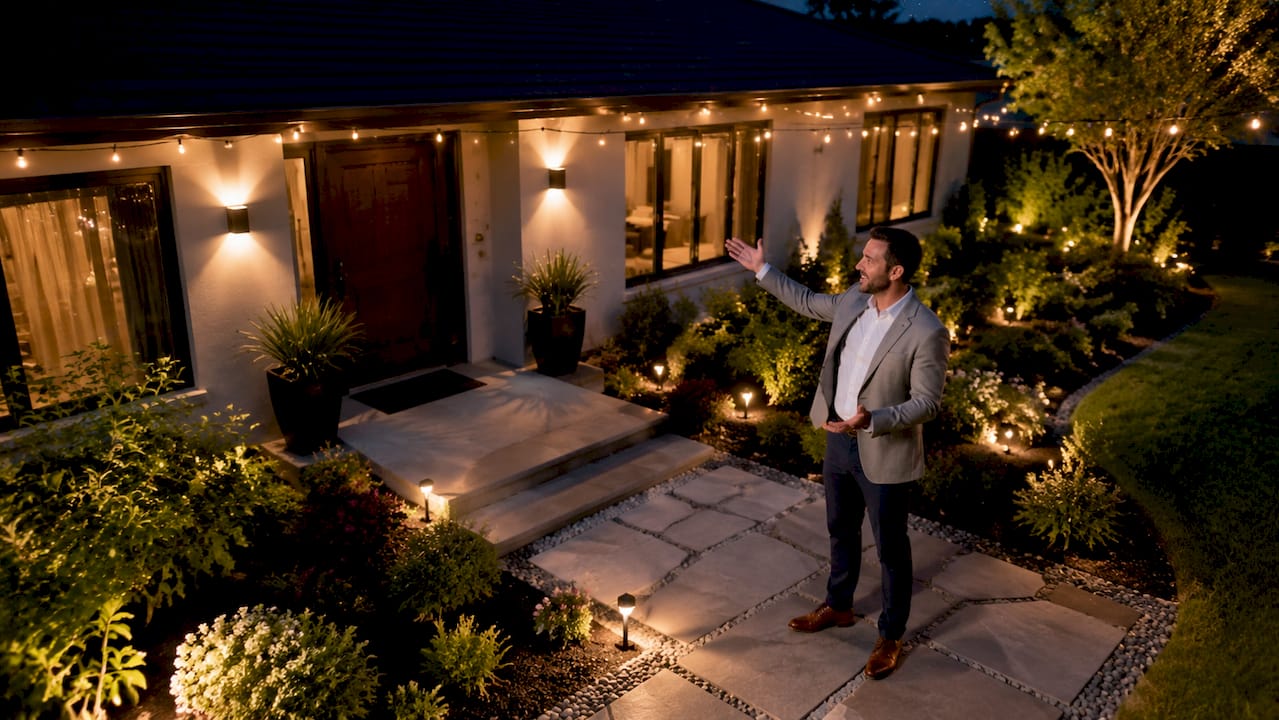
The mechanism is psychological before it is financial. Buyers form first impressions at the kerb, and lighting shapes those impressions directly. A well-lit front entry signals maintenance, security, and modernity. A dark or poorly lit exterior signals neglect, regardless of what lies inside. According to the AHS 2025 survey, 30% of homeowners rank outdoor lighting as the top curb appeal factor, and 35% cite curb appeal as a primary resale consideration. That means nearly one in three buyers is actively evaluating your exterior lighting before they assess anything else.
The financial case is indirect but real. Interior lighting upgrades recover roughly 70 to 75% of their cost at resale, with exterior upgrades performing comparably in high-competition markets. The return is not guaranteed by the fixture itself. It comes from the cumulative effect on buyer confidence, offer strength, and time on market.
How does lighting affect home value and buyer perception?
Lighting changes how buyers read a home's condition and age. A dated fixture at the front door signals a home that has not been updated. A modern LED fixture with clean lines signals the opposite, even if the siding behind it is unchanged. This is the core mechanism of home lighting value: perception of modernity and care travels faster than any inspection report.
The NAR 2025 Profile of Home Staging found that 29% of agents report staging increases sale offers by 1 to 10%, and 49% report faster sale times. Lighting is identified as a key staging element in that report. Faster sales and stronger offers are the two outcomes every seller wants, and lighting contributes to both.
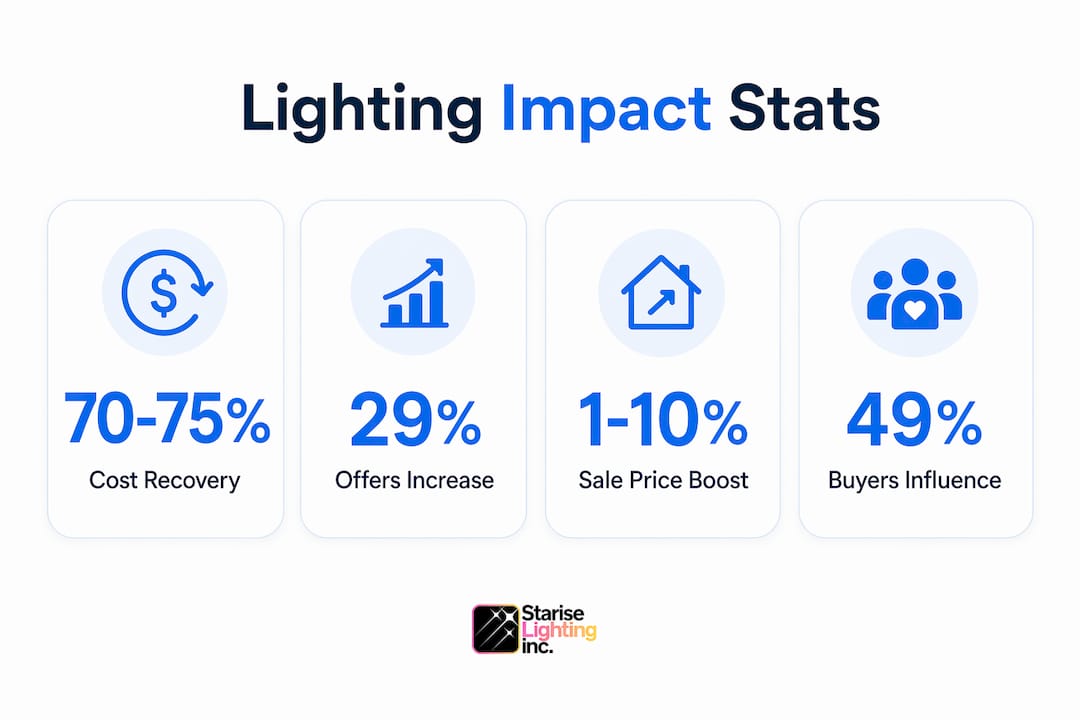
Lighting also strongly influences real estate photographs, which are the first point of contact for most buyers in 2026. A dusk photo of a home with well-placed landscape and entryway lighting can generate significantly more showing requests than a flat daytime photo. This is why agents increasingly request twilight photography as a standard listing tool.
Key ways lighting shapes buyer perception:
- Perceived size: Brighter, layered lighting makes spaces feel larger and cleaner.
- Safety signals: Lit pathways and entries reduce hesitation and build trust.
- Modernity cues: LED fixtures and smart controls signal a well-maintained, updated property.
- Photo performance: Dusk and twilight shots with quality lighting generate stronger online engagement.
What exterior lighting upgrades most effectively boost home value?
Not all lighting upgrades deliver equal returns. The highest-impact zones are entry doors, walkways, steps, and architectural or landscape features that photograph well at dusk. These are the areas buyers see first and remember longest.
| Lighting zone | Fixture type | Visual impact | Estimated cost range |
|---|---|---|---|
| Front entry | Wall-mount LED lantern | Very high | $150 to $600 installed |
| Pathway and walkway | Ground-stake or bollard LED | High | $200 to $800 installed |
| Landscape and trees | Uplights or spotlights | High | $300 to $1,200 installed |
| Garage and driveway | Floodlight or soffit LED | Medium | $100 to $400 installed |
| Steps and risers | Recessed step lights | Medium to high | $250 to $700 installed |
Smart lighting and dimmer controls add measurable value beyond aesthetics. LED and smart lighting technology provides energy savings and convenience features that buyers actively seek in 2026. App-controlled systems from brands like Lutron or permanent LED systems with programmable colour and brightness give buyers a sense of control and customisation that older fixed systems cannot match.
Pro Tip: Focus your budget on the zones a buyer sees in the first 30 seconds: the driveway approach, the front path, and the entry door. These three areas deliver the highest return per dollar spent because they directly shape the first impression.
What regulations should homeowners know before upgrading exterior lighting?
Lighting codes are the part of the home value lighting conversation that most homeowners skip entirely. Skipping them is expensive. Compliance with lighting codes is often underestimated but critical for successful installation and avoiding delays. A fixture installed without regard for local ordinances may need to be removed, repositioned, or replaced before a sale can close.
Here are the key regulatory areas every homeowner should address before installation:
-
Cutoff and shielding requirements. The City of Madison's outdoor lighting code requires fixtures producing over 500 lumens to be fully cutoff or shielded. This prevents glare and light scatter onto neighbouring properties. Many Canadian municipalities follow similar standards, and Alberta's dark sky preservation guidelines align with these principles.
-
Light trespass limits. The City of Madison sets a maximum of 0.5 footcandles beyond the property line. Exceeding this can trigger complaints from neighbours and require costly fixture adjustments after installation.
-
Egress and safety lighting mandates. IRC and NEC codes require proper egress lighting for stairs, exits, and pool areas. These are non-negotiable safety requirements, not aesthetic choices.
-
Energy efficiency standards. Codes increasingly require minimum lumens-per-watt performance and automatic shutoffs for exterior fixtures above certain wattage thresholds. LED fixtures almost universally meet these standards; older halogen or incandescent fixtures often do not.
-
Permit requirements. Some municipalities require permits for new exterior electrical circuits. Confirm with your local building authority before any wiring work begins.
Treating your lighting upgrade as a combined presentation and compliance package from the start prevents the most common and costly installation failures.
How to plan and implement home value lighting improvements
Effective planning separates a lighting upgrade that sells a home from one that simply adds fixtures. Start with a site walk at dusk. Note where your property looks dark, where pathways feel unsafe, and which architectural features deserve to be highlighted. This is your lighting brief.
Prioritise the zones that reduce buyer uncertainty first:
- Entry door and porch: Replace dated fixtures with modern LED wall mounts. Warm white (2700K to 3000K colour temperature) reads as welcoming in photographs and in person.
- Pathway and walkway: Install low-voltage LED bollards or ground stakes along the main approach. Consistent spacing matters more than fixture cost.
- Landscape and trees: Uplighting mature trees or hedges adds depth and drama to dusk photographs. This is the zone that most often appears in listing photos.
- Garage and driveway: Motion-activated LED floodlights serve double duty as security features and practical lighting for evening arrivals.
For fixture selection, balance aesthetics with function. A fixture that looks beautiful but produces glare or spills light onto a neighbour's property will create problems. Choose fixtures rated for outdoor use (IP65 or higher for Canadian winters), and confirm they meet your municipality's lumen and cutoff requirements before purchasing.
Pro Tip: Work with a lighting professional or a local supplier who understands your municipality's codes. In Calgary and Edmonton, where winters are severe, fixture weatherproofing and low-voltage systems like Co-starise's Gen 2 24V LED technology are worth the investment. A landscape lighting specialist can identify the three or four zones that will deliver the strongest visual return for your specific property.
Energy efficiency is not just a regulatory requirement. It is a selling point. Buyers in 2026 ask about operating costs. An exterior lighting system that runs on low-voltage LED with smart controls and automatic shutoffs is a feature, not just a fixture. Pair your lighting upgrade with your landscaping plan so that plantings and light placement work together rather than against each other.
Key takeaways
Home value lighting works because it shapes buyer perception, improves photo performance, and signals property care before any inspection or appraisal takes place.
| Point | Details |
|---|---|
| Perception drives value | Lighting affects buyer confidence and first impressions more than direct appraisal line items. |
| High-impact zones | Entry doors, pathways, and architectural features deliver the strongest return per dollar spent. |
| Compliance is non-negotiable | Cutoff, light trespass, and egress codes must be met before installation to avoid costly rework. |
| LED and smart controls | Modern fixtures signal property modernity and reduce operating costs, both valued by buyers. |
| Plan before you purchase | A dusk site walk and code review before buying fixtures prevents the most common upgrade mistakes. |
Why lighting upgrades are more strategic than most homeowners realise
Most homeowners treat exterior lighting as a finishing touch. In my experience working with Calgary and Edmonton properties, it is actually one of the earliest decisions that shapes everything else. The homes that photograph best, sell fastest, and attract the strongest offers are almost always the ones where lighting was planned alongside landscaping and staging, not added as an afterthought the week before listing.
The mistake I see most often is ignoring light trespass and glare. Homeowners install bright floodlights aimed at the street, thinking more light equals more appeal. It does not. Glare creates discomfort and signals poor planning to buyers who notice it. A well-shielded, properly aimed fixture at 60% of the brightness will outperform an unshielded floodlight every time.
The second mistake is timing. Lighting upgrades need time to settle, for plants to grow around new fixtures, for smart controls to be configured, and for any permit or inspection processes to complete. Starting the upgrade six months before listing gives you time to photograph the property at its best. Starting two weeks before listing gives you a rushed installation and no time to correct problems.
The psychological leverage of good exterior lighting on offer strength is real. Buyers who feel safe and impressed at the kerb walk into a showing already inclined to say yes. That emotional momentum is worth far more than the cost of the fixtures. Combine your aesthetic goals with your safety and compliance requirements from day one, and the upgrade pays for itself in ways that show up in the final sale price.
— Starise
Upgrade your home's exterior with Co-starise permanent lighting
If you are ready to put these principles into practice, Co-starise offers permanent outdoor LED lighting solutions built specifically for Calgary and Edmonton homeowners. The Gen 2 24V LED systems are weatherproof, app-controlled, and designed to last through Alberta winters without annual reinstallation.
Co-starise's permanent outdoor lighting systems cover every high-impact zone discussed in this article: entry, pathway, landscape, and architectural features. For Edmonton homeowners, the permanent lights Edmonton programme offers localised installation support and fixtures rated for extreme cold. Whether you are preparing to sell or simply want a property that stands out on your street every evening, Co-starise has a solution worth exploring. Request a quote directly through the website to get a lighting plan tailored to your property.
FAQ
What is home value lighting exactly?
Home value lighting is a term for exterior and entryway lighting upgrades that improve a property's curb appeal, safety, and buyer confidence. It is not a formal appraisal category but a recognised strategy for increasing perceived market value.
How much can lighting upgrades increase home value?
Interior lighting upgrades recover roughly 70 to 75% of their cost at resale, with exterior upgrades performing similarly in competitive markets. The return comes from stronger offers and faster sales, not a direct appraisal increment.
What are the best lighting zones for improving curb appeal?
Entry doors, front pathways, and architectural or landscape features that photograph well at dusk are the highest-impact zones. These are the areas buyers evaluate first and that appear most prominently in listing photography.
Do I need a permit to upgrade exterior lighting in Calgary?
Permits are required for any new exterior electrical circuit in most Canadian municipalities, including Calgary. Confirm requirements with your local building authority before beginning any wiring work, and verify that your fixtures meet cutoff and lumen standards.
Does smart lighting add value when selling a home?
Smart lighting and app-controlled systems signal modernity and energy efficiency, both of which buyers actively value in 2026. They also reduce operating costs, which is a practical selling point during showings and negotiations.