
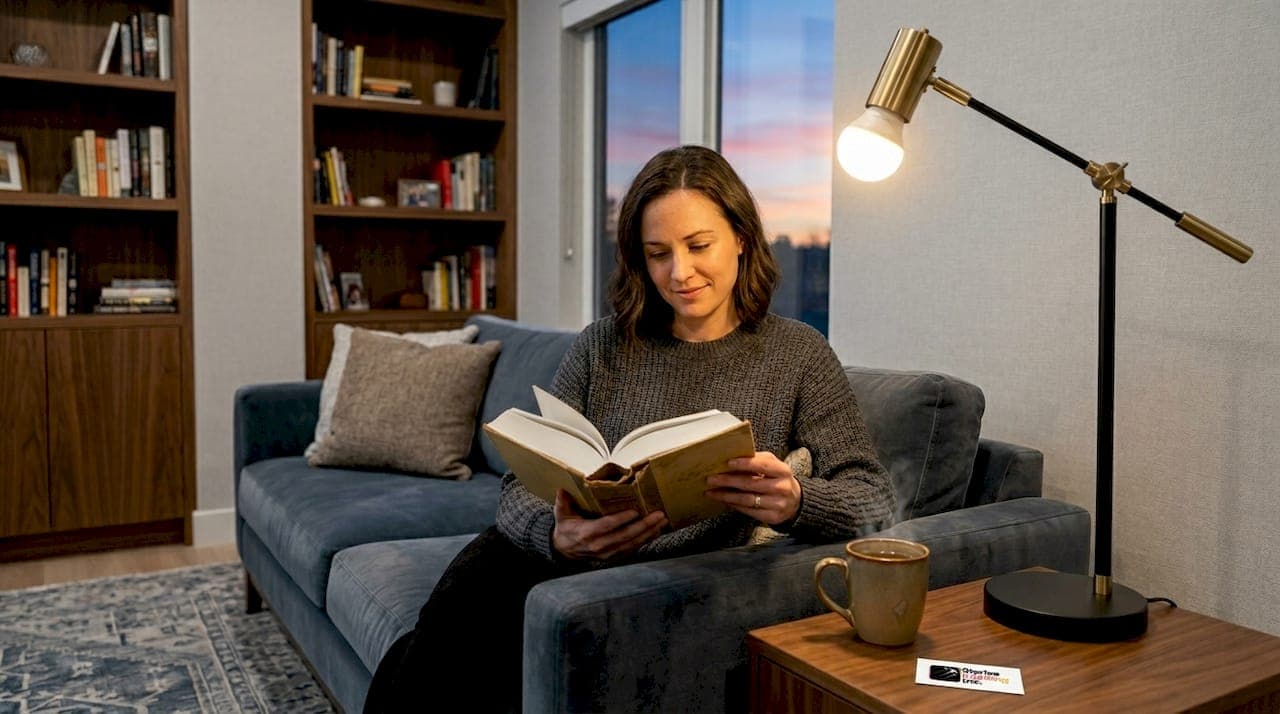
TL;DR:
- Warm white LEDs, ranging from 2700K to 3000K, create cozy, amber-toned lighting that enhances relaxation and sleep. They use up to 80% less energy than incandescent bulbs, offering significant long-term cost savings and health benefits. Properly choosing and matching warm white bulbs in the home enriches design, mood, and overall comfort while avoiding mismatched lighting.
Not all white light is the same, and that distinction matters far more than most homeowners realise. The role of warm white LEDs goes well beyond simply illuminating a room. These bulbs shape how a space feels, how well you sleep, and how much you pay on your electricity bill. While cool white and daylight LEDs have their place, warm white LEDs consistently outperform them in the spaces where you actually live and relax. This guide breaks down exactly what makes warm white LEDs different, where to use them, and how to get the most out of them in your home.
Table of Contents
- Key takeaways
- The role of warm white LEDs explained
- Mood, ambiance, and health benefits
- Energy efficiency and real cost savings
- How to choose and use warm white LEDs
- Common misconceptions about warm white LEDs
- My perspective on warm white for the home
- Upgrade your home with Co-starise warm white lighting
- FAQ
Key takeaways
| Point | Details |
|---|---|
| Warm white range is 2700K–3000K | This colour temperature produces the soft, amber-toned light best suited for living rooms and bedrooms. |
| Mood and sleep benefits are real | Warm white light supports melatonin production, making evening lighting healthier and more relaxing. |
| Up to 80% energy savings over incandescent | LEDs deliver major cost reductions without sacrificing the cosy glow homeowners love. |
| Match temperature to room function | Use 2700K for relaxation spaces and 3000K for kitchens or home offices where clarity matters. |
| Avoid mixing bulb temperatures | Combining warm white and soft white in the same fixture creates uneven, inconsistent light quality. |
The role of warm white LEDs explained
If you have ever walked into a room and immediately felt at ease, the lighting probably had something to do with it. Warm white LEDs sit in the 2700K to 3000K colour temperature range, producing a soft, slightly golden glow that closely mimics the look of traditional incandescent or tungsten bulbs. That familiar amber quality is not accidental. It comes from the way warm white LEDs are engineered, using a phosphor layer over a blue LED chip that converts some of that blue light into longer, warmer wavelengths in the red and yellow spectrum.
Cool white LEDs sit between 4000K and 5000K, producing a crisper, bluer light that works well in workshops, garages, and bathrooms. Daylight bulbs push even further to 5500K and beyond, replicating midday sunlight. The table below gives you a clear snapshot of how these options compare.
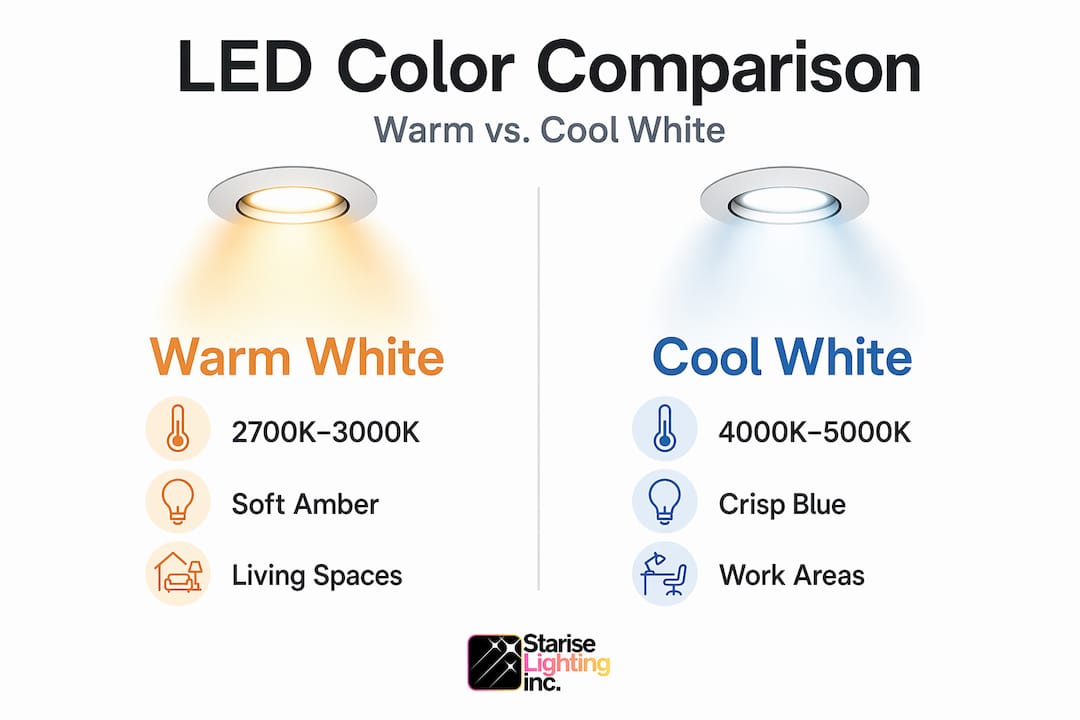
| Colour temperature | Tone | Best use cases |
|---|---|---|
| 2700K | Amber, soft yellow | Bedrooms, living rooms, dining areas |
| 3000K | Warm white, slightly crisper | Kitchens, hallways, home offices |
| 4000K | Cool white, neutral | Bathrooms, laundry rooms, garages |
| 5000K–6500K | Daylight blue-white | Workshops, reading nooks, commercial spaces |
The visual difference is significant when you hold these side by side. Warm white enhances the natural richness of wood finishes, earthy paint colours, and warm textiles. Cool white tends to wash out those same surfaces, making them appear flatter or even slightly grey. That is why warm white dominates residential sales, accounting for 65 to 75 percent of LED bulb purchases in markets like the UK and the US.
Mood, ambiance, and health benefits
The benefits of warm white LEDs go deeper than aesthetics. There is a physiological reason why sitting under warm light in the evening feels natural and comfortable. Warm white light promotes melatonin secretion, the hormone your body relies on to wind down before sleep. Blue-enriched light from cool white or daylight bulbs suppresses melatonin, which is exactly what you do not want in a bedroom at 9 PM.

This is also why hotels, restaurants, and spas nearly always use warm white lighting. A warm white atmosphere increases comfort and trust, creating the sense of being welcomed rather than interrogated by overhead fluorescent tubes. You can replicate that same effect in your home with the right bulbs in the right rooms.
Here are the key mood and health advantages warm white LEDs offer in residential settings:
- Better sleep preparation. Using warm white light in bedrooms and living areas from early evening reduces blue light exposure, supporting your body's natural sleep cycle.
- Reduced eye strain. The softer output of warm white LEDs is gentler on the eyes during extended evening activities like reading or watching television.
- Enhanced interior warmth. Warm white light enriches red, orange, and brown tones in wood flooring, furniture, and textiles, making rooms feel richer and more welcoming.
- Psychological relaxation. The cosy quality of warm light signals to your brain that the day is winding down, reducing alertness and stress.
- Universal appeal in social spaces. Guests consistently rate warm-lit rooms as more pleasant and inviting compared to rooms lit with cooler tones.
Pro Tip: If you use your living room for both relaxing and working from home, install dimmable warm white LEDs at 2700K. Bright at 100 percent for focused tasks, dimmed to 30 to 50 percent for evening wind-down, one bulb does both jobs.
Energy efficiency and real cost savings
The warm white LED advantages are not purely about how a room looks or feels. They are also about what shows up on your electricity bill. LEDs, including warm white variants, use up to 80 percent less electricity than traditional incandescent bulbs and typically last 8 to 12 years under normal residential use.
Consider a practical example. Replacing ten 60-watt incandescent bulbs in your home with 9-watt warm white LEDs cuts the energy demand for those fixtures from 600 watts to 90 watts. Run them four hours a night and that adds up to meaningful savings across a full year. Standard warm white bulbs cost between $1.80 and $2.30 each, making the upfront investment minimal. Smart warm white bulbs run from $10 to $25 per unit but offer scheduling, dimming, and colour-tuning that add long-term value.
One nuance worth knowing: warm white LEDs consume slightly more electricity than cool white due to what is called the Stokes Shift, the energy lost during the phosphor conversion process that creates warmer tones. In practice, this difference is so small it will never appear on your bill in any meaningful way. The gap between LEDs and any older technology is so large that warm white versus cool white becomes an irrelevant comparison for budgeting purposes.
Smart-connected warm white LEDs are a growing category worth paying attention to. They currently represent 10 to 12 percent of bulb purchases and are projected to reach 25 to 30 percent of the market by 2032. For homeowners who want full control over ambiance without swapping bulbs, smart warm white is the direction the market is clearly heading. For outdoor applications, pairing efficient warm white LEDs with permanent outdoor LED systems pushes savings even further.
How to choose and use warm white LEDs
Knowing the warm white LED lighting uses for each room in your home is where theory becomes practice. Here is a straightforward process for getting it right.
-
Start with your relaxation rooms. Bedrooms, living rooms, and dining areas benefit most from 2700K. This is the warmest end of the spectrum and where the mood and melatonin benefits are strongest.
-
Step up to 3000K for functional spaces. Kitchens, hallways, bathrooms, and home offices need a bit more visual clarity. The 2700K to 3000K layering approach keeps your home consistent without feeling harsh in work areas.
-
Match your fixture type to the task. For ambient lighting, choose warm white LED bulbs with a wide beam angle (120 degrees or more). For accent lighting over artwork or architectural features, use narrow beam warm white spotlights in the 2700K range to make textures pop.
-
Choose dimmable bulbs wherever possible. Not all warm white LEDs are dimmable. Check the packaging. Pairing a dimmable 2700K bulb with a quality dimmer switch gives you the flexibility to shift from bright functional light to a low evening glow without buying two different products.
-
Consider smart bulbs in multi-purpose rooms. Tunable colour temperature fixtures let you shift between warm and cooler whites depending on the activity. This is particularly useful in home offices that double as guest rooms.
-
Apply warm white outdoors with intention. Warm white LEDs used along pathways, on porches, or as exterior accent lighting create an inviting approach to your home. They also look far more natural against wood siding, stone, and brick than cool white alternatives.
Pro Tip: When buying replacement bulbs, photograph the existing bulb's packaging before discarding it. Matching lumen output and colour temperature precisely prevents the mismatched glow that happens when one socket in a fixture ends up slightly different from the others.
Common misconceptions about warm white LEDs
Several myths circulate about warm white LEDs that trip homeowners up when they are choosing bulbs. Understanding them will save you money and frustration.
The most common one: warm white means dim. Not true. Brightness is measured in lumens, not colour temperature. A 2700K warm white bulb can be just as bright as a 5000K daylight bulb at the same lumen rating. You choose the warmth, then separately choose how bright you need it.
Another common misunderstanding involves efficiency. Many homeowners assume cool white LEDs save more electricity and therefore choose them everywhere, including bedrooms and living rooms. As noted earlier, the efficiency difference is negligible for home use. Choosing cool white for a bedroom purely for efficiency reasons sacrifices real health and comfort benefits for a saving that will never appear on your bill.
"Mixing different white light temperatures in the same fixture disrupts visual harmony and should be avoided for professional-looking results." — Warm white vs soft white light bulbs
This is the mistake that makes lighting feel "off" without homeowners knowing why. If you mix warm and soft white bulbs in the same ceiling fixture, you get a subtle but annoying inconsistency where one bulb casts a slightly different shade. The fix is simple: buy all bulbs for a given fixture from the same product line on the same day.
My perspective on warm white for the home
After watching how lighting transforms residential spaces, I am convinced that warm white LEDs are the single best default choice for most homeowners. Not because they are perfect in every scenario, but because most rooms in a home are designed for comfort first and tasks second.
What I find consistently overlooked is how much warm light affects the experience of other design decisions. A homeowner might invest heavily in hardwood flooring or natural stone surfaces, then light them with cool white bulbs that strip out exactly the tones those materials are meant to display. Warm white at 2700K does not just light the room, it finishes it.
The smart warm white category is where I see the most untapped opportunity for homeowners. The ability to adjust outdoor ambiance through an app, dim down for evenings, or programme seasonal changes without swapping a single bulb is a meaningful upgrade in daily comfort. It is also where the connection between interior warmth and exterior presence really comes together. When the front of your home glows with the same warm tone as the inside, the whole property feels cohesive and welcoming.
Warm white is not a compromise. For most living spaces, it is the right answer.
— Starise
Upgrade your home with Co-starise warm white lighting
If warm white LEDs have convinced you that lighting deserves more than a quick trip to the hardware store, Co-starise offers a better option. The permanent LED systems installed across Calgary and Edmonton use the latest Gen 2 24V LED technology, delivering warm white tones through weatherproof fixtures built to survive harsh Alberta winters. No bulb swapping, no ladders after every season, and no inconsistent glow from mismatched products.

Whether you are looking for permanent lights in Edmonton or a complete lighting upgrade for your Calgary property, Co-starise designs and installs systems that work the first night and every night after. You control colour, warmth, and effects from an app, all backed by professional installation that maximises both ambiance and efficiency. Request a quote today and see what warm white lighting looks like done properly.
FAQ
What colour temperature is warm white LED?
Warm white LEDs fall in the 2700K to 3000K colour temperature range, producing a soft, amber-toned glow similar to traditional incandescent bulbs.
How do warm white LEDs impact mood and sleep?
Warm white light supports melatonin production and reduces blue light exposure in the evening, helping your body wind down naturally and improving sleep quality.
Are warm white LEDs energy efficient?
Yes. LEDs including warm white variants use up to 80 percent less electricity than incandescent bulbs and last 8 to 12 years, making them highly cost-effective for residential use.
Can I mix warm white and soft white bulbs in the same fixture?
It is best to avoid mixing them in the same fixture. Slightly different colour temperatures create an inconsistent, mismatched glow that disrupts the visual quality of the space.
Where should I use warm white LEDs in my home?
Use 2700K warm white in bedrooms, living rooms, and dining areas for relaxation. Step up to 3000K in kitchens, hallways, and home offices where you need a bit more visual clarity without harsh cool light.