
TL;DR:
- Lighting significantly enhances home appeal by shaping buyer perception and increasing perceived quality. Focus on high-traffic areas like kitchens and bathrooms for maximum return, and incorporate layered lighting to create depth and warmth. Proper exterior lighting and professional preparation for listing photos further boost curb appeal and market value.
Lighting is one of the highest-return upgrades a homeowner can make before selling or simply improving their property's appeal. Knowing how to increase home value with lighting means understanding that buyers respond to how a space feels, not just how it looks on paper. A well-lit kitchen reads as larger and cleaner. A bright front entryway signals care and modernity. Both interior and exterior lighting shape buyer perception before a single offer is made, and the upgrades required are often far less expensive than homeowners expect.
Which lighting upgrades deliver the highest return on investment?
Not every lighting change pays off equally. The upgrades that consistently deliver the strongest returns are concentrated in high-traffic, visible spaces where buyers spend the most time forming opinions.
Kitchen pendant lights and vanity fixtures in the primary bathroom are the two highest-impact areas. A lighting upgrade costing $2,250 across those two rooms can produce a $5,000 increase in sale price, representing a gross ROI above 100%. That figure matters because it reframes lighting as an investment, not a cosmetic expense.
Interior lighting improvements broadly recover 70% to 75% of their costs through improved buyer confidence and perceived quality, even when the appraisal does not fully reflect fixture cost. This means the payoff is partly financial and partly psychological, which is exactly how real estate decisions get made.
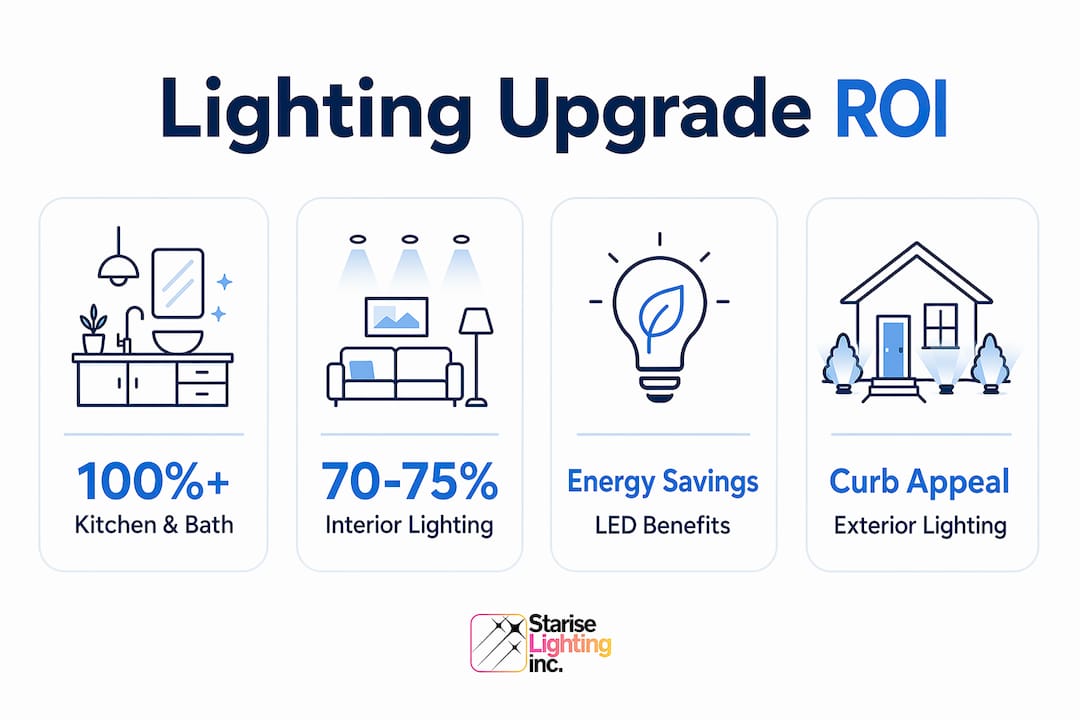
LED lighting reduces operating costs and increases buyer interest through lower maintenance and energy savings. Buyers in 2026 actively look for homes that cost less to run, and a fully LED-equipped home signals that the current owner has been thoughtful about upkeep.
Lighting upgrades ranked by ROI potential:
- Kitchen island pendants and under-cabinet lighting: Highest visibility, directly tied to buyer perception of kitchen quality
- Primary bathroom vanity fixtures: Buyers scrutinise bathrooms closely; good lighting here signals a well-maintained home
- Front entryway and exterior entry lighting: First impression, curb appeal, and security in one upgrade
- Landscape and path lighting: Low cost, high perceivable value, and strong impact on listing photography
- Flush mounts and consistent fixture styles throughout: Cohesion across rooms signals intentional design rather than builder-grade defaults
Pro Tip: Prioritise lighting spend on the kitchen island and primary bathroom vanity before touching secondary spaces. These are the rooms buyers photograph in their minds first, and the ROI reflects that.
| Upgrade area | Estimated ROI impact |
|---|---|
| Kitchen and primary bath fixtures | Over 100% gross ROI in documented cases |
| Interior lighting overall | 70% to 75% cost recovery |
| Exterior entry and landscape lighting | High perceivable value, low installation cost |
| LED conversion throughout | Long-term savings that attract energy-conscious buyers |
How does layered lighting improve interior appeal?
Layered lighting is the professional term for combining ambient, task, and accent lighting in a single room. Most builder-grade homes rely on one overhead fixture per room, which creates flat, shadow-heavy spaces that photograph poorly and feel institutional. Layering solves this.
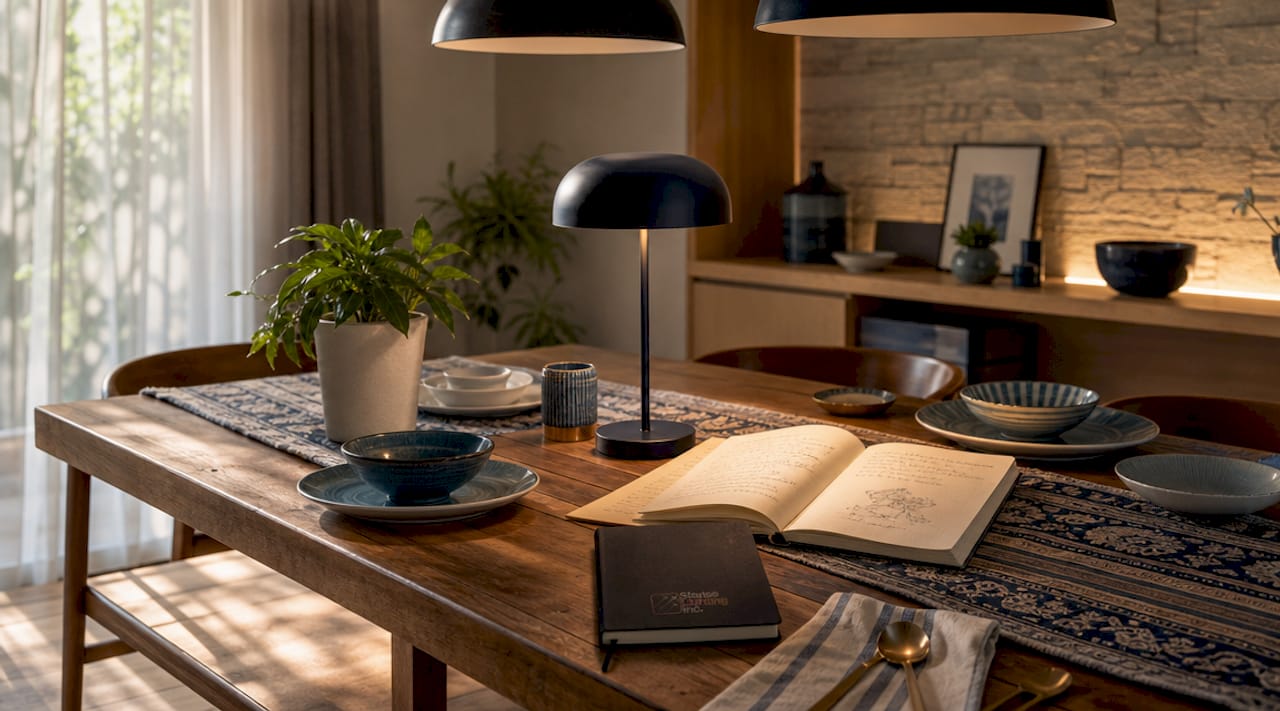
Ambient lighting is the base layer, providing general illumination across the room. Task lighting targets specific work areas: under-cabinet strips in the kitchen, a reading lamp beside a chair, or a vanity fixture above a mirror. Accent lighting draws attention to architectural features, artwork, or shelving. All three layers working together create depth, warmth, and the sense that a room has been thoughtfully designed.
Bulb selection is where many homeowners make costly mistakes. A 60W-equivalent LED at 2700K to 3000K is the recommended baseline for living spaces. That colour temperature range produces warm white light that flatters skin tones, makes wood finishes glow, and photographs without the blue cast that higher Kelvin bulbs produce. Mixing a 2700K bulb in one fixture with a 4000K bulb in another creates uneven, blotchy lighting that buyers notice even if they cannot name the cause.
Here is a practical sequence for applying layered lighting in any room:
- Start with ambient: confirm your overhead fixture provides adequate base light without harsh shadows
- Add task lighting in every functional zone, kitchen counters, bathroom mirrors, and reading areas
- Place accent lighting to highlight one or two features per room, not every surface
- Install dimmers on ambient and accent circuits so you can adjust the mood for showings
- Standardise bulb colour temperature across every fixture in the room before moving to the next
Pro Tip: Dimmers are one of the most cost-effective upgrades you can add. Modern lighting controls like smart switches and dimmers create versatile atmospheres that appeal directly to buyers seeking a functional, current home.
Fixture scale matters as much as bulb choice. A pendant hung too low over a dining table crowds the space. A flush mount too small for a large ceiling reads as an afterthought. The fixture should feel proportional to the room, and its finish should coordinate with hardware elsewhere in the space.
How does exterior lighting affect curb appeal and buyer interest?
The front of your home is the first thing buyers see, in person and in listing photos. Exterior lighting shapes that impression more than most homeowners realise, and the impact on buyer perception extends well beyond aesthetics into feelings of safety and care.
Timing matters. Installing or refining exterior lighting two to three weeks before listing gives the system time to settle, allows for adjustments, and means your listing photos capture the home at its most polished. Rushing this step the night before photos is a common mistake that produces uneven results.
For enhancing curb appeal with lighting, focus on these priorities:
- Front entryway: Use bright, warm fixtures on both sides of the door for symmetry. This is the focal point buyers look at first.
- Architectural accents: Uplighting on columns, gables, or stone features adds dimension and makes the home look more substantial in photos.
- Path and driveway lighting: Low-voltage path lights guide the eye toward the front door and signal a well-maintained property.
- Security lighting with style: Motion-sensor fixtures near the garage and side entries provide security without the harsh, industrial look of floodlights. Choose fixtures that match the home's architectural style.
- Landscape lighting: Uplighting trees or illuminating garden beds adds depth and makes the property feel larger after dark.
| Exterior lighting type | Primary benefit | Cost range |
|---|---|---|
| Entry fixture upgrade | Curb appeal, first impression | Low |
| Path and driveway lights | Safety, perceived value | Low to moderate |
| Architectural uplighting | Visual depth, listing photo quality | Moderate |
| Motion-sensor security lights | Security, buyer confidence | Low to moderate |
| Permanent LED systems | Year-round appeal, durability | Moderate to high |
What steps prepare your home's lighting for listing photos and showings?
Listing photos are where most buyers form their first opinion of your home, and lighting quality in those photos directly affects how many showings you book. The preparation process is straightforward but requires attention to detail.
- Clean every fixture and window. Dust on bulbs and grime on glass reduce effective light output significantly. Cleaning windows and removing clutter from light paths can dramatically increase room brightness without any renovation.
- Replace every burnt-out or dim bulb. A single dead bulb in a multi-bulb fixture creates an obvious gap that photographs poorly and signals neglect.
- Standardise colour temperature across each room. Every bulb in a room should be the same Kelvin rating. Mixing temperatures creates uneven, unflattering light that is immediately visible in photos.
- Open all curtains and blinds on photo day. Natural light is your strongest asset. Remove any furniture or objects blocking windows.
- Add portable task or accent lighting to dark corners. Floor lamps and plug-in sconces are inexpensive ways to address rooms that lack overhead light without any electrical work.
- Test dimmers and set them to mid-range for photos. Full brightness can wash out details; mid-range creates warmth and depth.
Pro Tip: Place a mirror opposite a window in any room that feels dark. Mirrors opposite windows can effectively double the perceived natural light in a room, which is one of the simplest and least expensive improvements available.
Common lighting mistakes that reduce home value
Even well-intentioned lighting upgrades can backfire when the execution is off. These are the mistakes that most consistently undermine the value of lighting improvements.
- Mixing incompatible colour temperatures. A 2700K bulb beside a 5000K bulb creates jarring contrast. Consistent colour temperature across all bulbs in a room is non-negotiable for professional-looking interiors and clean listing photos.
- Choosing oversized or undersized fixtures. Fixture scale and finish coordination affect perceived value more than fixture cost alone. A large chandelier in a small dining room reads as cluttered; a tiny pendant over a large kitchen island reads as incomplete.
- Neglecting the kitchen, bathroom, and entryway. These three areas drive buyer decisions. Leaving them with builder-grade fixtures while upgrading secondary rooms is a misallocation of budget.
- Ignoring energy efficiency. Buyers in 2026 factor running costs into their offers. A home still using incandescent or halogen bulbs throughout signals an outdated property.
- Skipping dimmers and smart controls. Fixed-brightness lighting limits the atmosphere you can create for showings and signals that the home lacks modern features.
Pro Tip: Before buying any new fixture, hold a piece of paper beside the existing hardware in the room, door handles, cabinet pulls, and faucets. If the finishes clash, the new fixture will too, regardless of its quality.
Key takeaways
Lighting upgrades are among the most cost-effective improvements a homeowner can make, with documented returns above 100% in high-visibility areas like the kitchen and primary bathroom.
| Point | Details |
|---|---|
| Focus on high-traffic areas | Kitchen islands and primary bathroom vanities deliver the strongest ROI per dollar spent. |
| Use layered lighting indoors | Combining ambient, task, and accent lighting creates depth and warmth that photographs well. |
| Standardise colour temperature | All bulbs in a room should match at 2700K to 3000K to avoid uneven, unflattering light. |
| Time exterior upgrades carefully | Install or refine outdoor lighting two to three weeks before listing for best photo results. |
| Avoid common fixture mistakes | Scale, finish coordination, and consistent lumen levels matter more than fixture price alone. |
What I have learned about lighting and home sales in Calgary
Lighting is the upgrade that buyers feel before they consciously notice it. I have seen homes in Calgary where every surface was freshly painted and the kitchen was newly renovated, but flat, inconsistent lighting made the whole space feel tired. Conversely, I have seen modest homes where thoughtful layered lighting and a well-lit front entryway created a warmth that buyers responded to immediately, often without being able to articulate why.
The mistake I see most often is homeowners treating lighting as the last item on the list, something to address after the big renovations are done. The reality is that lighting should be one of the first considerations, because it affects how every other upgrade is perceived. A beautiful new countertop under poor lighting looks ordinary. That same countertop under warm, layered light looks like a feature worth paying for.
My honest advice: spend the most on what buyers see first and use most. The front entryway, the kitchen, and the primary bathroom. Keep secondary bedrooms and utility spaces modest. And do not underestimate the value of permanent exterior lighting, particularly in Calgary where dark winters mean your home is seen after dark for a significant portion of the year. A home that looks inviting at 6pm in January is a home that stands out in a market where most properties go dark.
— Starise
Upgrade your home's lighting with Co-starise
If you are ready to move beyond bulb swaps and fixture updates, Co-starise offers permanent outdoor LED lighting systems designed specifically for Calgary's climate and residential market.
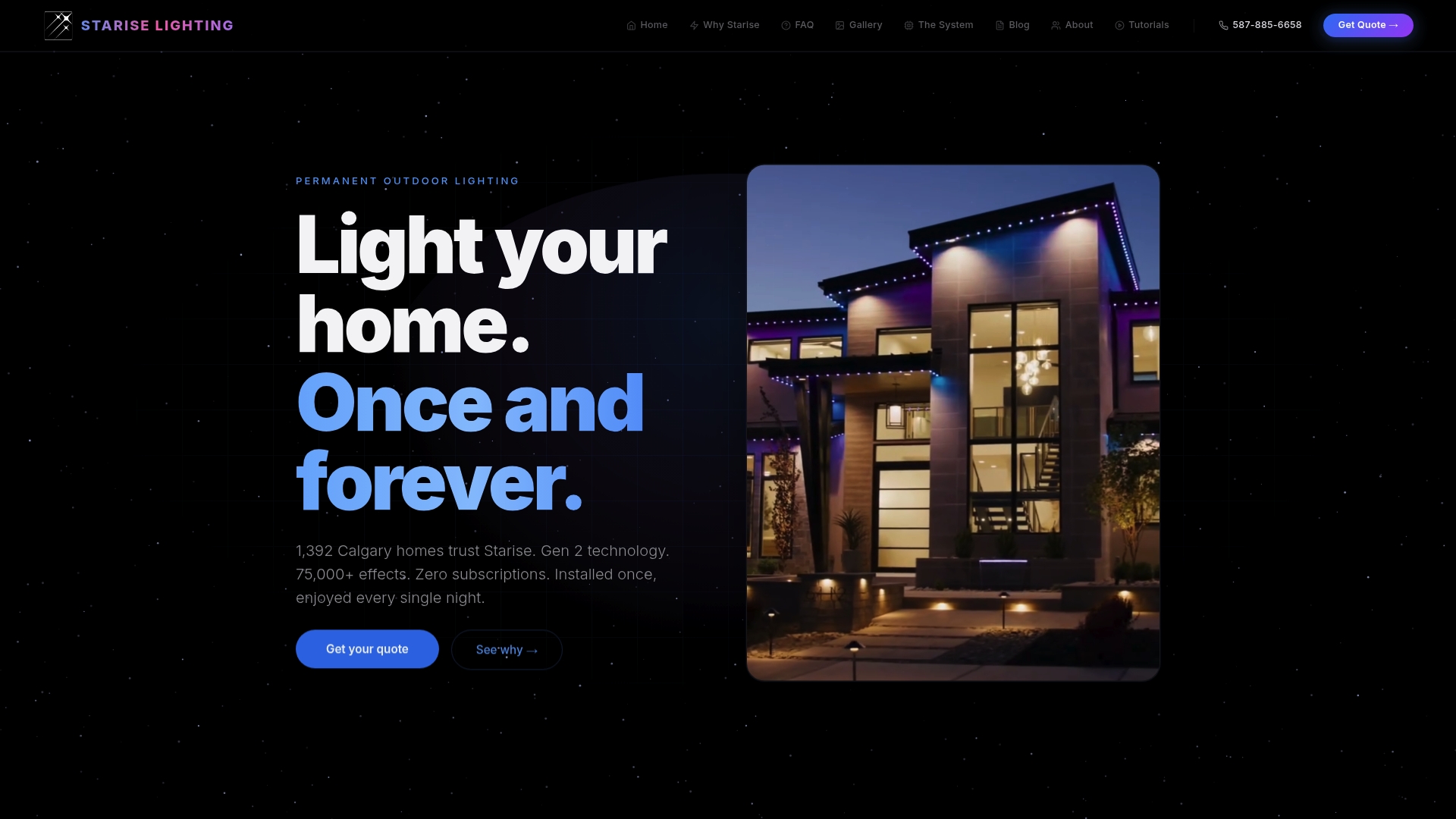
Co-starise's permanent lighting solutions use Gen 2 24V LED technology that is weatherproof, app-controlled, and installed once for year-round performance. Whether you want to improve your home's curb appeal before listing, add security lighting with architectural style, or simply make your property stand out on the street, Co-starise delivers results that last. Learn more about the Co-starise system or request a quote to see what permanent lighting can do for your property's value and presence.
FAQ
How much value does lighting add to a home?
Interior lighting improvements recover approximately 70% to 75% of their costs through improved buyer perception, with targeted kitchen and bathroom upgrades documented at over 100% gross ROI.
What colour temperature is best for selling a house?
Bulbs rated between 2700K and 3000K produce warm white light that flatters interiors, photographs well, and creates the inviting atmosphere buyers respond to most positively.
When should I upgrade exterior lighting before listing?
Install or refine exterior lighting two to three weeks before your listing date so the system is settled, adjusted, and ready to perform in professional listing photos.
Does LED lighting increase home value?
Yes. LED lighting improves buyer confidence by signalling lower maintenance and energy costs, both of which factor into how buyers assess a property's long-term value.
What are the best lighting upgrades for resale value?
Kitchen pendant lights, primary bathroom vanity fixtures, front entryway lighting, and consistent LED bulbs throughout the home are the upgrades that most reliably improve both perceived and actual resale value.