
TL;DR:
- Calgary homeowners automate outdoor lighting to improve safety, curb appeal, and compliance with local bylaws. Proper planning involves selecting weather-rated hardware, adhering to shielding requirements, and using fixed or offset schedules to address seasonal daylight variation. Regular maintenance and schedule adjustments ensure reliable, compliant lighting that enhances property value and security throughout the year.
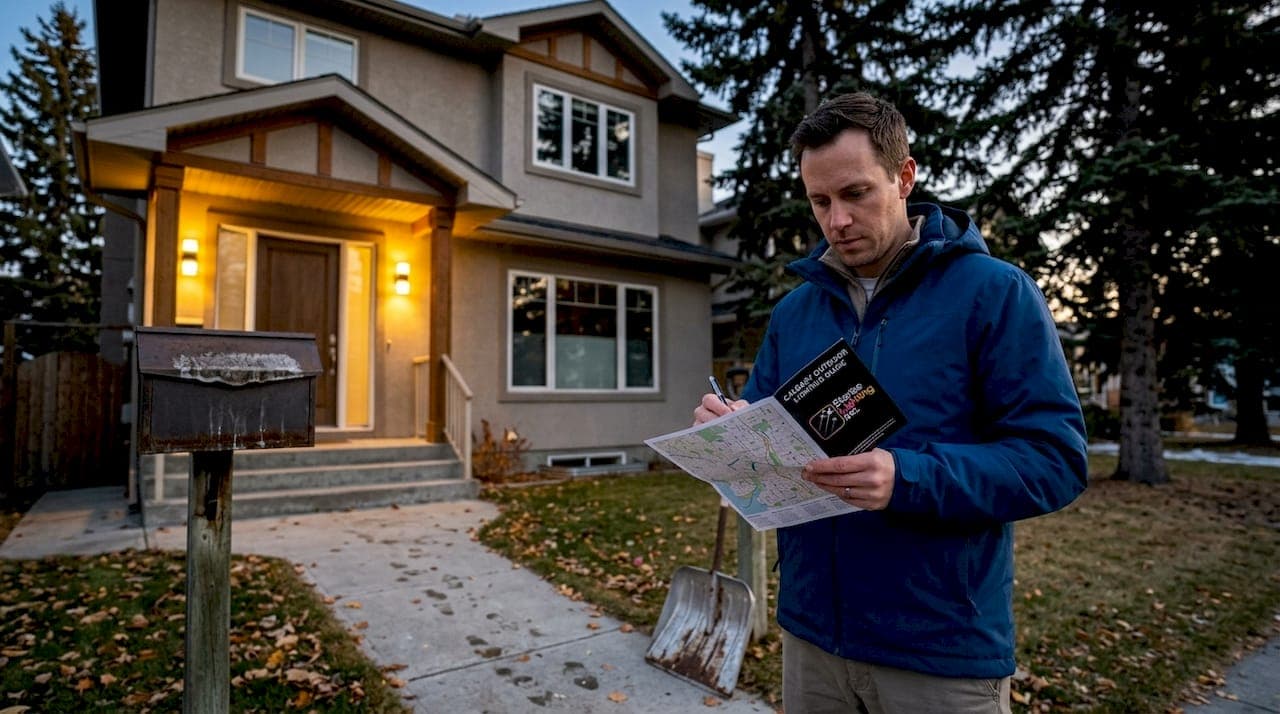
Picture this: it's a bitter January evening in Calgary, and you've just pulled into your driveway after a long commute. Your front yard is dark, your pathway is invisible under a dusting of snow, and your front door looks about as welcoming as a parking garage. You meant to switch the porch light on before you left, but you forgot. Again. This is the daily frustration that drives Calgary homeowners toward outdoor lighting automation, and once you experience a properly set-up system, you'll wonder how you ever managed without one.
Table of Contents
- What you need to automate outdoor lighting in Calgary
- Step-by-step: How to automate your permanent outdoor lighting
- Common automation mistakes and troubleshooting tips
- Fine-tuning and maintaining your outdoor lighting automation
- Why careful automation planning matters in Calgary
- Get expert help with outdoor lighting automation
- Frequently asked questions
Key Takeaways
| Point | Details |
|---|---|
| Preparation is critical | Calgary’s climate and bylaws demand careful planning before installing automated outdoor lighting. |
| Smart schedules matter | Using fixed times or offsets from sunrise/sunset avoids inconsistent automation. |
| Aim and shield fixtures | Preventing glare and light spill is both a bylaw and good neighbour practice. |
| Seasonal adjustments are key | Regular schedule checks keep your system effective as sunrise and sunset times change. |
| Expert help streamlines the process | Professional installers can ensure compliance, safety, and lasting curb appeal. |
What you need to automate outdoor lighting in Calgary
To begin automating your outdoor lighting, it's important to gather the right equipment and prepare for Calgary's unique requirements. You can't just pick up any smart bulb at a hardware store and call it done. Calgary's winters are brutal, bylaws are specific, and the results you want, whether that's safety, curb appeal, or both, require the right foundation.
Hardware you'll need:
- Permanent LED light strips or fixtures rated for exterior use (IP65 or higher is strongly recommended for Calgary's freeze-thaw cycles)
- A smart lighting controller or hub compatible with your preferred automation platform
- Weatherproof junction boxes and UV-resistant wiring
- Shielded fixtures that direct light downward or onto your property only
- A reliable Wi-Fi connection at or near your installation zones
Software and control systems:
The most popular choices for Calgary homeowners are dedicated manufacturer apps (such as those bundled with Gen 2 LED systems), Home Assistant, or smart home platforms like Google Home or Amazon Alexa. Each has its strengths. Manufacturer apps are often easiest to configure, while platforms like Home Assistant allow deep customisation and more precise scheduling control.
Before you buy a single fixture, read the Calgary permanent lighting guide to understand what systems work best in this climate and how to plan your layout. It covers everything from voltage requirements to mounting strategies suited to Calgary homes.
Climate and bylaw considerations:
Calgary's climate swings from scorching summers to minus-30 winters, so every component you select must handle that range without degrading. Just as important: Calgary bylaws require outdoor fixtures to prevent light spill onto neighbouring properties, with fines possible for non-compliance. This isn't a minor technicality. Bylaws in Calgary specifically address light trespass and nuisance, meaning a poorly aimed floodlight can result in a formal complaint and a fine.
| Consideration | What to look for |
|---|---|
| Temperature rating | Fixtures rated for at least -40°C to +40°C |
| Ingress protection | IP65 or IP67 rating minimum |
| Wiring insulation | Cold-rated, UV-resistant sheathing |
| Fixture shielding | Full cutoff or semi-cutoff designs |
| Controller compatibility | Works with your preferred app or platform |
Pro Tip: Map your lighting zones on paper before purchasing anything. Mark where you want light for aesthetics (roofline, pathways, trees) separately from where you need it for security (entry points, garage, side gates). This prevents over-buying and ensures your layout is bylaw-compliant from the start.
Step-by-step: How to automate your permanent outdoor lighting
Once everything is ready, you can move on to the installation and automation process. This is where many homeowners make the leap from a vague plan to a working system, and the sequence matters.
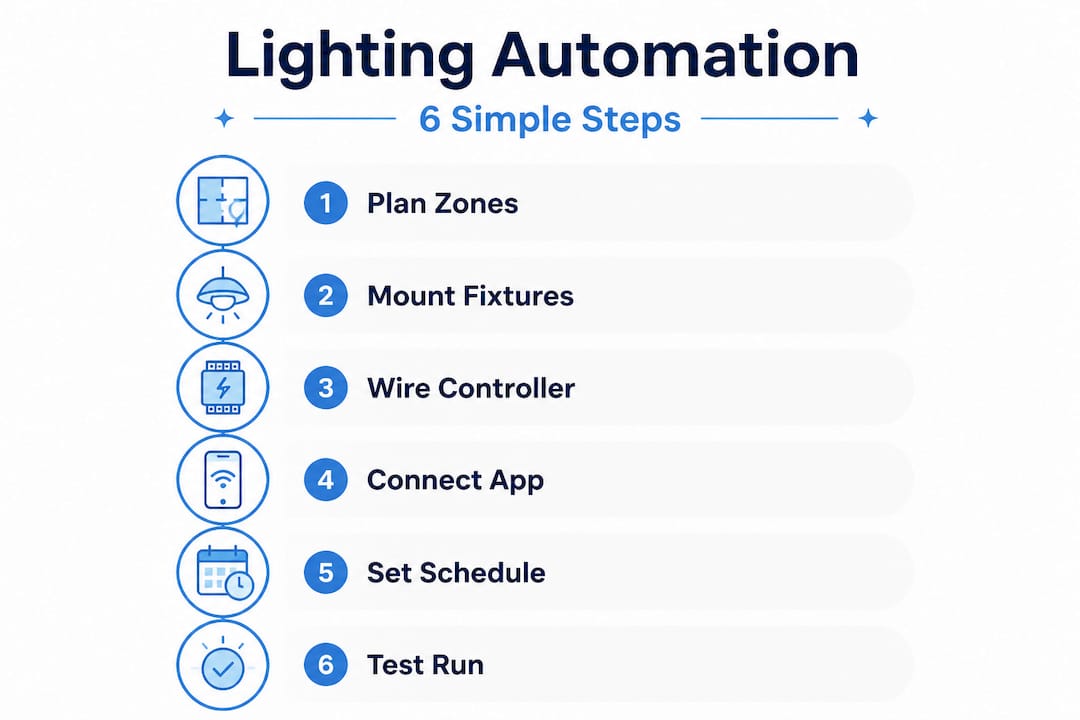
1. Plan and mark your mounting points
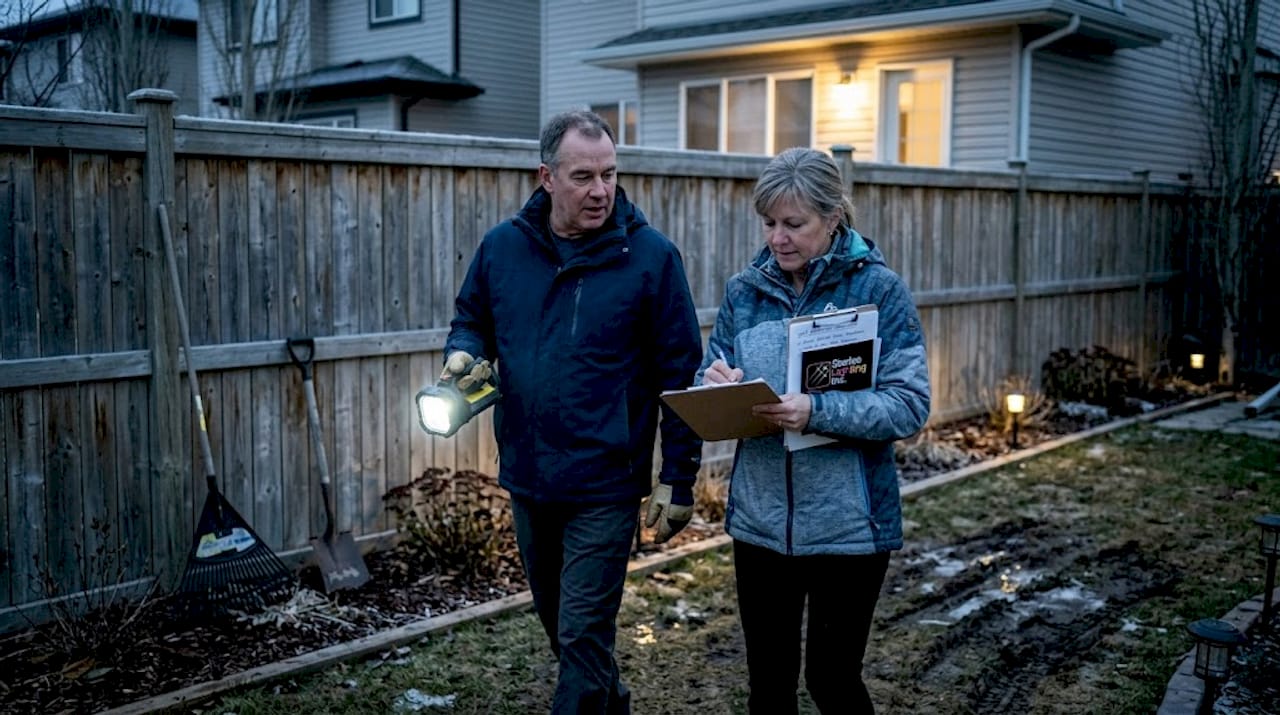
Walk your property at night with a flashlight. Note where shadows create security blind spots and where you'd like accent lighting for kerb appeal. Photograph the areas to refer back to during installation.
2. Mount your LED fixtures
Permanent LED systems are typically installed along rooflines, soffits, fascia boards, or along pathways. For roofline installation, you'll snap or clip LED light channels into position, then feed wiring back through a small entry point near your eaves. Consult the LED lighting installation guide for detailed mounting instructions specific to Calgary-style homes, particularly those with wide overhangs or composite soffits.
3. Wire to your controller
Run low-voltage wiring from each fixture cluster back to a central controller, usually mounted inside your garage or in a weatherproof exterior enclosure. Keep connections tight and use waterproof wire nuts or purpose-made connectors. A loose connection is the number one cause of flickering lights months after installation.
4. Connect your controller to your network and app
Follow the controller manufacturer's setup steps to pair the device with your home Wi-Fi and install the corresponding app on your smartphone. Test each lighting zone individually before moving to scheduling.
5. Set up your automation schedule
Here's where precision matters. Sunrise and sunset schedules can become inconsistent because the sun shifts several minutes daily, especially across Calgary's dramatic seasonal swings. Use fixed times or offsets (for example, "turn on 20 minutes before sunset") rather than a raw sunrise/sunset trigger. This keeps your lighting predictable and prevents your home from sitting dark for 15 extra minutes during a busy weeknight.
6. Test thoroughly
Run through your complete schedule manually. Force the system to simulate an "on" and "off" cycle at different trigger points. Walk around your property and check for unintended light spill onto the neighbour's windows or yard. Adjust fixture angles before finalising your setup.
| Scheduling method | Consistency | Best for |
|---|---|---|
| Fixed time (e.g., 8:00 PM) | Very high | Predictable routines |
| Sunrise/sunset raw trigger | Low to medium | General use only |
| Offset (e.g., sunset minus 15 min) | High | Seasonal adaptability |
| Geo-fencing | Medium | Arrival-based activation |
Pro Tip: If you're using Home Assistant or a similar platform, create a separate automation for weekday and weekend schedules. Your lighting needs at 6 AM on a Monday are very different from a Sunday morning, and this small step dramatically improves daily usability.
For anyone thinking beyond basic switches, installing lighting for curb appeal offers an excellent visual walkthrough of how Calgary homeowners are layering security and aesthetic lighting in a single installation.
Common automation mistakes and troubleshooting tips
Even with good preparation, some hiccups can arise during or after setup. The good news is that most problems are predictable and fixable if you know what to look for.
Most common mistakes Calgary homeowners make:
- Relying entirely on raw sunrise/sunset automation without offsets, leading to inconsistent lighting schedules across the year
- Pointing floodlights or accent lights at an upward angle, creating glare and causing light spill into adjacent properties
- Forgetting to update firmware on smart controllers, which can cause scheduling failures months after installation
- Installing non-rated hardware that fails during Calgary's first hard frost
- Skipping the compliance check and assuming lighting placement is fine without confirming angles and shielding
"Outdoor lighting that intrudes onto a neighbour's property or causes glare is not just an etiquette issue in Calgary. Fixtures must be aimed and shielded properly, and bylaw enforcement can follow complaints."
Troubleshooting inconsistent schedules:
If your lights are turning on and off at unpredictable times, the culprit is almost always the scheduling method. Day-to-day variation in sunrise and sunset can cause automations to fall out of sync unless offsets or fixed times are used. Log in to your app or controller and switch from a raw sun-trigger to an offset or hard time. This single change resolves the majority of schedule complaints.
Troubleshooting light spill:
Walk your property boundary after dark and look back toward your home from your neighbour's perspective. If any light is hitting their windows or driveway directly, adjust the fixture angle downward or add a shield. Purpose-made barn door shields or louvres are inexpensive and clip onto most LED housings.
Troubleshooting flickering or intermittent lights:
Check all wiring connections first. If connections are solid, the issue may be voltage drop, particularly in long runs of LED strip lighting. Consider upgrading to a 24V system over a 12V one for longer runs, as higher voltage drops less over distance and maintains brightness more reliably.
For homeowners wanting to go further with security applications, the guide on permanent lighting for security explains exactly how fixture placement affects deterrence and how to combine motion activation with your base schedule for maximum effectiveness.
Pro Tip: After any significant Calgary weather event, such as a heavy snowfall or ice storm, do a quick visual check of your roofline fixtures. Snow loading can shift the angle of surface-mounted lights and undo your careful adjustment work from installation day.
Fine-tuning and maintaining your outdoor lighting automation
With the basics working, it's time to get the best possible performance from your system year-round. A properly maintained system is invisible in the best possible way; it just works, every night, without you thinking about it.
Updating schedules for seasonal shifts:
Calgary experiences some of the most dramatic daylight variation in Canada. Midsummer days can run 17 hours of daylight, while midwinter days shrink to under 8 hours. Calgary's sunrise and sunset times can shift by up to five minutes per day in spring and autumn, which means a static schedule set in October will be noticeably wrong by December. Block a 15-minute reminder in your calendar for the solstices and equinoxes to review and adjust your lighting schedule.
Routine checks to keep everything running:
- Inspect fixture mounts and clips every spring after freeze-thaw cycles loosen hardware
- Test every lighting zone manually at least twice a year to catch failed LEDs early
- Check wiring at entry points where cables penetrate soffits or walls, as thermal movement can loosen seals
- Confirm your controller's firmware is up to date each season
- Recheck fixture angles after any roofline work, gutter cleaning, or significant weather events
Long-term system health:
Permanent LED systems, particularly Gen 2 24V designs, are built to last well over a decade with minimal intervention. The biggest threats are not the LEDs themselves but the connections and controllers. Keep controller enclosures sealed, replace silicone sealant around cable penetrations every few years, and ensure your Wi-Fi signal is strong enough at the controller location to avoid dropped connections.
A well-maintained system also protects your investment. Lighting that works reliably, looks consistent, and stays compliant contributes meaningfully to your property's kerb appeal and perceived security. Review the lighting installation workflow for a structured seasonal maintenance checklist you can follow without needing a professional visit every year.
Callout: Did you know? Calgary's sun sets nearly 90 minutes later in June than it does in January. If you set your exterior lights to activate at the same fixed time year-round, you're either lighting up your home while it's still broad daylight or leaving it dark during early winter evenings. Seasonal schedule reviews aren't optional; they're essential for a system that actually serves you.
Why careful automation planning matters in Calgary
Here's the opinion most lighting guides won't offer: automation is not "set and forget." That phrase, which gets repeated constantly in smart home circles, is one of the most damaging ideas for Calgary homeowners specifically. Our city's combination of extreme seasonal daylight variation, a bylaw environment that actively penalises light trespass, and weather that physically moves your fixtures means that a system installed once and never reviewed will quietly degrade in both performance and compliance over time.
We've spoken with homeowners who invested in excellent hardware, set up a schedule in autumn, and didn't think about it again until a neighbour knocked on their door in February. In two cases, a combination of schedule drift and a fixture nudged by ice had turned a compliant system into one that was shining directly onto a neighbour's window every evening. Both situations were easily fixed, but neither would have happened with a quarterly review habit.
The other myth worth challenging: that automation is only for tech-savvy homeowners. Modern permanent LED systems with dedicated apps are genuinely intuitive. You don't need to understand smart home protocols or write automation logic. You need to understand your property, Calgary's bylaws, and your own daily routine. The technology fills in around those three things.
Where automation planning really pays off is in long-term property value increases. A home with reliable, attractive, compliant exterior lighting doesn't just look better; it signals to buyers that the property is well cared for. That perception has real value at sale time, and it starts with getting the planning right before the first fixture goes up.
Get expert help with outdoor lighting automation
You've seen exactly what goes into a well-planned, automated outdoor lighting system for a Calgary home. If that process feels manageable on your own, the guides linked throughout this article will take you through each step in detail.
For homeowners who'd rather have it done right the first time, without the trial and error of DIY setup, professional installation makes a significant difference. The Starise lighting system is engineered specifically for Calgary's climate, with Gen 2 24V LED technology, a user-friendly app, and weatherproof construction that holds up through Calgary winters without annual maintenance calls. Explore permanent outdoor lighting Calgary options or request a quote directly through the website to find out what a professionally installed, fully automated system would look like for your home.
Frequently asked questions
What's the best schedule for automated outdoor lights in Calgary?
Fixed schedules or offset-based triggers are best for consistent results. Raw sunrise/sunset automation drifts noticeably across Calgary's dramatic seasonal changes, leading to lights turning on too early or too late.
Do I need to comply with outdoor lighting bylaws in Calgary?
Yes, absolutely. Calgary bylaws require fixtures to be shielded and aimed to avoid light trespass onto neighbouring properties, and non-compliance can result in bylaw fines following a complaint.
Does weather affect outdoor lighting automation?
Calgary's temperature extremes, from deep freezes to summer heat, can loosen fixture mounts and degrade unsealed connections over time, making weather-rated hardware and annual physical checks essential for reliable automation.
How do I ensure my lights turn on and off at the right times all year?
Review and update your schedules at each season change. Because Calgary's sunrise and sunset can shift by up to five minutes per day in transitional months, using offset-based or fixed-time scheduling prevents the gradual drift that makes lights feel unreliable.