
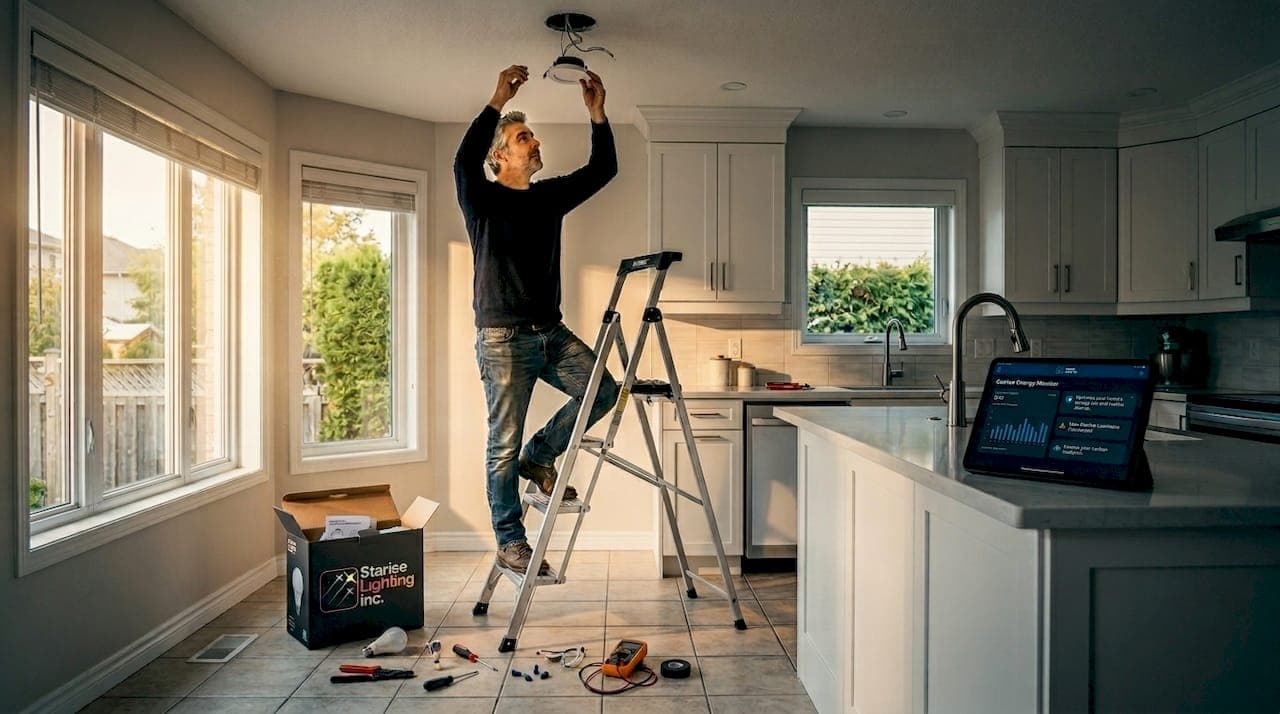
TL;DR:
- LED lighting is the most energy-efficient and long-lasting residential option, offering superior light quality and reduced maintenance. They save at least 75% in energy compared to incandescent bulbs and last up to 25,000 hours, drastically decreasing replacement needs. Additionally, LEDs improve home aesthetics, safety, and environmental impact, providing quick returns on investment, especially for high-use fixtures.
LED lighting is the most energy-efficient and longest-lasting residential lighting technology available today. The advantages of LED lights extend well beyond lower electricity bills: they deliver superior light quality, reduced maintenance, and meaningful aesthetic upgrades that traditional incandescent and halogen bulbs simply cannot match. ENERGY STAR, the U.S. Department of Energy, and manufacturers like LEDVANCE have all documented these gains extensively. For homeowners weighing a lighting upgrade, the case is clear and the numbers are compelling.
1. How LED lights save energy and cut electricity bills
ENERGY STAR-labelled LEDs use at least 75% less energy than incandescent bulbs while delivering the same light output. That single figure translates directly to your monthly electricity bill. Swap a 60W incandescent for an equivalent LED and you reduce that bulb's running cost from roughly $350 to $53 over 20 years. Multiply that across every fixture in your home and the savings become substantial.
The mechanism is straightforward. Incandescent bulbs convert most of their energy into heat rather than light. LEDs convert the vast majority of energy into visible light, which means you pay for brightness, not wasted warmth. The savings scale linearly with operating hours, so fixtures that run many hours per day, such as kitchen lights or outdoor security lights, deliver the fastest payback.
Key factors that determine your actual savings:
- Wattage difference between the LED and the bulb it replaces
- Daily operating hours per fixture
- Your local electricity rate in cents per kilowatt-hour
- Number of fixtures being upgraded
Pro Tip: Match lumen output carefully when choosing an LED replacement. A 60W incandescent produces roughly 800 lumens. Choosing an LED rated at 800 lumens rather than a higher output avoids over-lighting and maximises your energy savings without sacrificing comfort.
2. Why LEDs last far longer than traditional bulbs
LED bulbs typically last 15,000 to 25,000 hours or more, compared to roughly 1,000 to 1,200 hours for a standard incandescent bulb. That is 15 to 25 times the service life from a single purchase. For homeowners, this means years between replacements rather than months.
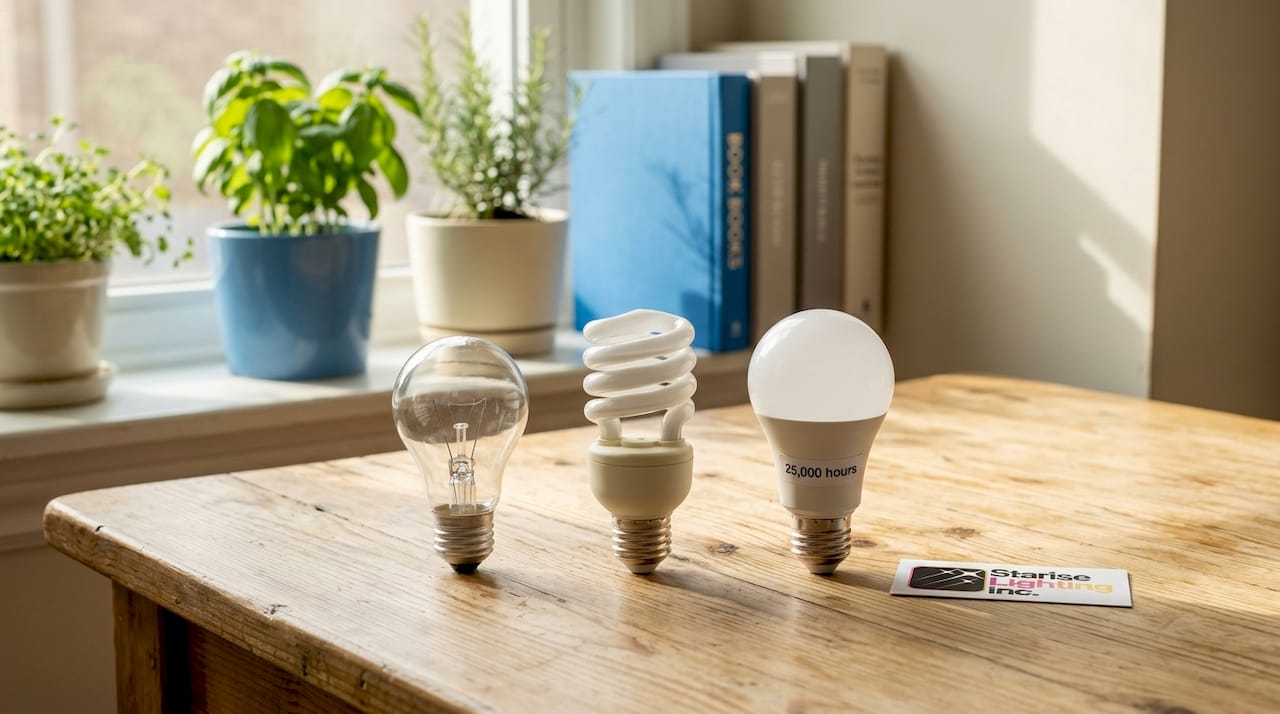
Understanding how LED lifespan is measured matters when you are comparing products. The industry standard is the L70 rating, which indicates the number of hours until a bulb's light output drops to 70% of its original brightness. An LED rated at L70/50,000 hours will still deliver usable light at that point. Many budget products advertise long life without specifying L70, which is a marketing claim rather than a verified performance metric.
| Bulb type | Rated lifespan | Replacements over 25,000 hours |
|---|---|---|
| Incandescent | 1,000 to 1,200 hours | 20 to 25 replacements |
| Halogen | 2,000 to 4,000 hours | 6 to 12 replacements |
| LED | 15,000 to 25,000+ hours | 1 replacement or fewer |
The practical implication for your home is significant. Fixtures in high ceilings, stairwells, or outdoor housings that are awkward to access no longer need frequent attention. You can explore LED longevity for homes in detail to understand what rated life means for your specific fixtures.
Pro Tip: When purchasing LEDs, look for products with a verified TM-21 L70 rating and an efficacy of 130 lumens per watt or higher. These specifications confirm durable, efficient performance and often qualify for utility rebates.
3. What improvements LEDs bring to lighting quality and home aesthetics
LED lighting offers far more control over light quality than incandescent or halogen alternatives. Colour temperature flexibility allows you to choose warm white light (2,700K to 3,000K) for living rooms and bedrooms, or cooler, crisper light (4,000K to 5,000K) for kitchens, garages, and workspaces. This single feature lets you tailor the mood of every room without changing fixture hardware.
Colour rendering is equally important. High CRI LEDs rated at 90 or above reproduce colours faithfully, making paint colours, fabrics, and food look accurate rather than washed out. Modern LEDs can closely replicate the warm, flattering quality of incandescent light while consuming a fraction of the energy.
Additional quality advantages that matter to homeowners:
- Instant-on performance. LEDs reach full brightness immediately, with no warm-up period. This is particularly useful in hallways, bathrooms, and motion-activated outdoor fixtures.
- Dimming compatibility. Most quality LEDs work with standard dimmer switches, giving you precise control over ambiance.
- Directional light output. LEDs emit light in a specific direction rather than in all directions, reducing wasted light and improving fixture efficiency.
- Curb appeal. Permanent outdoor LED systems, such as those offered by Co-starise, use colour temperature and programmable effects to transform the exterior appearance of a home at night.
For homeowners considering a full exterior upgrade, the aesthetic and security benefits of permanent LED installations go well beyond what a simple bulb swap delivers.
4. How LEDs improve home safety and reduce environmental impact
LEDs generate significantly less waste heat than incandescent or halogen bulbs. This matters for two reasons: fire safety and cooling costs. Halogen bulbs can reach surface temperatures high enough to ignite nearby materials if installed incorrectly or left in contact with insulation. LEDs run much cooler, reducing heat load on air conditioning systems and lowering the risk of heat-related incidents in enclosed fixtures.
The environmental advantages are equally concrete:
- No mercury content. LEDs contain no mercury, unlike compact fluorescent lamps (CFLs), which require special disposal. This makes LED disposal straightforward and eliminates contamination risk.
- Lower carbon emissions. Reduced electricity consumption directly lowers the carbon output associated with your home's energy use.
- Less waste from replacements. Because LEDs last 15 to 25 times longer than incandescent bulbs, far fewer bulbs end up in landfill over the lifetime of your home.
- Reduced packaging waste. Fewer replacements means fewer boxes, blister packs, and shipping materials consumed over time.
For homeowners who want their property to reflect both practical and environmental values, LEDs are the straightforward choice. Pairing efficient indoor LEDs with permanent outdoor LED lighting compounds these benefits across the entire property.
5. Cost considerations and return on investment when switching to LED
The upfront cost of LED bulbs is higher than incandescent equivalents, but the total cost of ownership over time is dramatically lower. The payback period for most residential LED upgrades is measured in months, not years, depending on how many hours per day the fixtures operate and your local electricity rate.
A straightforward comparison illustrates this clearly:
| Cost factor | Incandescent (60W) | LED equivalent (9W) |
|---|---|---|
| Purchase price | $1 to $2 | $4 to $8 |
| Annual energy cost (3 hrs/day) | ~$7.88 | ~$1.18 |
| Bulbs needed over 25,000 hours | 20 to 25 | 1 |
| 20-year running cost | ~$350 | ~$53 |
The ROI on LED retrofits scales directly with operating hours. A fixture running eight hours per day pays back its LED upgrade cost far faster than one running one hour per day. Outdoor lighting, which often runs six to ten hours nightly, is one of the highest-return upgrade categories in any home.
Utility rebates are available in many Canadian provinces and municipalities, further reducing the effective upfront cost. Check with your local utility provider before purchasing, as rebates often apply specifically to products with verified ENERGY STAR certification.
Pro Tip: Before purchasing, calculate your actual payback period using your electricity rate and the fixture's daily operating hours. A wattage savings calculator makes this a two-minute exercise and confirms whether a premium LED product is worth the extra upfront spend.
For a full breakdown of what a home lighting upgrade involves from a planning and cost perspective, Co-starise has documented the process specifically for Calgary homeowners.
Key takeaways
LED lighting delivers the strongest combination of energy savings, lifespan, light quality, and safety of any residential lighting technology available in 2026.
| Point | Details |
|---|---|
| Energy savings are substantial | ENERGY STAR LEDs use at least 75% less energy than incandescent bulbs, cutting long-term running costs dramatically. |
| Lifespan reduces maintenance | LEDs last 15,000 to 25,000+ hours, meaning years between replacements even in hard-to-reach fixtures. |
| Light quality is fully controllable | Colour temperature and CRI options let homeowners tailor light mood and colour accuracy to every room. |
| Safety and environment both benefit | No mercury, lower heat output, and reduced waste make LEDs the safer and greener choice. |
| ROI is fastest for high-use fixtures | Outdoor and frequently used indoor fixtures pay back their LED upgrade cost within months at typical electricity rates. |
Why I think most homeowners underestimate what LEDs actually deliver
After working with residential lighting across hundreds of Calgary properties, the pattern I see most often is homeowners who switched to LEDs expecting lower bills and got that. What they did not expect was how much the quality of light in their home changed. Warm white LEDs with a CRI above 90 make a living room feel genuinely different. Paint colours read correctly. Skin tones look natural. That is not a minor detail.
The other thing I have learned is that the spec sheet matters more than the packaging. A bulb labelled "25,000 hours" without an L70 rating is a marketing claim. A bulb with a verified TM-21 L70/25,000 rating is a performance guarantee. Most homeowners never check this, and they end up replacing budget LEDs far sooner than expected, which erodes the savings they were counting on.
The misconception I hear most often is that permanent outdoor LED systems are a luxury. They are not. When you calculate the cost of seasonal lighting installation and removal, the labour, the storage, the replacement of damaged strands each year, a permanent LED system from a provider like Co-starise pays for itself faster than most homeowners expect. The long-term investment case for LED security lighting is particularly strong for properties where outdoor lighting runs every night.
The bottom line is this: buy verified specifications, prioritise fixtures with the highest daily operating hours, and do not treat outdoor lighting as an afterthought. That is where the real return is.
— Starise
See the benefits of permanent LED lighting for your home
Co-starise specialises in permanent outdoor LED lighting systems built for Calgary's climate and designed to deliver every advantage described in this article: verified energy efficiency, decades of service life, and full colour and brightness control through a simple app.
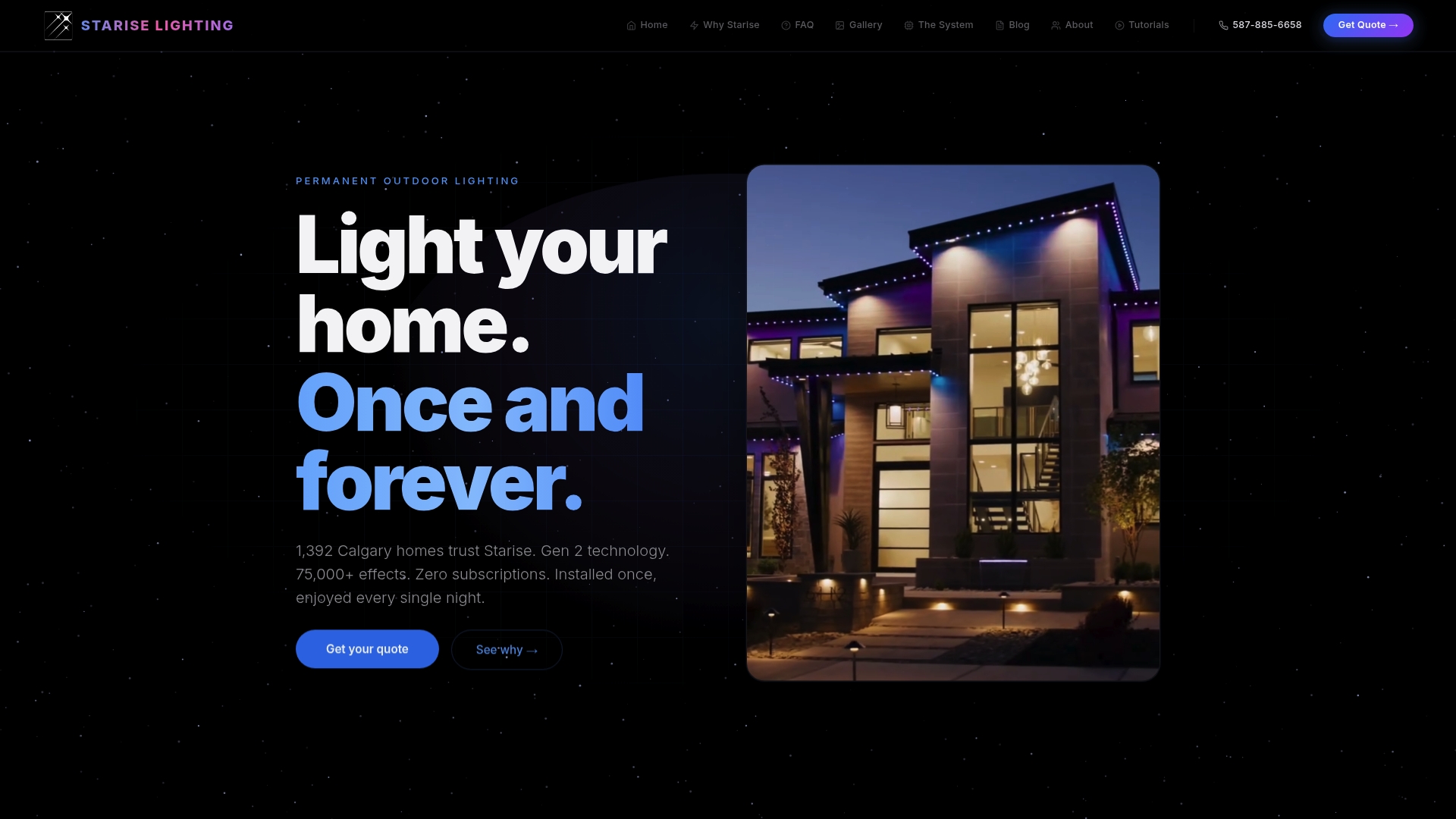
Co-starise's Gen 2 24V LED systems are weatherproof, maintenance-free, and installed once. Whether you want to enhance curb appeal, improve security, or reduce the ongoing cost of seasonal lighting, the permanent lighting solutions at Co-starise are engineered for exactly that purpose. Homeowners in the Edmonton area can also explore permanent lights in Edmonton for local installation options. Request a quote today and see what a properly specified LED system looks like on your property.
FAQ
How much energy do LED lights actually save?
ENERGY STAR-labelled LEDs use at least 75% less energy than incandescent bulbs of equivalent brightness. Over 20 years, a single LED replacement can reduce one bulb's running cost from roughly $350 to $53.
How long do LED bulbs last compared to incandescent bulbs?
LED bulbs last 15,000 to 25,000 hours or more, compared to 1,000 to 1,200 hours for standard incandescent bulbs. That difference means one LED replacement covers the same period as 20 or more incandescent bulb changes.
What does the L70 rating mean on an LED product?
The L70 rating indicates the number of hours until an LED's light output drops to 70% of its original level. It is a more reliable measure of useful lifespan than a simple "rated hours" claim and should be the primary specification you check when comparing products.
Are LED lights safer than halogen or incandescent bulbs?
LEDs run significantly cooler than halogen and incandescent bulbs, reducing fire risk in enclosed fixtures and lowering heat load on your home's cooling system. They also contain no mercury, unlike compact fluorescent lamps, making them safer to handle and dispose of.
Do LED lights work well outdoors in cold Canadian winters?
LEDs perform reliably in cold temperatures and are generally more stable in extreme cold than fluorescent alternatives. Permanent outdoor LED systems designed for Canadian climates, such as those from Co-starise, use weatherproof construction rated for Calgary's winters specifically.